Tikom G8000 Max Review: A Quiet, Simple Vacuum-Mop
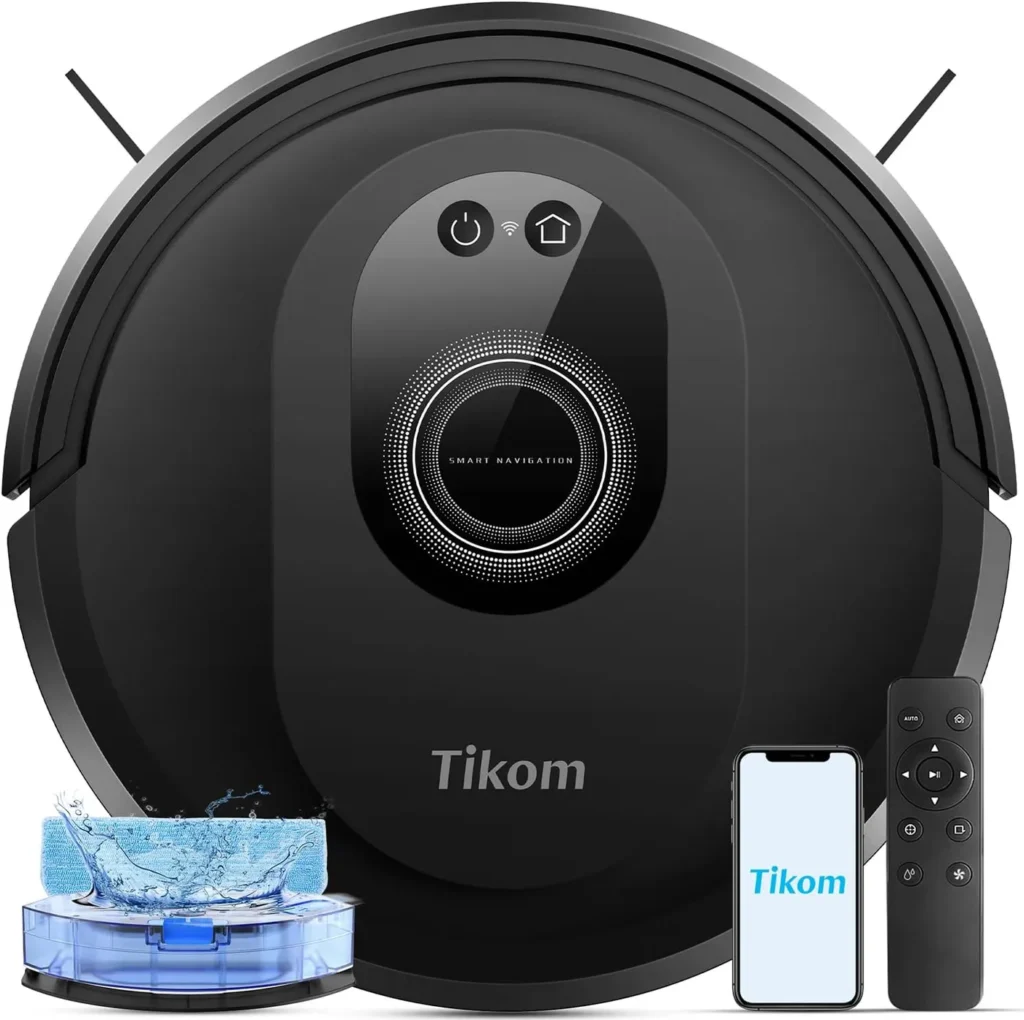
A quiet, low-riding vacuum-mop that cleans hard floors well and answers to two buttons, a remote or an app, best in homes kept clear of clutter.
By Tikom's count, there are four ways to start the Tikom G8000 Max: two buttons on the robot, a remote, the Tuya Smart app and a voice assistant. With its cloth holder fitted, it mops while it vacuums. For a budget-tier robot, the vacuuming holds up well, lifting dust, crumbs, litter and pet hair from wood and tile. It's also quiet, and its low body slips under beds and sofas. The weak spots, though, lie in how it gets around: its route wanders, cords and low furniture can trap it, and the dock sometimes eludes it. Meanwhile, the mop gives hard floors only a light wipe with plain water.
Pickup across bare floors and low rugs
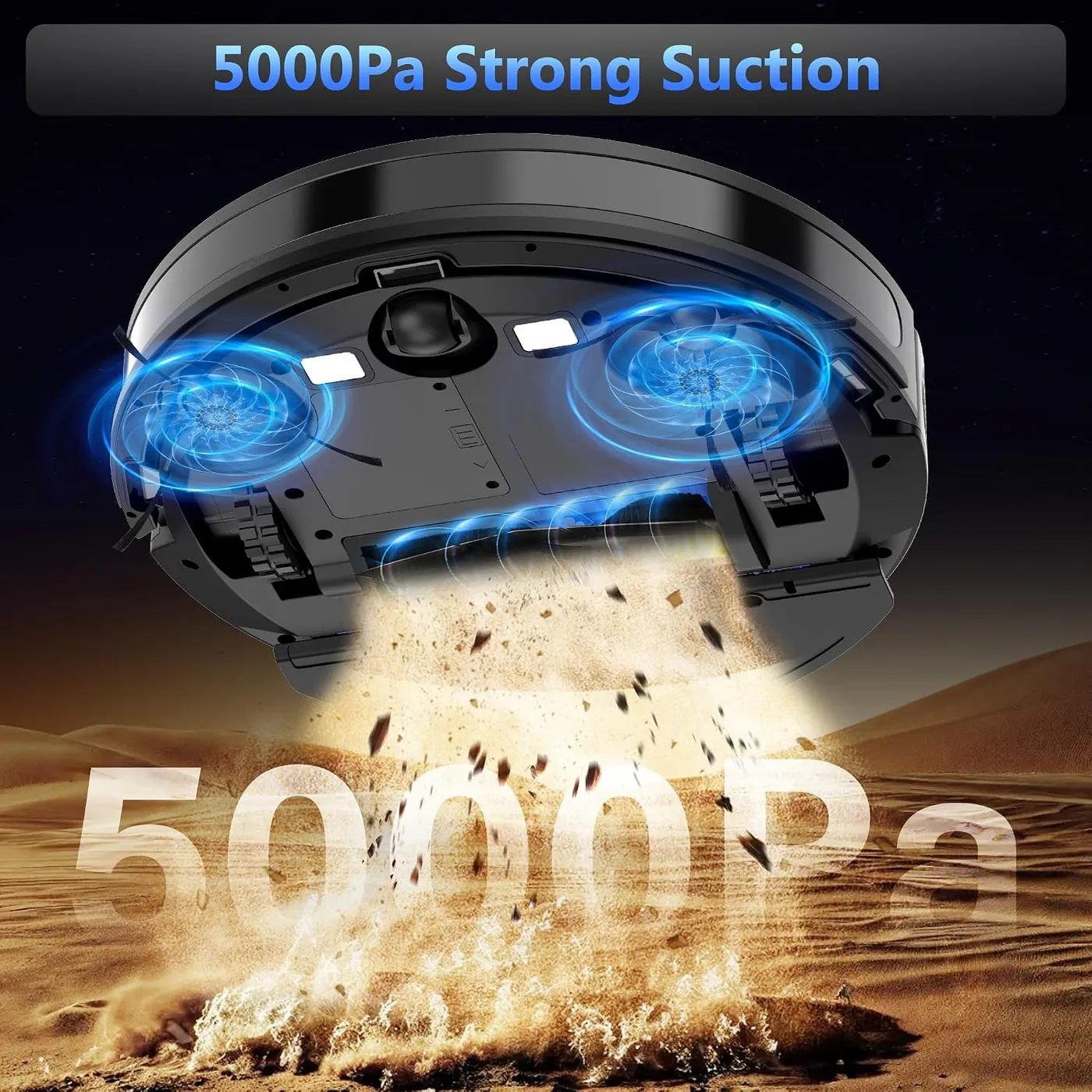
Hard floors suit it best. Tikom rates the suction at 5,000Pa, and on wood and tile the Tikom G8000 Max turns it into consistent pickup of dust, crumbs, cat litter and pet hair. It also works along edges and into corners effectively, lifting more fine dust than the floor appeared to hold.
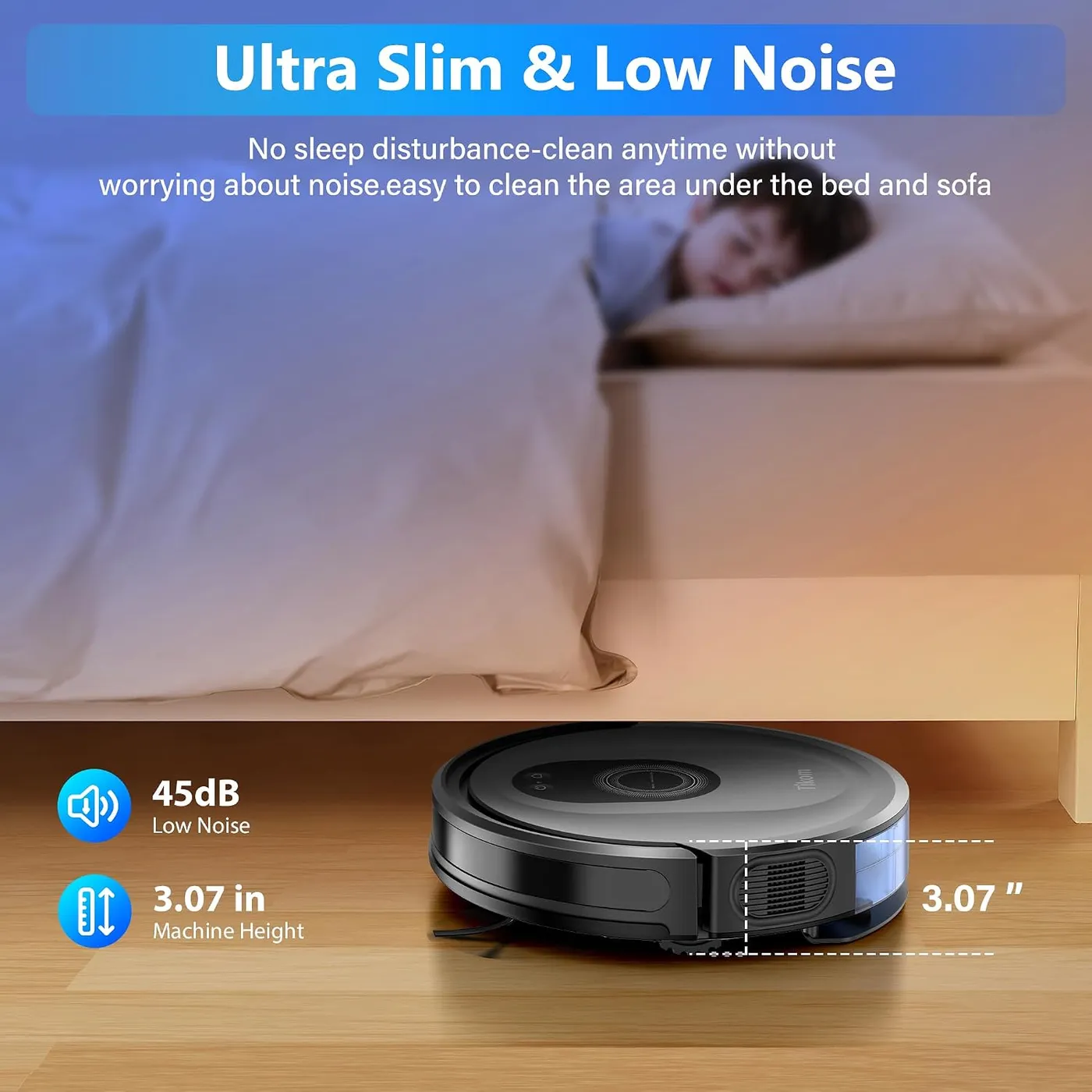
Its height matters as much as its suction: at about 3 inches tall, by Tikom's figure, this robot vacuum slips beneath most beds, sofas and kitchen cabinets. An upright vacuum tends to miss those areas, since reaching them means kneeling or shifting heavy furniture.
Where pets shed, a daily run keeps loose fur and tracked-in dirt from accumulating between full vacuums. When a room needs more, the remote steps the suction through three levels. At any setting, though, it maintains floors between deep cleans and doesn't replace them.
Carpet gets a qualified yes. Tikom says it cleans short- and medium-pile carpet, and it credits the large wheels with climbing thresholds. The robot rolls over door lips and onto low rugs without much difficulty, although its best work still happens on bare floors. The quick start caps rug pile at 0.63 inch (16 mm). It also asks you to fold tasseled edges under before a run.
Roaming routes, loose cords and low sofas
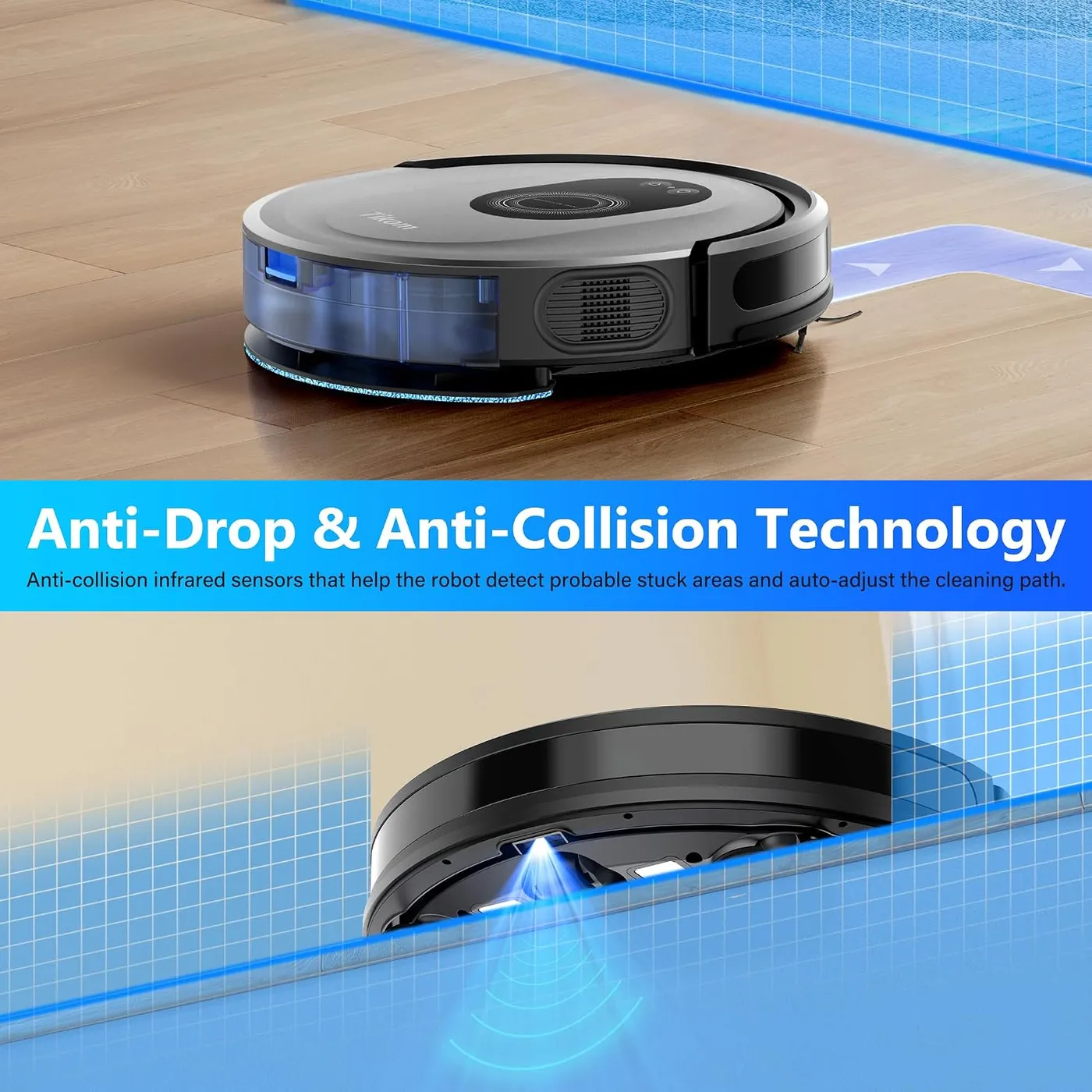
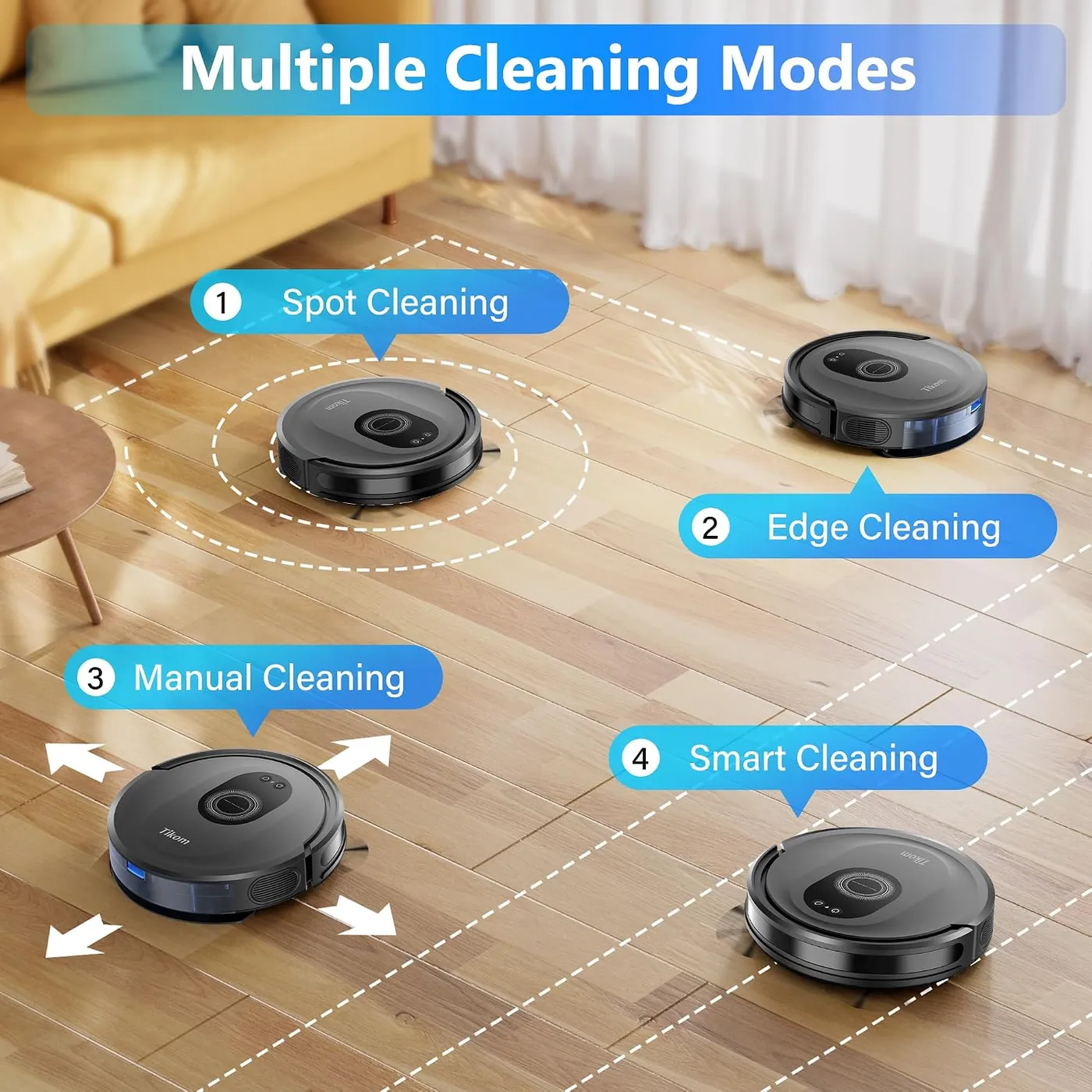
Two kinds of sensor guide it, by Tikom's account. One watches for obstacles and the other for drops, while four modes cover the cleaning: Spot, Edge, Zig-zag and Manual. Tikom pitches Zig-zag as the full-coverage pattern, and the listing names no LiDAR, camera or room mapping.
In practice, coverage is erratic, since the robot may revisit one room several times while skipping parts of the next. Nor does it always finish a room before moving on, and Tikom lists no way to pick rooms.
Socks, toys and cords are the main hazard, because they can tangle in the brush and interrupt a run. Tikom's guide asks you to clear them first and even supplies cable ties. Chair and stool legs it threads through well enough, but low furniture is a different story. The guide warns against gaps close to the body's 3.07-inch height, and the robot does wedge itself under low sofas. Floor vents and some rugs can also trigger its anti-fall sensors mid-run.
A magnetic boundary strip, taped to the floor, marks off no-go areas, and the quick start insists it lie flat. The supplied length only covers a doorway or two, and the robot sometimes rolls over a strip anyway. I'd make a quick floor tidy part of every run, especially with children or pets around.
If a planned route matters more than a mop, the iRobot Roomba 105 Vac is the budget alternative to weigh. It builds a LiDAR map and lets you choose which rooms to clean. On the other hand, it has no mop and also docks on a plain charger.
Long, quiet runs and the hunt for the dock
On a full charge, it keeps going for a long time. Tikom quotes up to 150 minutes in quiet mode from its 14.4-volt lithium-ion pack. Runs of around two hours are typical, enough to carry the Tikom G8000 Max through a whole floor. When the battery runs low, it heads back to recharge on its own, by Tikom's description. Tikom puts the noise at 45 dB, and the hum is low enough to keep working from home or watching TV.
The return trip is less dependable. Often the robot parks itself neatly on the charger, yet it can also circle within a few feet of the dock without finding it. When that happens, it runs flat wherever it stops, and someone has to carry it back. At 5.29 pounds, per Tikom's listing, that's an easy lift.
Tikom's quick start guide asks for 3 feet (1 m) of clear floor on both sides of the dock and 6 feet (2 m) in front. It also wants the dock permanently plugged in, taped down and left in one place. Moving the dock, or lifting the robot mid-run, can throw off its way home. Before the first run, Tikom asks for a full charge, with the robot placed on the dock by hand so the contacts line up.
Mopping with a damp cloth and plain water
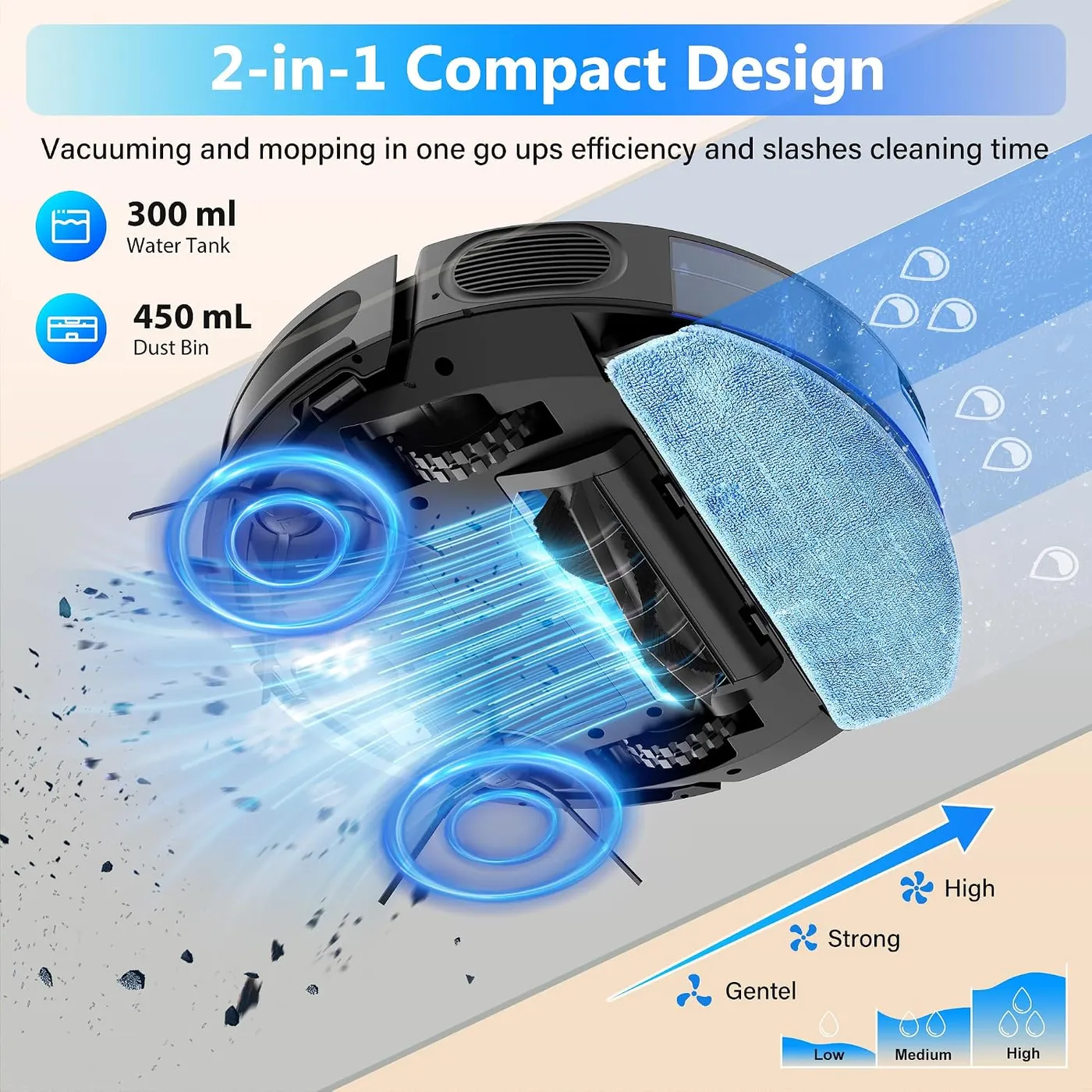
Think of the mop as an add-on. Attach the cloth holder, fill the tank, which Tikom rates at 300 ml, and both jobs run simultaneously. The robot mops only when it detects the holder, and water flow comes in three levels set from the remote. After filling, Tikom asks you to press the tank's rubber cover firmly shut.
Tikom's guide warns that floor cleaners or disinfectants may damage the tank, so plain water is the only fill. The result is a light wipe that leaves wood and tile looking fresher between proper mopping sessions. Real floor washing still falls to a mop and bucket.
Before the robot cleans carpet, Tikom says to take the cloth holder off or block the area with the boundary strip. Left in place, the damp cloth follows the robot onto any rug in its path. With rugs in the mix, I'd keep the Tikom G8000 Max on vacuum duty most days and save the mop for bare-floor rooms.
Four ways to start the Tikom G8000 Max
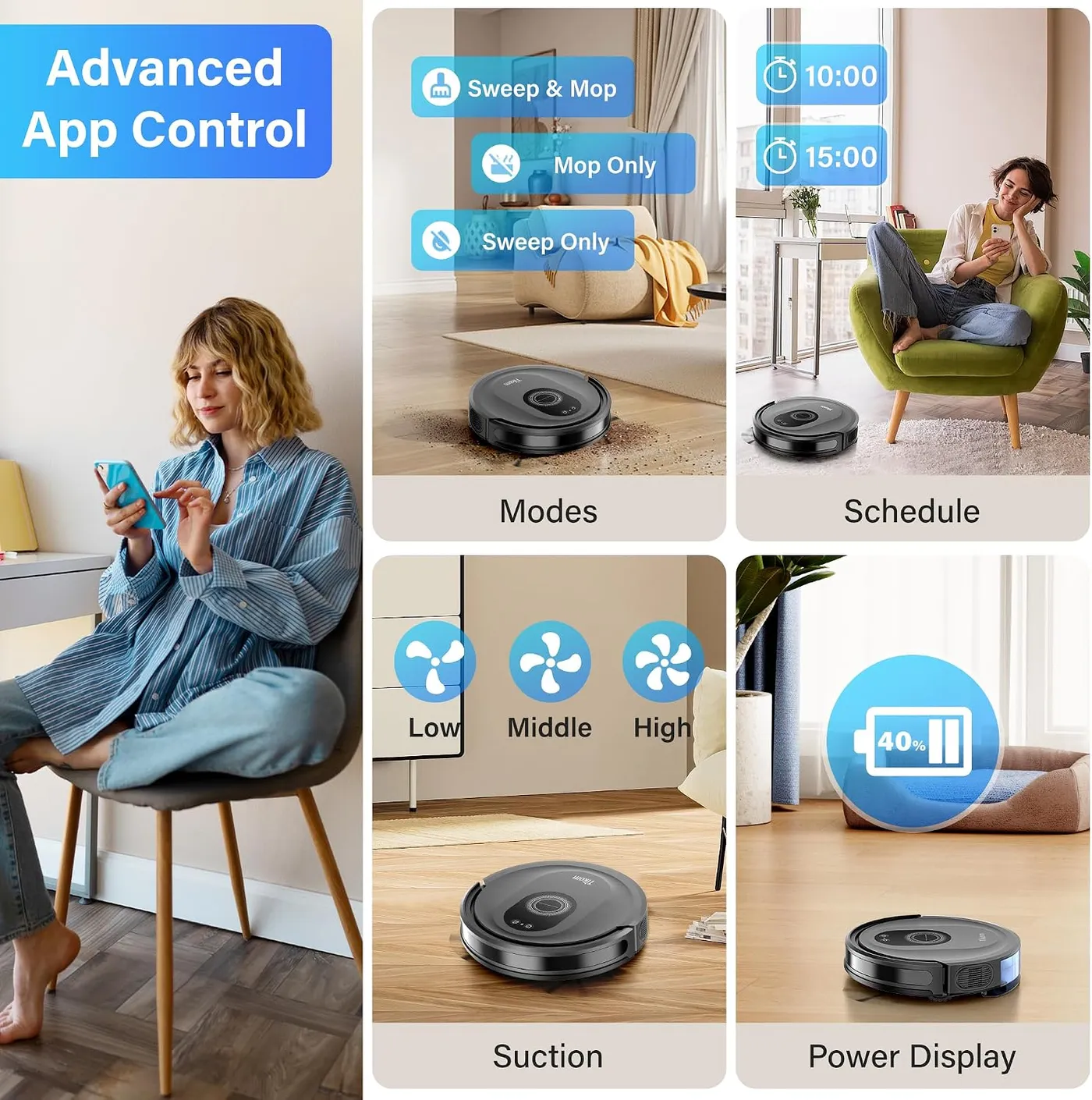
You don't need a phone to run it. On the robot, holding the Clean/Power button for three seconds switches it on or off. After that, a short press starts or stops a run, while the Home button sends it back to the dock. The remote adds Spot and Edge cleaning, smart cleaning, manual steering and three levels each for suction and water flow. The guide says to stop a cleaning run before steering by hand. Tikom pitches that simplicity at seniors and parents, and it suits anyone who would rather skip another app.
For app control, Tikom uses the Tuya Smart app. Setup wants a 2.4GHz Wi-Fi network, Bluetooth switched on in your phone and the robot near the router. Holding Power and Home for three seconds starts pairing, signaled by a sound and a fast-flashing Wi-Fi light. Once connected, that light stays on, and pairing usually goes smoothly. Tikom also posts installation videos on YouTube under the name Tikom Technology. After setup, the app reaches the Tikom G8000 Max over any network, mobile data included.
Scheduling is the app's main draw. Set a daily time, and the robot cleans while you're out, provided the floor is clear before it starts. Voice control rounds out Tikom's list of four methods.
Emptying the bin and freeing the brush
Little jobs follow most runs. The dock is a plain charger, so the bin and the mopping cloth are yours to empty and rinse. Tikom sizes the bin at 450 ml, and while it lifts out and empties easily, a shedding pet can fill it on almost every run.
Hair wraps the roller brush quickly, so in a multi-pet house the roller may need to come out for cleaning after every run. The filter, which Tikom lists as HEPA, needs regular cleaning too, though the parts come apart readily. The anti-fall sensors deserve an occasional wipe as well, because the quick start notes that dirt makes them less effective.
Plan on emptying the bin after each run and clearing the brush whenever hair builds up. With that routine, the Tikom G8000 Max keeps working at its best.
Faults, red lights and a few simple resets
A minority of units develop faults within weeks to a few months. Some halt mid-run under a red light and an urgent beep, or shut off early despite a full charge. Others lose suction, fall well short of Tikom's runtime, sit on the dock without charging or stop feeding water to the mop.
Tikom's quick start decodes the status light. Solid red with an urgent beep signals a malfunction, while solid red without the beep only means a low battery. Flashing white means it's charging, solid white means it's full or on standby, and no light means it's off or asleep. A dark Wi-Fi light likewise means the robot is asleep, switched off or offline. If water stops reaching the cloth, Tikom's first fix is to remove the cloth holder and seat it again. For Wi-Fi trouble, holding the Power and Home buttons together for three seconds resets the connection. Our G8000 Max troubleshooting guide reads each of those signals in turn.
Pros: What we liked
- Pro: Lifts dust, crumbs, cat litter and pet hair well from wood and tile floors
- Pro: Runs with a low hum that suits work-from-home hours and TV time
- Pro: Low body, about 3 inches by Tikom's figure, slides under most beds and sofas
- Pro: Runs from two on-robot buttons or a remote, so the app is optional
- Pro: Tikom quotes up to 150 minutes in quiet mode, and a charge usually covers a whole floor
- Pro: Bin and filter come out easily for emptying and cleaning
Cons: What could be better
- Con: Roams without a set plan and wedges under low furniture or on cords, so it needs a tidy floor and an occasional rescue
- Con: Can circle near its dock without finding it, then run flat wherever it stops
- Con: Mopping is a light wipe with plain water only, and the cloth holder must come off by hand before carpet
- Con: Small 450 ml bin and a hair-prone roller brush mean cleaning after nearly every run in pet homes
- Con: A minority of units stop running properly, lose suction or stop feeding mop water within weeks to months
Best For
- Apartment and small-home dwellers with mostly wood or tile floors
- Pet owners who want daily hair and litter pickup between full vacuums
- Anyone who would rather press a button or use a remote than learn an app
- First-time robot buyers trying out the idea
Not Ideal For
- Homes with many rugs, where the cloth holder has to come off before every carpet run
- Anyone who wants scheduled runs to finish with nobody home to clear the floor
- Shoppers hoping the mop will replace a mop and bucket
| Specification | Details |
|---|---|
| Suction (Tikom rating) | 5,000Pa |
| Runtime (Tikom rating) | Up to 150 minutes in quiet mode |
| Dustbin | 450 ml |
| Water tank | 300 ml |
| Height | About 3 in (listing 2.99 in; quick start 3.07 in / 78 mm body) |
| Noise (Tikom rating) | 45 dB |
| Cleaning modes | Spot, Edge, Zig-zag, Manual |
| Controls | Robot buttons, remote, Tuya Smart app, voice |
| Wi-Fi | 2.4GHz only for setup |
| Rug limit | Pile up to 0.63 in / 16 mm (quick start) |
Alternatives Worth Considering
Final Verdict
Judged as a daily helper, the Tikom G8000 Max is good value. Its pickup on hard floors carries the case for it, and the buttons and remote make it easy for anyone at home to use. What it can't do is look after itself. Someone has to clear the floor first and check on it occasionally, which suits a home with a person around more than an empty one. For a first robot in an apartment with hard floors, I'd call that a fair trade. Wood or tile floors, few rugs and a pet that sheds are where it pays its way.
Frequently Asked Questions
What comes in the box besides the robot and its dock?
Tikom's materials point to a remote, a mopping cloth holder and water tank, a boundary strip with adhesive tape, cable ties for tidying cords and adhesive tape for fixing the dock to the floor.
What if the router uses one name for both 2.4GHz and 5GHz?
Connect your phone as normal, says Tikom's guide. If that combined network won't pair, split out the 2.4GHz band in the router's settings and join that network directly.
How does it handle stairs and dark floors?
Tikom's guide says its anti-drop sensors help keep it from tumbling down stairs and steep drops. They work less well over carpeted, reflective or very dark floors, so Tikom suggests blocking those spots with the boundary strip.
What do the beeps mean when you change suction or water flow?
Tikom's quick start gives both the suction and the water controls three levels, confirmed by beeps: one beep for the lowest, two for the middle and three for the highest.
What should come off the floor before a cleaning run?
Tikom's guide names pet waste, socks, clothing, tissues, toys, slippery surfaces and power cords, since any of them can entangle the robot. The supplied cable ties help keep wiring off the floor.
The Verdict
A quiet, low-riding vacuum-mop that cleans hard floors well and answers to two buttons, a remote or an app, best in homes kept clear of clutter.