Roborock Saros 20 Review: Over the Sill, Under the Sofa
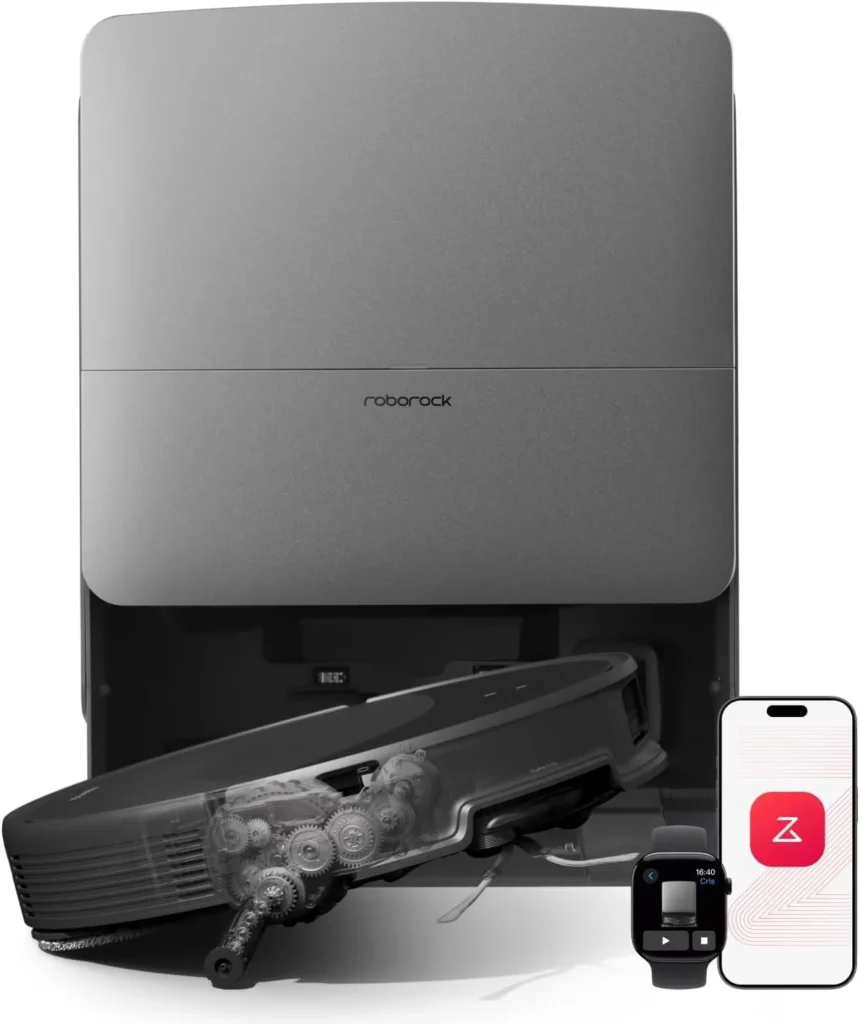
Few robots reach as much of a home: it climbs raised sills, slides under low sofas and mops hard floors superbly, though carpet pickup varies and it carries a top-tier price.
A raised sill, a sliding-door track or the lip of a thick rug ends more robot runs than dirt does. Meanwhile, a low sofa hides whatever gets missed. The Roborock Saros 20 is built for exactly that kind of home.
Its lifting chassis climbs higher than most robots can, and its slim body slips beneath furniture that blocks taller ones. On that promise, it delivers. The cleaning is excellent on hard floors and strong on most carpet, though not uniform. Still, the settings that unlock its best work sit a few taps deep in the app.
Where the Roborock Saros 20 can go
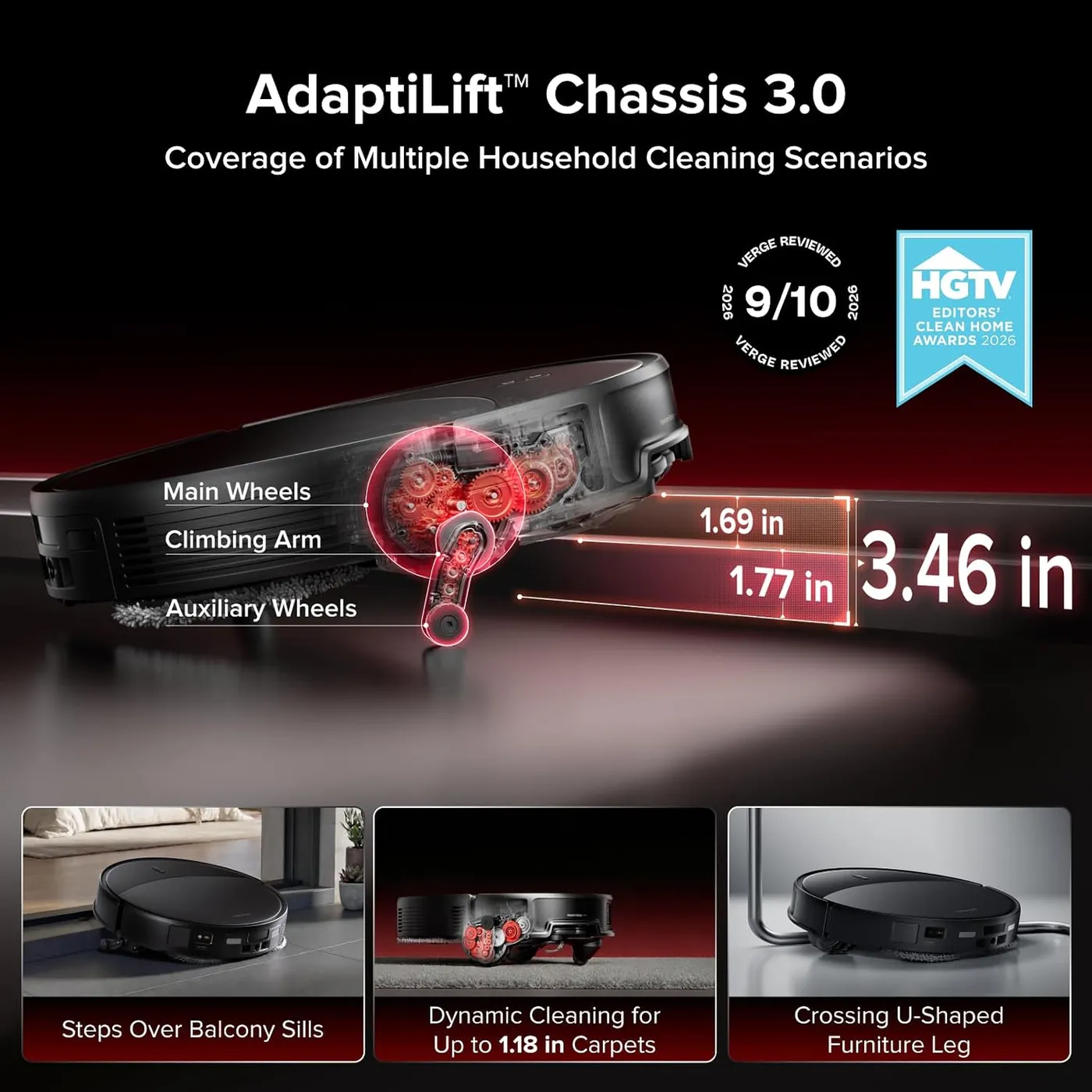
Thresholds come first, because this is where the design stands apart. Roborock says the AdaptiLift Chassis 3.0 crosses a single sill of up to 1.77 inches. Stacked transitions go further: under Roborock's test conditions, it clears a double-layer threshold of up to 3.46 inches combined.
Those conditions come from Roborock's own footnotes, and they are specific. The first step can't exceed 1.77 inches, and the second can't exceed 1.69. The gap between them must also fall between 4.72 and 5.51 inches. A door sill paired with a balcony track is the case Roborock has in mind.
Everyday obstacles sit well inside that range. Thick door thresholds, raised transitions between rooms and deep rugs get climbed rather than avoided. Once trapped, it can lift its chassis or raise one side at a time to break free, according to Roborock.
Height matters just as much. At 3.14 inches tall, it has no laser turret on top. Instead, StarSight 2.0 relies on 3D time-of-flight sensors at the front and rear-left.
Roborock adds that the front of the chassis gives slightly, letting the Roborock Saros 20 squeeze under a 3.13-inch gap. It also warns that scraping may occur there, so I'd measure for a little more than 3.14 inches. Clear that, and the dust under sofas, beds and dining tables finally gets vacuumed.
Cords, corners and curtains
Clutter is handled well, too. Roborock lists more than 300 recognizable obstacle types, including objects just 0.79 inches wide and tall. As a result, charging cables and pet toys get skirted rather than swallowed. Scheduled runs rarely end with the robot stuck.
It isn't flawless, however. A tight spot under a couch or between table legs can still wedge it. For those spots, a no-go zone is the simplest fix.
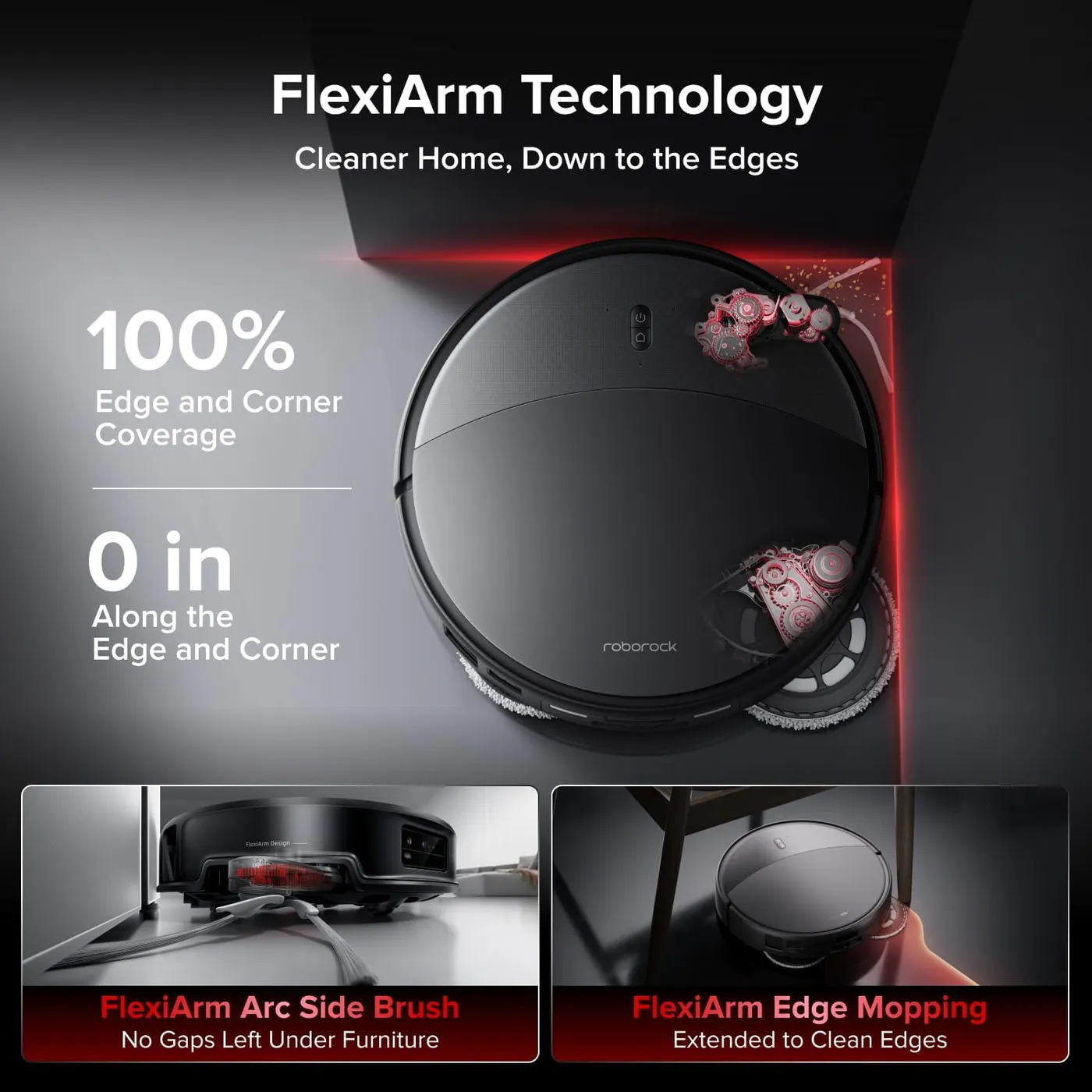
Edges get their own hardware. The FlexiArm Arc side brush swings into corners and, by Roborock's figures, toe-kick recesses down to 0.79 inches high. Meanwhile, one mop pad extends along the baseboards.
Most inside corners come up clean, although now and then it cuts a corner short and leaves a patch of dirt. Curtains need setup first: the robot cleans behind them only after you mark them on the map.

From tile to deep pile
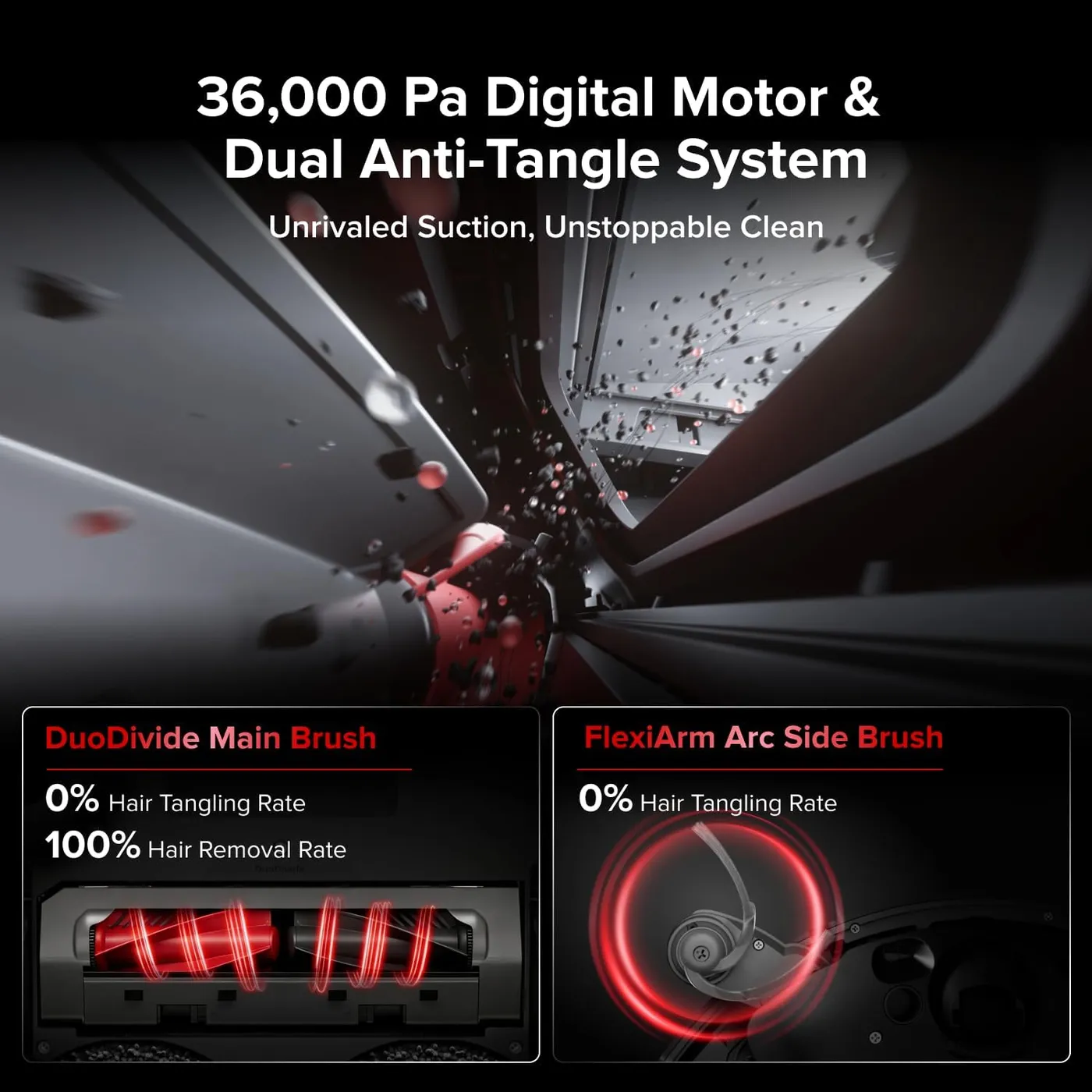
The vacuum is at its most convincing on hard floors. Tile, sealed wood and vinyl plank come clean of dust, crumbs and pet hair in a normal run. On these surfaces, the 36,000 Pa motor has suction to spare, especially for fine dust.
Carpet takes more setup. The chassis rises to hold suction on pile as deep as 1.18 inches, which covers most carpet, says Roborock. However, that only happens once you switch Deep Carpet Cleaning on in the app. The remaining carpet options are opt-in too.
On area rugs and low-pile carpet, the Roborock Saros 20 generally does well, pet hair included. Results aren't uniform, though.
Some carpets keep visible debris even at maximum suction. Now and then, a hard floor is left with crumbs or kibble after a pass, too. For a mostly carpeted home, that inconsistency matters more than the 36,000 Pa headline.
Rugs stay dry, at least, because the mop pads don't have to come along. Before a carpet-first or vacuum-only job, the robot parks both pads in the dock. On mixed jobs, it raises them over carpet instead.
Hair, litter and the onboard bin
Hair is the brush design's strong point. Roborock's own testing puts the FlexiArm Arc side brush and the DuoDivide roller at zero tangling. The brushes largely deliver on that. Hair and shed fur end up in the bin rather than wrapped around the roller.
Volume is the real test. Where dog hair piles up faster than the runs can keep pace, it can pack the intake until it clogs. The robot then starts dropping wads of hair. Stray hair behind the robot is the cue to clear the intake.
The onboard bin fills fast in a multi-pet home, too. A setting sends the robot back to empty itself mid-job, which helps in a very furry house.
Dry spills get help from the camera. With DirTect enabled, the Roborock Saros 20 spots messes such as cat litter or coffee grounds and boosts suction. Around the pets themselves, Roborock says it pauses the main brush and adjusts its path.
Paw prints, spills and sticky patches
Mopping on the Roborock Saros 20 runs on two spinning pads at 200 RPM. Roborock quotes 8 N of downforce for ordinary mopping, and more when the robot detects a tough stain. Full 13 N pressure, however, only arrives once you enable Deep Cleaning for Heavy Dirt or Stains in the app.
Daily grime is where the pads excel. Tile and sealed wood dry without streaks, even on glossy finishes. A normal run also clears fresh muddy paw prints. Meanwhile, the extending pad mops right along the baseboards, where round robots usually leave a dry strip.
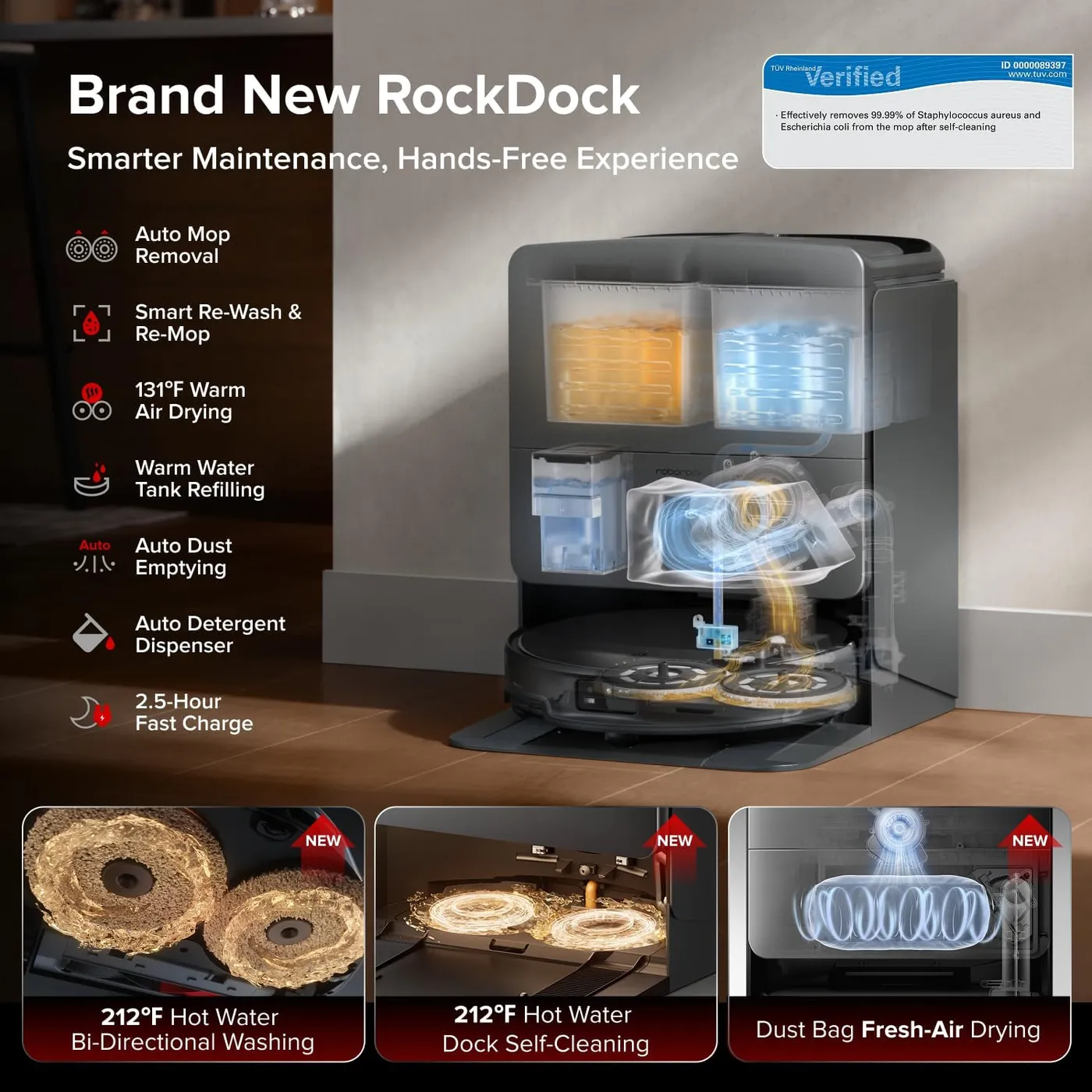
Hot washing keeps the pads fresh between runs. Roborock says the water leaving the base's clean-water dispensers reaches up to 212°F at standard atmospheric pressure. It also cites TÜV Rheinland testing for 99.99% bacteria removal from the mops on the default self-cleaning cycle.
Drying comes next, with outlet air of up to 131°F. As a result, the musty smell of older docks doesn't settle in.
Set-in marks are a different job. On some floors, paw prints still take two or three passes, and set-in stains may need a cloth. Roborock's dirt detection can trigger a re-wash and an extra pass over grimy patches, yet old stains may stay. For fresh liquid spills, DirTect can also switch the robot to mop-only over the spot.
Running costs, chores and long-term wear
The Roborock Saros 20's dock takes on most of the dirty work. It empties the robot's bin, scrubs and dries both pads, and doses detergent from its own compartment. It also refills the robot with warm water.
Between cycles, it airs out the dust bag to cut odors. Roborock claims up to 65 days before that bag needs changing, although it adds that the interval depends on use.
Its two water tanks stay a manual chore, one to refill and one to drain. The washable filter wants an occasional rinse as well. Roborock also made the dock base detachable for washing and fitted a one-piece, self-cleaning tray. Roborock says that tray needs less upkeep than those in its earlier docks.
Consumables are the ongoing cost. Roborock sells dust bags in six-packs, main brushes, washable filters in pairs and a 480 ml floor-cleaning solution. Its four-pack of rotating mop cloths also fits the Qrevo Edge 2, and replacements are simple to track down.
Budget for them from day one. The box holds the robot, dock and base, plus one dust bag and one mop pad, but no solution. Ordering bags and detergent alongside the robot therefore saves a second delivery. Leave floor space as well, since Roborock lists the dock at 15.00 by 18.70 inches and 19.21 inches tall.
Durability is harder to call. The occasional unit has thrown an internal-error fault within its first two months. Those faults have tended to surface after the usual 30-day return window, so the one-year limited warranty is what counts.
A lifting chassis, detachable mops and two extending arms add up to a lot of moving parts. Yet a 2026 model hasn't been on sale long enough to show how they wear.
Setup, the app and daily noise
Setup is quick, and a single mapping run gives the Roborock Saros 20 a usable floor plan. From there, everything runs through the Roborock app, which Roborock says the robot needs in order to work as intended.
The app is logical, with room-by-room schedules, per-room settings, no-go zones and a vacuum-then-mop option. It is also deep. Deep Carpet Cleaning, stain targeting, the heavier mop pressure and curtain crossing all start out switched off. Learning where everything lives therefore takes a while.
For a lighter touch, SmartPlan 3.0 recognizes room types, learns cleaning habits and turns power down during do-not-disturb hours. It also supports multi-floor maps. Roborock also lists Matter support, alongside Alexa, Siri and Google Home. The Hello Rocky voice assistant responds even without Wi-Fi.
Its camera also lets you drop in on pets remotely, through video calls and on-demand photos. Noise, meanwhile, stays low enough for overnight schedules.
On standard settings, one charge covers a full floor of a large home. Maximum suction and the deep-clean mode drain the 6,400 mAh battery much faster, though. Across a sprawling floor plan, that can mean a recharge partway through. Roborock quotes a 2.5-hour fast charge but publishes no runtime figure.
What the upgrade over the Saros 10R adds
The Roborock Saros 10R already shares much of this recipe. It has the same turret-free 3.14-inch height, a FlexiArm side brush, a DuoDivide split brush and twin spinning mops. Roborock's upgrade list starts with suction, which rises from 22,000 Pa to 36,000 Pa. Pad pressure now reaches 13 N, though only with the deep-clean setting switched on.
The pad wash gets hotter, with water reaching 212°F at the dispensers against the 10R's 176°F. The AdaptiLift 3.0 chassis is new as well. Smaller additions round out the list: a brushed-metal shell, dust-bag drying, 300-plus obstacle types and SmartPlan 3.0. Roborock says the metal also resists wear better.
In daily life, though, climbing is the change that matters most. The 10R tops out at 4 cm, roughly 1.6 inches. In contrast, the Saros 20 takes single sills to 1.77 inches and, under Roborock's test conditions, stacked thresholds to 3.46 inches.
Within the same family, the Saros 20 Sonic costs slightly less and keeps the suction, the chassis and the hot-water dock. Its mop is VibraRise 5.0 instead, a vibrating pad that extends and presses at 14 N. It also navigates with structured light rather than StarSight. I'd choose between the two on mopping style alone.
Pay the premium only where the climbing matters. In a flat, open home with low-pile floors, the Saros 10R or the Sonic covers the same ground for less. Where sills, tracks and deep rugs keep cutting runs short, however, the Roborock Saros 20 justifies a top-tier price. That's the home I'd buy it for.
Pros: What we liked
- Pro: AdaptiLift 3.0 climbs single sills to 1.77 in and, under Roborock's test conditions, stacked thresholds totaling 3.46 in
- Pro: Low 3.14-inch body reaches the dust under sofas, beds and dining tables
- Pro: Recognizes cords and pet toys, so scheduled runs rarely end with the robot stuck
- Pro: Tangle-resistant brushes send hair and shed fur into the bin instead of around the roller
- Pro: Spinning pads leave tile and sealed wood streak-free, right up to the baseboards
- Pro: Dock washes pads with water heated to 212°F at its dispensers, dries them and doses detergent itself
- Pro: Low running noise makes overnight schedules practical
- Pro: Unhooks both mop pads before carpet runs, so rugs stay dry
Cons: What could be better
- Con: Pickup varies: some carpets keep visible debris at maximum suction, and heavy shedding can clog the intake
- Con: Some paw prints and set-in stains take two or three mopping passes, or a cloth by hand
- Con: Deep carpet mode, stain targeting and full 13 N mop pressure stay off until enabled in a required, settings-heavy app
- Con: The occasional unit has thrown an internal-error fault within its first two months
Best For
- Households whose raised sills, balcony tracks or thick rugs keep stranding their current robot
- Pet owners whose hard floors collect paw prints and shed hair every day
- Homes where dust collects under furniture sitting just over three inches off the floor
- Owners of an S7- or S8-generation Roborock ready for a quieter robot and a hot-water dock
Not Ideal For
- Wall-to-wall carpet homes where consistent pickup matters more than climbing
- Anyone who wants every feature working without touching the app
- Flat, open floor plans, where the Saros 10R or Saros 20 Sonic does the job for less
- Tight spaces with no room for a dock just over 19 inches tall
| Specification | Details |
|---|---|
| Suction | 36,000 Pa (Roborock's HyperForce figure) |
| Threshold climbing | Single sills to 1.77 in; two-step thresholds totaling 3.46 in (first step 1.77 in, second 1.69 in) under Roborock's test conditions |
| Carpet | Chassis lifts for carpet pile as deep as 1.18 in once Deep Carpet Cleaning is switched on |
| Robot size | 13.90 × 13.78 × 3.14 in, 5.05 kg; no turret |
| Navigation | StarSight 2.0 3D ToF sensing, RGB camera, VertiBeam side sensing, 300+ obstacle types |
| Mopping | Dual spinning pads at 200 RPM; 8 N standard, up to 13 N with Deep Cleaning for Heavy Dirt or Stains enabled |
| Dock | Auto-empty (up to 65 days), 212°F wash water at the dispensers, 131°F drying air, detergent dispenser, warm refill |
| Dock size | 15.00 × 18.70 × 19.21 in, 10.54 kg |
| Battery | 6,400 mAh; 2.5-hour fast charge; Roborock publishes no runtime |
| Warranty | 1-year limited |
Alternatives Worth Considering
Final Verdict
The Roborock Saros 20 is at its best in homes that defeat other robots. Think raised sills, a balcony track, thick rugs and furniture just over three inches off the floor. There, it reaches floor that most robots never touch, and the dock takes over most of the upkeep.
Carpet-heavy homes get a strong but less predictable clean, while set-in stains still need a hand. Whichever home it lands in, spend the first evening in the app. The deep carpet mode, stain targeting and heavier mop pressure all start out switched off.
Frequently Asked Questions
Will the Roborock Saros 20 fit under my sofa?
Measure the gap first. It's 3.14 inches high and has no turret, so furniture with a little more clearance than that is within reach. Roborock says front-end flex lets it squeeze under 3.13 inches, but warns that scraping may occur.
Does it keep rugs dry while it mops?
Yes. Ahead of carpet-first or vacuum-only jobs, it detaches both mop pads and leaves them docked, and on mixed jobs it lifts them over carpet. Deep Carpet Cleaning, which raises the chassis for pile as deep as 1.18 inches, has to be switched on in the app.
What's included, and what should I order alongside it?
The robot, dock and dock base arrive with one dust bag and one mop pad, and no floor-cleaning solution. The dock doses detergent from its own compartment, so order Roborock's solution and a pack of dust bags at the same time.
Can it clean a large home on one charge?
On standard settings, a full floor of a large home is realistic. Maximum suction and the deep-clean mode drain the 6,400 mAh battery much faster, so a sprawling layout may need a recharge partway. Roborock quotes a 2.5-hour fast charge but no runtime.
How is it different from the Saros 20 Sonic?
Both share 36,000 Pa suction, the AdaptiLift 3.0 chassis and a hot-water dock. The Sonic mops with VibraRise 5.0, a vibrating pad that extends and presses at 14 N, and navigates by structured light, while this model uses two spinning pads and StarSight 3D sensing.
Which smart-home platforms does it work with?
Roborock lists Matter support, plus Alexa, Siri and Google Home. Matter is the shared standard many smart-home apps use to add devices. The Hello Rocky voice assistant also works offline.
The Verdict
Few robots reach as much of a home: it climbs raised sills, slides under low sofas and mops hard floors superbly, though carpet pickup varies and it carries a top-tier price.