Roborock Qrevo Curv 2 Flow Review: A Self-Rinsing Roller Mop
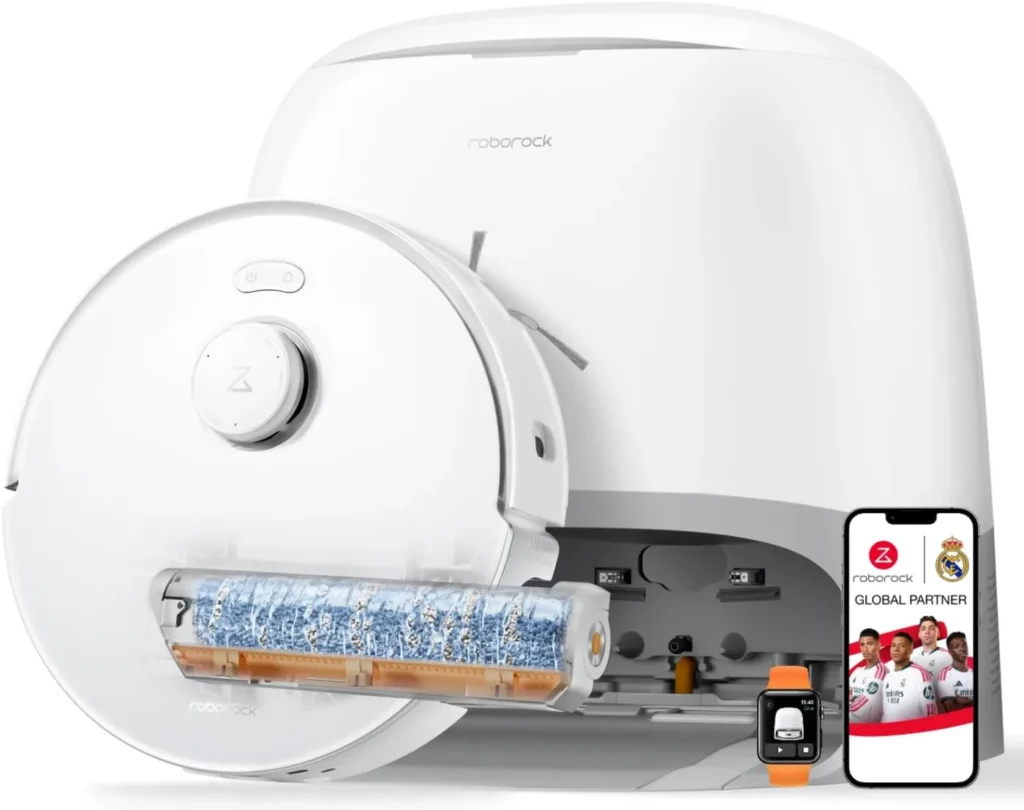
Tuned well, its self-rinsing roller beats spinning pads on hard floors, but the tall body misses kitchen toe-kicks and some units have shown early dock faults.
A robot mop is only as clean as the water it spreads. Spinning pads get rinsed at the dock, yet between rinses they carry grime from room to room. The Roborock Qrevo Curv 2 Flow takes another route. Its wide roller takes on fresh water and sheds the dirty water as it turns.
On tile, vinyl plank and sealed wood, the idea works. Once you turn the water up, it lifts dirt that pads tend to push around. Pet hair stays off the brush, too.
The compromises are practical ones, though. Its 4.7-inch body stops short of kitchen toe-kicks, and the mop needs tuning. A minority of units have also developed water or dock faults early on.
Wet messes on tile, plank and wood
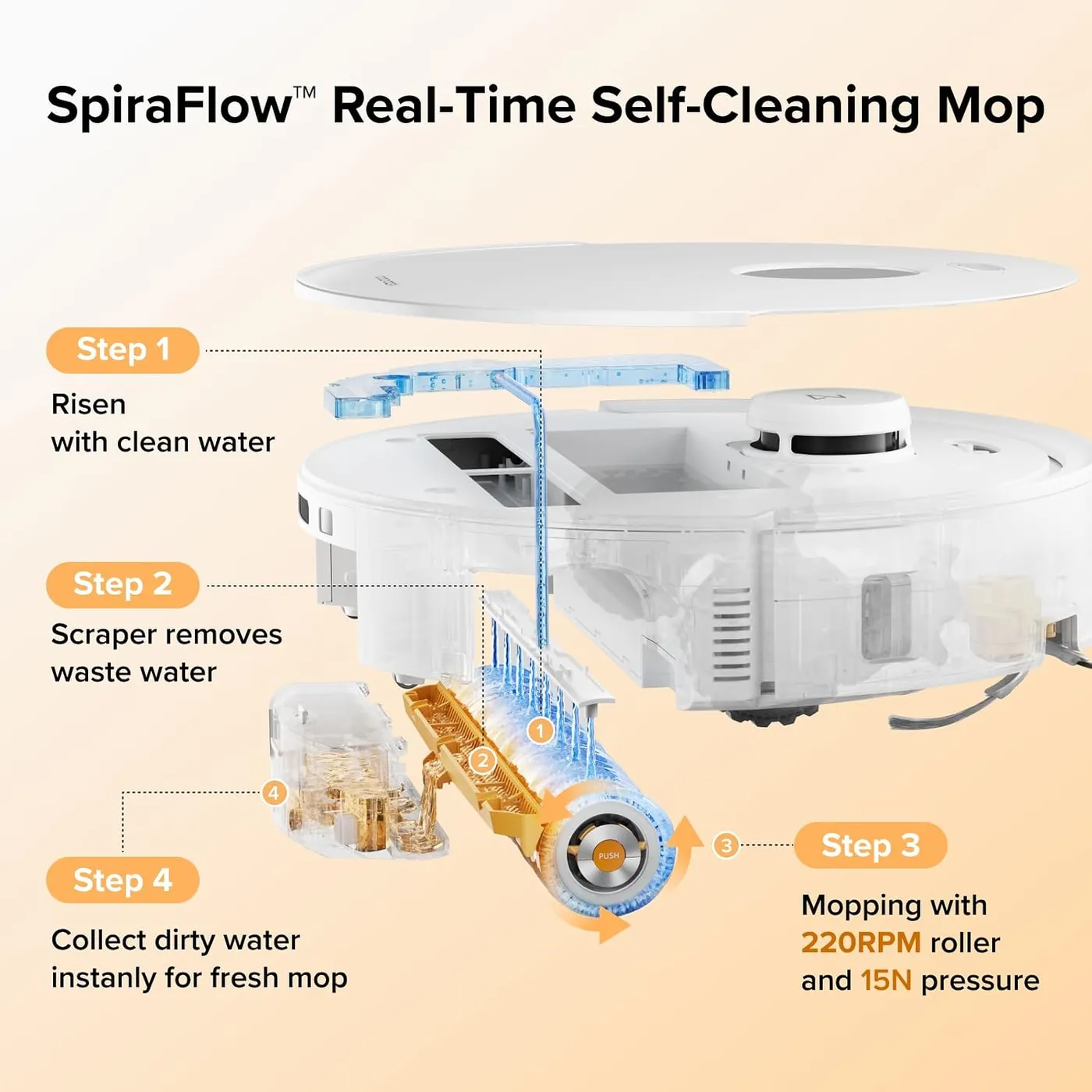
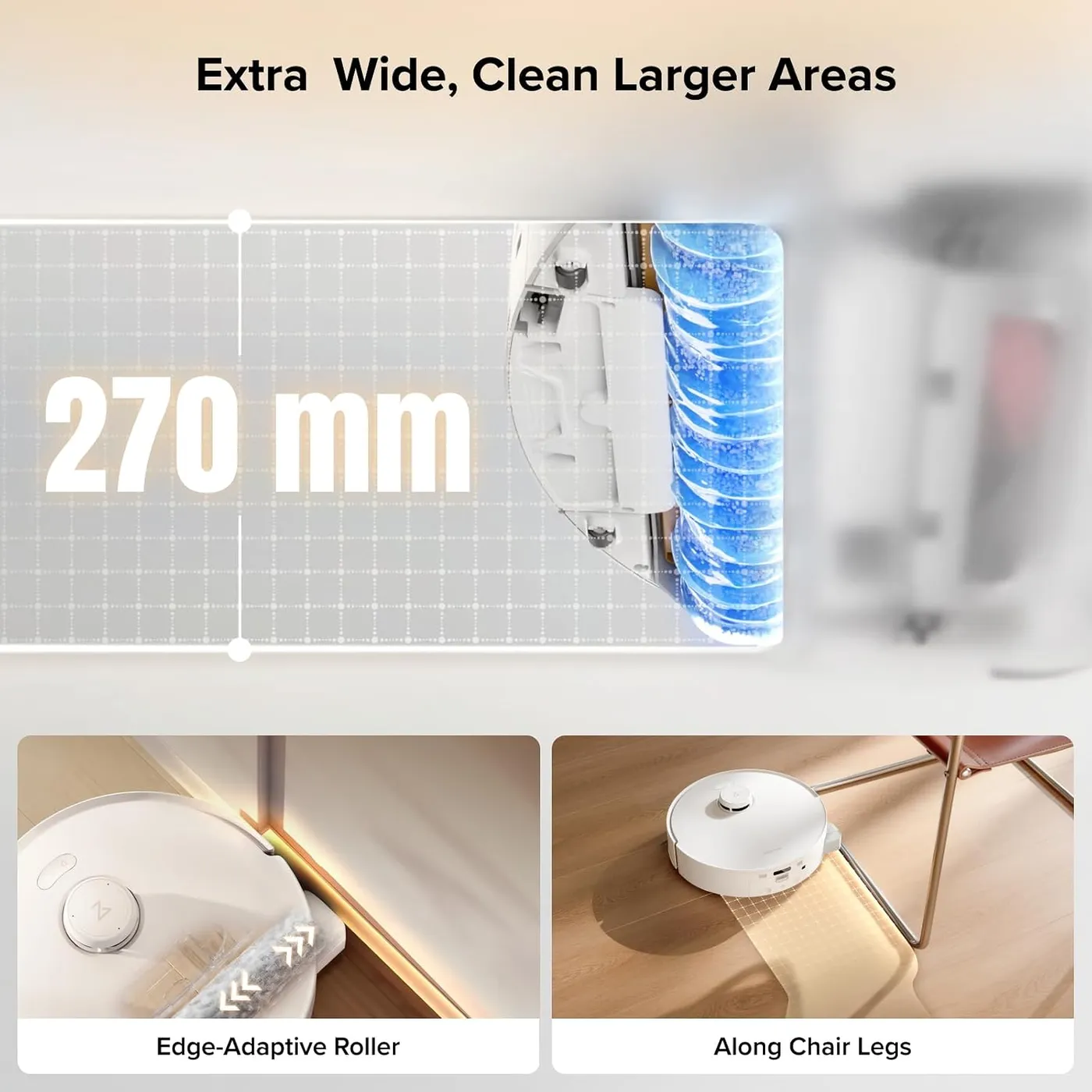
Pressure is the headline. The Roborock Qrevo Curv 2 Flow presses its 270 mm roller down with up to 15 N. By Roborock's internal testing, that's two and a half times the pressure of the original Qrevo Curv.
The roller spins at up to 220 rpm on the top water setting, fed by eight hydration points. Meanwhile, a built-in blade wipes the used water off the roller and into a compact tank on the robot. As a result, the roller touches the floor with clean water rather than recycled grime.
That design shines on pet and kitchen traffic. Mud from a dog's walk, drool on tile and grime ground into a hallway all lift in a standard run. Textured vinyl plank benefits most, since the pressure pushes the roller into the embossing instead of skating over it. Heavily soiled floors can still need repeat passes, however.
Spills are a separate case. DirTect recognizes a wet mess and raises the brushes, so the spill gets mopped rather than flung around.
Still, this is not a wet vac. Its onboard dirty-water tank takes only about 100 ml. Roborock draws the line at standing water or any spill over 50 ml. A splash of coffee is fine; a knocked-over glass needs a towel first.
Two design choices set its limits. First, its heater serves the dock's wash cycle. Roborock doesn't describe the mopping water as heated, and reserves continuous hot-water washing for the Qrevo Curv 2 Pro. Second, there's no mop-only mode to pick. Apart from DirTect's switch for spills, it vacuums before or during every mopping job.
Setting up the Roborock Qrevo Curv 2 Flow for streak-free floors
Default settings leave lines. At the stock water flow, the roller can dry out between its hydration points and leave stripes. The fix lives in the app, and it takes some trial and error rather than a repair.
Start with water. Streaks usually clear once the water flow sits in the low 20s, and some floors want the maximum. Notably, Roborock only claims 220 rpm with custom mode's water flow set to extreme.
The app also saves water and suction levels per room. A tiled kitchen and a wood hallway can each get their own recipe.
Next, point the route along the boards on wood and plank. Passes across the grain tend to show, while passes along it blend in. Then shorten the wash interval. SmartPlan 3.0 already re-washes the roller after kitchens and bathrooms, and a shorter interval extends that habit to every room.
A vacuum-only pass before a mop run also leaves the roller less to deal with. Finally, dose floor cleaner lightly, because too much leaves suds that dry to a haze. Get those settings right and the Roborock Qrevo Curv 2 Flow leaves floors clear and close to dry behind it. Skip them, and a settings issue is easy to mistake for a weak mop.
Pet hair, crumbs and fine dust
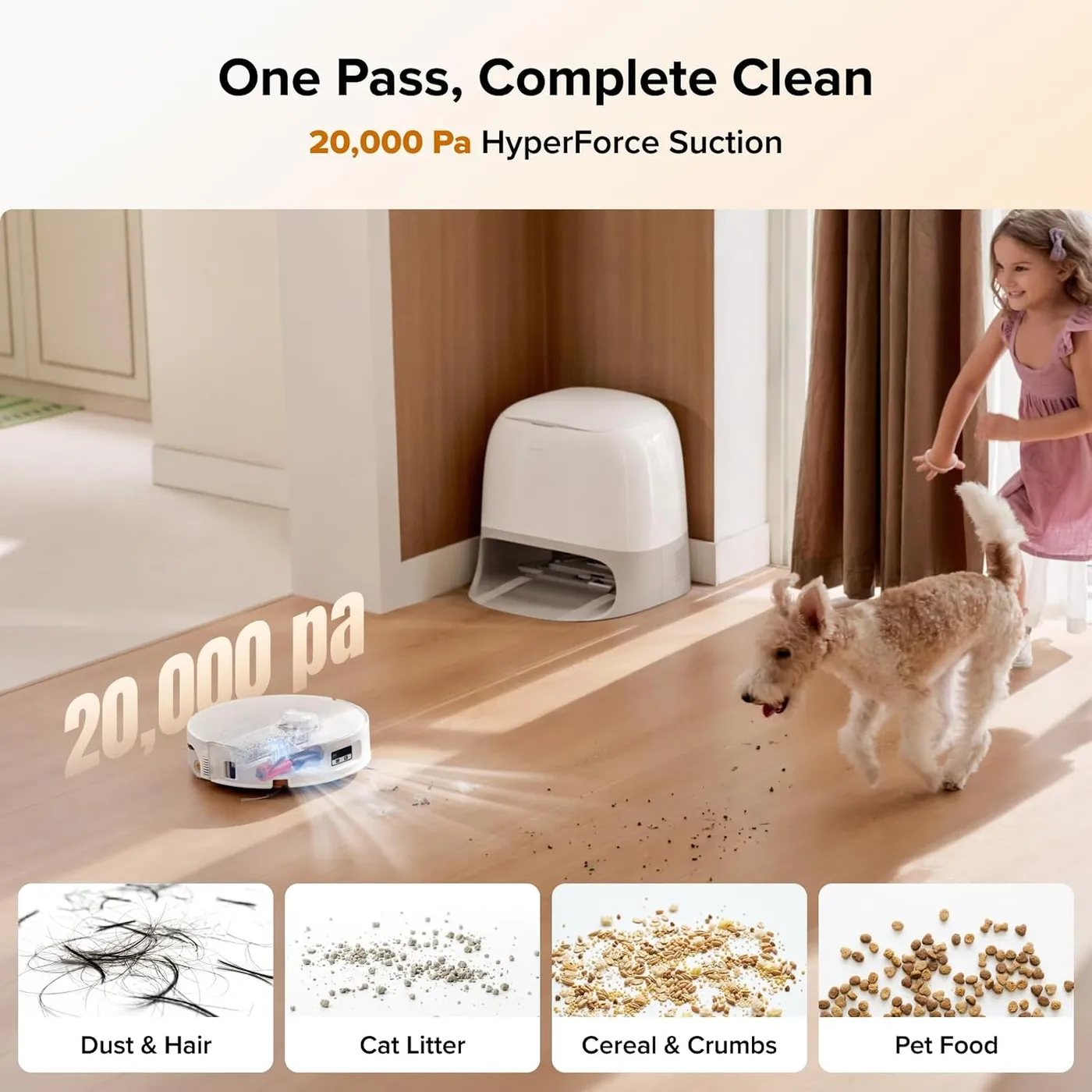
Hair is where the vacuum side excels. The Roborock Qrevo Curv 2 Flow pairs 20,000 Pa of suction with a DuoDivide main brush and twin side brushes. The suction figure comes from Roborock's Max+ mode. SGS certifies both brush types at a 0% hair-tangling rate.
Unusually, the certificate matches everyday results. Long dog coats and multi-cat shedding pass through without wrapping the main brush.
Heavy shedding calls for a routine all the same. When fur builds up faster than one run can clear, the robot can leave some behind in tufts. Lighter, more frequent runs help, and so does raising the dock's emptying frequency in the app. If hair keeps turning up after a run, check the bin and its inlet for a blockage.
Carpet is a strength as well. With carpet settings on, it raises suction on rugs, and plush pile comes up clean. On bare floors, the vacuum is solid rather than spectacular. A combined vacuum-plus-mop pass can leave the odd crumb, so vacuum first after messy meals.
The side brushes are the weak link. On some units, their bristles have loosened or worn out within weeks. Roborock's store carries replacement side brushes for this exact robot, so a spare set is cheap insurance.
Rugs, thresholds and the carpet shield
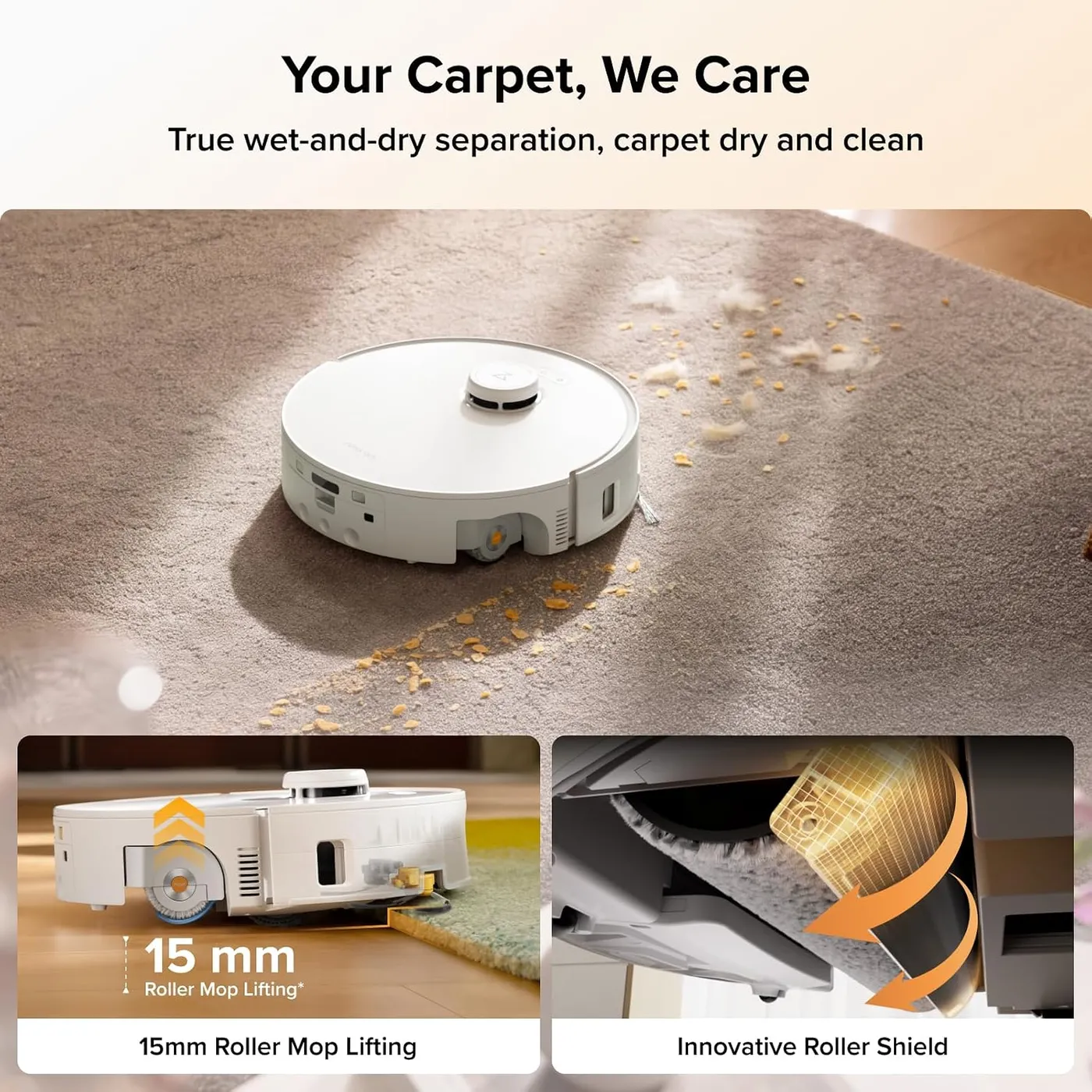
Carpet gets a two-part defense. As the robot nears a rug, it hikes the roller up by as much as 15 mm. A shield then drops beneath it to keep moisture off the fibers. That lets it vacuum a rug straight after mopping the floor around it, so mixed rooms become one job.
The catch is setup. As Roborock's own footnotes spell out, you enable carpet cleaning and choose a strategy yourself in the app. Until you do, don't count on it treating a rug differently from tile. It's a quick job, but it belongs on the first-day checklist.
Climbing onto a rug is the weaker half. Thick pile and very soft rugs can stall it at the edge or leave it perched halfway on. Roborock lists no lifting chassis for this model either, and tall thresholds between rooms can stop it. Along rug borders, a thin line of grit or hair can also survive a run.
For low-pile rugs and ordinary door strips, none of this matters. For shag or a raised threshold, check the height first, or plan on moving the rug before a run.
Kitchens, low furniture and tight corners
Height is the spec to check first. The Roborock Qrevo Curv 2 Flow stands 119 mm, or 4.7 inches, to the top of its fixed LiDAR housing. That's too tall for the recess under typical kitchen base cabinets, so the toe-kick strip stays out of reach.
Roborock aims this mop at kitchen messes, which makes the gap sting. Plan on wiping under the cabinets by hand now and then.
Low furniture is hit and miss, too. Plenty of sofas and beds clear the robot, while lower end tables and cabinets don't. Its top-mounted sensor can also misread a low overhang. A cabinet front may register as a wall, or a roomy couch as a trap.
Straight walls fare better than corners. Roborock puts the extending roller's reach at roughly 10 mm from the edge. Square corners are another story. The round body leaves a small unmopped gap there, and Roborock lists no extending side brush to sweep it out.
Elsewhere, navigation is a strength. Mapping is quick, and splitting rooms or drawing no-go zones is straightforward. Routes run in tidy lanes, and the robot seldom needs rescuing.
Roborock supports maps for up to four levels. A second floor still means carrying the robot up. Without the dock there, it can't refill its water, wash the roller or empty its bin.
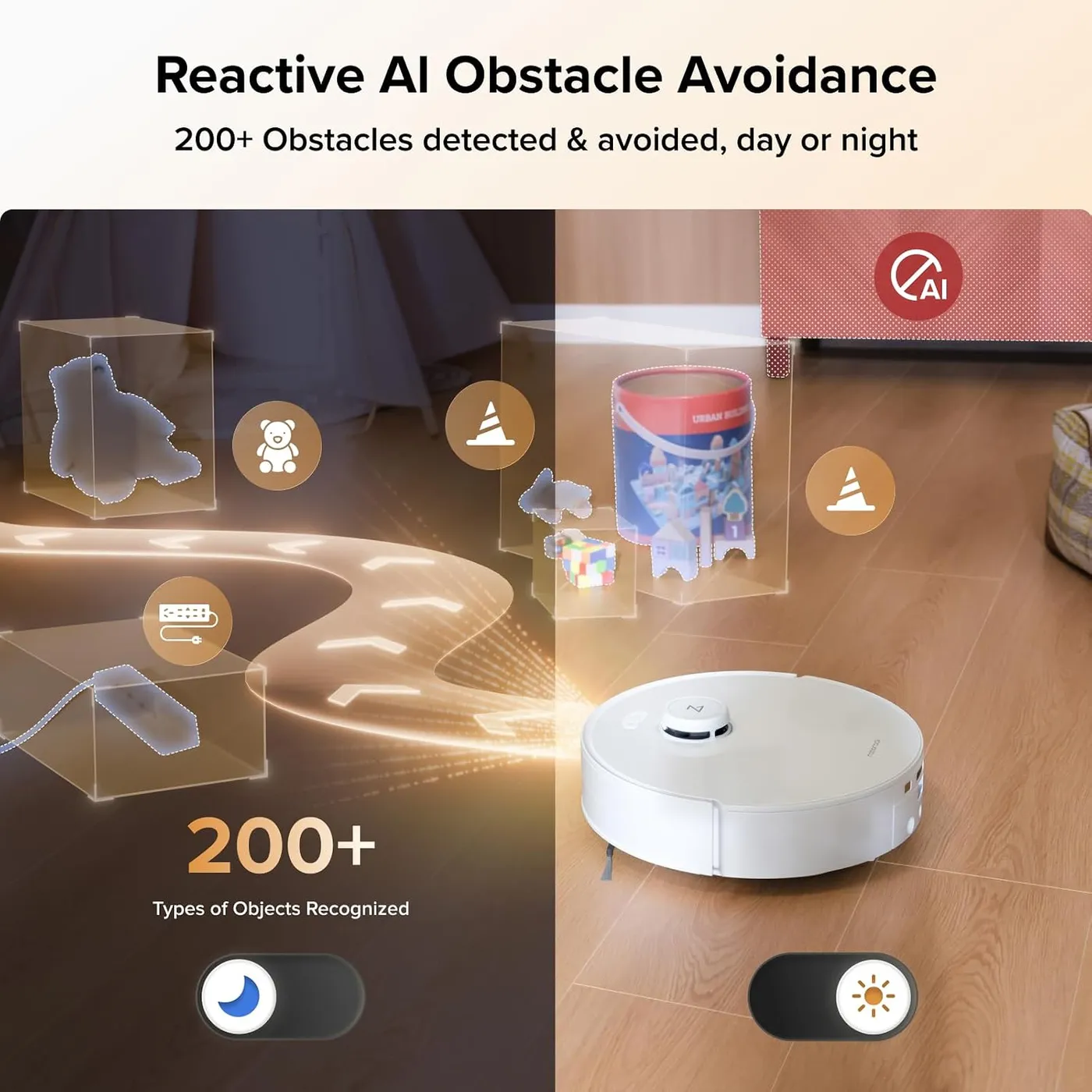
Structured light and an RGB camera pick out cords, bowls and chair legs. Roborock's detection minimum is an object about 5 cm wide and 3 cm tall. Soft, low clutter such as a dog toy or loose rug edge can still get caught, so tidy first.
The camera stays off until you switch it on, and the robot holds a TÜV cybersecurity certification. Once enabled, it doubles as a pet cam with video calls and snapshots.
Tanks, bags and the dock's weak spots
The dock takes on the dirtiest jobs. It washes the roller with water that leaves its heater at up to 167°F. Warm air, up to 131°F at the outlet, then dries the roller and the base. Meanwhile, the robot's bin empties into a bag that Roborock says lasts up to 65 days.
Hands-on cleaning takes little time. The roller, scraper and dirty-water tank all lift out for rinsing, and the dust filter is the washable kind.
Water is the chore that remains. The dock holds separate clean and dirty tanks, and you fill one and empty the other yourself. Because the roller runs wetter than pad mops, both need attention more often. A long job can even pause partway for a refill.
Empty the dirty tank after each mopping day, since standing wastewater soon smells. Roborock lists no automatic detergent dosing either, so you add cleaner to the clean tank at every refill.
The weak spots sit in the water and dust paths. A minority of units have developed leaks within their first month or two. The water pools at the dock or drips behind the robot, and on laminate that's more than a nuisance.
Other units have stopped emptying their bins. The robot docks as usual, yet the bin comes back full and hair lands on the floor. A few more have lost their bearings and circled until the battery died, while others have thrown repeated brush-jam alerts.
For the first few weeks, check beneath the dock and inside the robot's bin after each run. Either fault falls under Roborock's one-year warranty, which generally means shipping the robot away for repair. A first repair doesn't always cure it, so spotting a fault early saves a long back-and-forth.
Roller versus spinning pads
The roller wins where mopping is the main event. Pressure, a constant fresh-water rinse and orderly lanes give it the edge on textured plank, pet traffic and daily spills. Spinning-pad designs still lead on other fronts, so the right pick depends on what your floors demand.
Height comes first. Roborock's Qrevo 2 Pro costs a tier less and stands under 4 inches tall. The Roborock Saros 10R goes lower still, at 3.14 inches with no turret, and adds automatic detergent dosing. If dirt gathers under your cabinets, the Saros can reach it and this robot can't.
Rug clearance and heat come next. The Qrevo 2 Pro can also drop its pads off at the dock ahead of a carpet run. Roborock's Qrevo Curv 2 Pro keeps spinning mops, with up to 20 mm of lift and continuous 140°F washing. Lower in price, the eufy X10 Pro Omni also washes and dries its pads, though with far less suction.
Against that field, the Roborock Qrevo Curv 2 Flow sits at the entry point of flagship pricing. For a mop this capable, that's a fair ask. I'd pay it for a hard-floor home with pets and a busy kitchen, provided the toe-kick chore doesn't bother you. For a carpet-heavy home, the premium buys little.
Pros: What we liked
- Pro: A roller pressing down with as much as 15 N, plus a constant fresh-water rinse, lifts grime from textured plank and tile
- Pro: Used water goes into a separate onboard tank, so dirty water isn't spread back across the floor
- Pro: Long pet hair passes through without wrapping the split DuoDivide brush
- Pro: Once carpet cleaning is enabled, the roller lifts and a shield deploys, keeping rugs dry
- Pro: Quick, orderly mapping with room splits, no-go zones and per-room water and suction settings
- Pro: Dock washes the roller at up to 167°F, dries it with warm air and holds as much as 65 days of dust
- Pro: Listed at 62–65 dB when vacuuming and mopping, hushed enough to share a room with
Cons: What could be better
- Con: At 4.7 inches with a fixed LiDAR housing, it can't reach under kitchen toe-kicks or low tables
- Con: Default water settings leave streaks until you raise the flow and route it along the boards
- Con: A minority of units have developed leaks or stopped emptying within weeks, and repairs mean shipping it out
- Con: No mop-only mode or automatic detergent dosing, and both dock tanks are filled and emptied by hand
- Con: Thick or very soft rugs can stall it, tall thresholds stop it, and square corners keep a small unmopped gap
Best For
- Households with mostly tile, vinyl plank or sealed wood that want daily mopping without a bucket
- Homes with shedding dogs or cats whose hair has wrapped older robots' brush rolls
- Owners of spinning-pad robots who want more pressure on textured or grimy floors
- Anyone happy to spend a few runs tuning water flow and route direction in the app
Not Ideal For
- Cooks whose kitchen dirt collects under low cabinet toe-kicks
- Homes with shag or very soft rugs, or tall thresholds between rooms
- Anyone who wants automatic detergent dosing or a dock that fills and drains itself
- Buyers who expect spotless mopping straight out of the box with no settings to learn
| Specification | Details |
|---|---|
| Suction | 20,000 Pa HyperForce (Max+ mode) |
| Mop system | SpiraFlow 270 mm roller, up to 15 N and 220 rpm, reaches within ~10 mm of edges |
| Carpet protection | 15 mm roller lift plus Roller Shield; carpet mode switched on in the app |
| Dock | Auto-empty up to 65 days; roller wash up to 167°F at the heater; warm-air drying up to 131°F |
| Navigation | PreciSense LiDAR, structured light and RGB camera, maps for up to 4 floors |
| Robot size | 13.9 x 13.9 x 4.7 in (353 x 353 x 119 mm) |
| Dock size and weight | 17.7 in cube (450 mm); 31.6 lb with the robot |
| Battery | 5,200 mAh; roughly 3 hours for a 15%-to-full recharge |
| Noise (Roborock figures) | 62–65 dB vacuum and mop; brief 70 dB burst during auto-empty |
| Connectivity | Wi-Fi, up to 5 saved networks; Roborock app, Hello Rocky, Alexa, Siri Shortcuts, Google Home |
Alternatives Worth Considering
Final Verdict
The Roborock Qrevo Curv 2 Flow backs a constantly rinsed roller with serious pressure, and hard floors show it. Its hair handling is just as convincing. In return, it asks for some setup. Turn the water up, run along the boards, go light on detergent and switch carpet settings on.
Other limits are fixed. The body is too tall for toe-kicks and low tables, and corners keep a sliver of dirt. The water tanks stay your job, too.
Add the early dock faults on a minority of units, and it stops short of a blanket recommendation. Mop-first homes should start here; carpet-first homes can spend less elsewhere.
Frequently Asked Questions
Will the Roborock Qrevo Curv 2 Flow get my rugs wet?
No, provided carpet cleaning is switched on. The robot raises its roller by up to 15 mm at a rug's edge and slides a shield beneath it, so moisture stays off the pile. You turn that on and pick a carpet strategy yourself in Roborock's app, so make it a setup-day job.
Can it mop a room without vacuuming first?
Not as a full run: every mopping job vacuums before or alongside the mop. The exception is DirTect. When it spots a wet spill mid-run, the robot raises its brushes and mops that patch on its own.
Does it mop with hot water?
Its heat goes into the dock. Water leaves the dock's heater at up to 167°F to wash the roller, and warm air at up to 131°F dries it. Roborock doesn't describe the roller's mopping water as heated. It reserves continuous hot-water washing for the Qrevo Curv 2 Pro, a spinning-mop sibling.
Will it fit under kitchen cabinets and low furniture?
Often not. It stands 4.7 inches (119 mm) to the top of its fixed LiDAR housing, too tall for the toe-kick recess under typical base cabinets and for some low tables. Measure the clearance first, and expect to wipe the toe-kick strip yourself.
How much attention do the dock's water tanks need?
More than a pad-based robot's. The roller runs wet, so you'll refill the clean tank and empty the dirty one by hand more often, and a long job can stop for either. Emptying the dirty tank after each mopping day keeps odors down.
Which parts wear out, and are replacements easy to get?
The roller, side brushes, dust bags and washable filter are the running items. Roborock's store carries a replacement roller and side brushes for this exact robot, and both cost little next to it. A spare set of side brushes is worth having, since their bristles can wear early.
The Verdict
Tuned well, its self-rinsing roller beats spinning pads on hard floors, but the tall body misses kitchen toe-kicks and some units have shown early dock faults.