LEVOIT LVAC-200 vs Electrolux Ergorapido: Which Should You Buy?
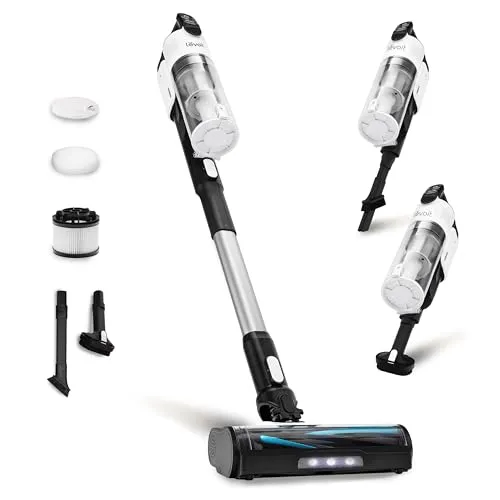
LEVOIT LVAC-200 Cordless Vacuum Cleaner
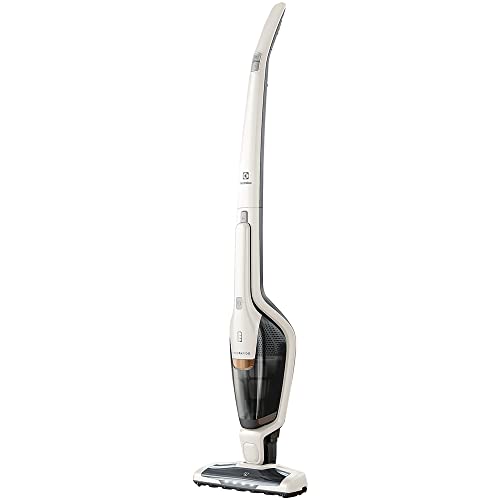
Electrolux Ergorapido Cordless Stick Vacuum
These two cordless sticks answer the same brief and finish on the same number. Both weigh a little over six pounds, both exist for the mess that turns up between proper cleans, and both scored 7.8 in our full reviews. Neither is a carpet machine. Neither will do a whole house on one charge.
So the interesting question is not which one cleans a kitchen floor better, because on tile, laminate, wood and thin rugs there is very little in it. Both lift crumbs, grit and loose pet hair in a pass on their low setting, and both give up in the same place — deep pile, and hair worked down into a rug.
They separate somewhere less obvious: what happens after the first year. The LEVOIT's battery pack lifts out and a new one drops in, so a tired battery is a purchase rather than the end of the machine. The Electrolux's battery is not a replaceable part, and a share of those units stop working early, with a claims path that does not reliably catch you.
Against that, the Electrolux offers something the LEVOIT has no answer to. Its hand vac is the powered half and comes off in one motion, and it lives upright on a floor-standing charging base — in the room, by the mess, plugged in and ready. A vacuum that is already standing where you need it is a vacuum that gets used.
Below: the five things that actually decide it, then a straight answer for each kind of buyer.
How They Compare
| Category | Winner | Why |
|---|---|---|
| Floors and pick-up | Tie | There is genuinely little between them, and the ceiling is the same. Tile, laminate, sealed wood and thin area rugs come up clean on the low setting on both, and both handle the daily drift of pet hair on smooth flooring well. Both also share a quirk worth knowing before you buy: larger, lighter debris gets nudged along rather than swallowed, so dry cereal and popcorn kernels scoot ahead of the head until you drive straight over them. Deep or plush carpet is past both of them, and no setting changes that on either machine. The LEVOIT has three power modes to the Electrolux's two, which gives it slightly finer control, but the extra mode buys headroom on rugs rather than a different answer on carpet. Call this even and decide on something else. |
| Weight and handling | LEVOIT LVAC-200 Cordless Vacuum Cleaner | The LEVOIT is 6.17 pounds against the Electrolux's 7.5. Both steer one-handed and both go low enough to reach under a bed or the front of a sofa, so this is a narrow win rather than a rout, but 1.3 pounds is noticeable on a machine you carry upstairs. Both stand up on their own, which matters more than it sounds: a stick vacuum that needs a wall mount or a corner to lean into is a stick vacuum that ends up in a cupboard. The difference is that the LEVOIT stands unaided anywhere, while the Electrolux stands on its charging base and therefore needs an outlet nearby. Both light their nozzle, and on dark flooring both LED heads turn up dust the floor looked clean without. |
| Battery and runtime | Tie | The rated figures are almost the same and mean almost the same thing. LEVOIT quotes up to 50 minutes, Electrolux up to 48, and both numbers belong to the lowest power setting rather than to normal use. On the LEVOIT the middle setting lands in the thirties and turbo falls into the teens; the Electrolux's high setting is less well documented but shortens things comparably. What both deliver in a house is a floor, not a house: a kitchen, a hall and a couple of bedrooms in one pass. Buy either expecting one level per charge and neither gets in the way. Buy either expecting a whole-house session on high and both will disappoint you in the same way. |
| Upkeep | LEVOIT LVAC-200 Cordless Vacuum Cleaner | Day-to-day living is where the LEVOIT pulls ahead. Its dust cup empties with one click and comes fully away from the body first, so you are never holding an open canister over a rug. Its filters wash and go back, and the roller detaches without tools for the same treatment. Nothing on it needs a consumable. The Electrolux's cup is small enough that a floor with a shedding dog on it can fill it inside one room, and emptying is a two-stage job. Its E10 filter is washable and needs washing on a routine, and while BrushRoll Clean is designed to release hair from the brush, a house with long hair or a shedding pet will still want the roller cleared by hand. Neither is faultless: the LEVOIT's weak spot is a filter assembly that takes more hand strength than it should. Even so, it asks less of you over a year. |
| Longevity and support | LEVOIT LVAC-200 Cordless Vacuum Cleaner | This is the criterion that decides the page, and it is not close. Both carry a battery reservation. On the LEVOIT, a real cluster of batteries stop holding a charge inside the first year, and a replacement pack is not cheap against what the vacuum costs. Crucially, though, it is a part: the pack lifts out, a new one drops in, and nothing needs opening up. On the Electrolux the same failure is terminal, because the battery is not built as a replaceable part. That sits alongside a broader record in which a share of units stop charging, fail to power on, cut out after a few seconds or lose their pull, with the failures clustering early. The route out is the weaker half of its case: registration, the claims form and the phone line are all in play, and enough claims stall to count as part of the ownership picture. One machine's worst case is a bill. The other's is a bin. |
#1 LEVOIT LVAC-200 Cordless Vacuum Cleaner (7.8/10)
The lighter machine with the longer future — the same cleaning ceiling as the Electrolux on bare floors, but a battery you can actually replace and less upkeep to stay on top of.
Strengths
- 6.17 lb, light enough to carry upstairs one-handed
- Tangle-resistant roller handles long and pet hair without wrapping
- Washable filters and a detachable washable roller, with no consumables to buy
- One-click emptying, with the dust cup coming fully away from the body
- The battery pack lifts out and replaces without tools
- Three power modes, and an LED head light that turns up dust on dark flooring
Weaknesses
- Deep carpet and embedded pet hair are beyond it in any power mode
- A real cluster of batteries stop holding a charge inside the first year
- The 50-minute rating is a lowest-power figure; turbo cuts it into the teens
- The dust cup and filter are fiddlier to separate than they should be
Review verdict: A light, quiet cordless stick vacuum that makes daily tidying on smooth flooring easy, provided you accept that deep carpet is beyond it and that the battery is the part most likely to need attention.
- Light enough at around six pounds to get used every day
- Strong on hard flooring, shallow rugs, crumbs, litter and loose pet hair
- The tangle-resistant roller lives up to its name on long and pet hair
- Washable filters and a detachable washable roller keep upkeep near zero
- One-click emptying, with the dust cup coming fully away from the body
- Deep carpet and embedded pet hair are beyond it, whatever the power mode
- A real cluster of batteries stop holding a charge inside the first year
- The 50-minute rating is a low-power figure; turbo cuts it into the teens
- Getting the dust cup off and the filter back in is fiddlier than it should be
#2 Electrolux Ergorapido Cordless Stick Vacuum (7.8/10)
The better shape for handheld work, carrying a genuine reliability reservation — the hand vac is the powered half of the machine, but the battery is not replaceable and failures cluster early.
Strengths
- The detachable hand vac is the powered unit, and comes off in one motion
- A floor-standing charging base keeps it upright, charged and in the room
- LED nozzle lights and a 180-degree swivel head
- 7.5 lb, and low enough to reach under a bed or the front of a sofa
- Tile, wood, laminate and thin area rugs come up clean on the low setting
Weaknesses
- The battery is not a replaceable part, so a battery failure ends the machine
- A share of units stop charging, stop powering on or lose suction, and the failures cluster early
- The warranty route stalls often enough to count as part of the ownership picture
- A small dust cup with a two-stage empty
- Deep and plush carpet stay beyond it
Review verdict: A light, well-lit stick vacuum that earns its corner of the kitchen on bare floors and thin rugs. The open question is how long an individual unit keeps working.
- Light enough at 7.5 pounds to steer and lift one-handed, and low enough to reach under a bed
- Stands upright on its own floor-level charging base, so it lives in the room and gets used
- The LED nozzle lights turn up dust the floor looked clean without
- Tile, wood floors, laminate and thin area rugs come up clean on the low setting
- The hand vac pops off in one motion for stairs, car interiors and countertops
- A share of units stop charging, stop powering on or lose their pull, and the failures cluster early
- The warranty route is the weak link: registration, the online claims form and the phone line all stall
- The dust cup is small for a vacuum you reach for daily, and it empties in two stages
- Deep and plush carpet stay beyond it; this is a bare-floor and thin-rug machine
- The battery is not a replaceable part, so a battery that stops charging ends the machine
How we judged these two
Both vacuums were judged on the five things that decide a second vacuum: what it lifts, what it weighs, how far a charge goes, what you have to do to it, and how long it keeps working. Neither was tested in a lab, and the scores come from our full standalone reviews of each machine rather than from a side-by-side run.
Where a spec separates them, the figure comes from the manufacturer's own published documentation — weight, rated runtime, filtration, what ships in the box — and where a rated figure carries a condition, we say so rather than quoting the headline. Both runtime claims are the case in point: each belongs to its machine's lowest power setting, not to normal use, which is why neither number means what the box implies.
The five criteria do not carry equal weight in the verdict. On the floor these two are close enough that either would do, so the cleaning criteria separate them very little. What separates them is what happens when a battery stops holding a charge: one machine takes a replacement pack, the other does not. That is a design difference you can see in how each is built, and unlike a cleaning result it does not depend on the floor, the setting, or the day.
Prices move too often to be worth quoting here; check the current figure on each listing before you decide, because the gap between them is small enough that a sale on either can reasonably flip the choice.
The hand vac is the Electrolux's real argument
If the Electrolux wins your house, this is why. Its motor, battery and dust cup all sit inside the hand unit, and the stick clips onto that — so pulling the hand vac off is one motion, and what comes away is the powered half rather than a token accessory. Stairs, car footwells, baseboards, the crumb line where a countertop meets the wall, upholstery in a house with a cat: all of it is easier held in one hand. A crevice tool with a dusting brush ships in the box.
The LEVOIT converts to a handheld too, and its wand comes off the same way, with a crevice tool and a pet tool included. The difference is emphasis. On the Electrolux the handheld is the machine, and the stick is the attachment. That also means emptying happens from the small half, so a full cup mid-job means carrying the hand unit to the bin rather than the whole vacuum.
Be honest with yourself about how much handheld work your house actually generates. If the answer is a car every fortnight and a set of stairs every week, the Electrolux's shape earns real points, and it is the reason to accept its longevity risk. If the answer is "not much", take the lighter machine with the replaceable battery.
Conclusion
For most homes, buy the LEVOIT LVAC-200. It is lighter, its upkeep costs you less time, and — the part that decides it — a dead battery is a part you replace rather than a machine you throw away. On the floors both of these are built for, tile, laminate, wood and thin rugs, it does everything the Electrolux does. And when its battery eventually fades, the machine survives it.
Buy the Electrolux Ergorapido if the hand vac is the point. Its detachable unit is the powered half of the machine rather than a bolt-on, and if your week genuinely includes stairs, a car interior and countertops, it does that job better than the LEVOIT's converted body does. The floor-standing base helps too, keeping the vacuum upright, charged and in the room. Go in with the reservations open: the battery is not replaceable, a share of units fail early, and the warranty path is not built to catch you. Register it the day it arrives and keep the receipt and serial number where you can photograph them.
Neither is the right answer for a carpeted house. If your main floors are deep or plush pile, both of these will frustrate you, and the money is better spent on a full-size machine.
Frequently Asked Questions
Which is better for pet hair?
On bare floors, both handle the daily drift of cat and dog hair well, and the LEVOIT's tangle-resistant roller is the better of the two at not wrapping long hair around the brush bar. For hair worked down into a rug, neither is the machine — that is a job for a full-size vacuum with a driven head.
Can you replace the battery on either one?
On the LEVOIT, yes: the pack lifts out and a replacement drops in without tools, though it is not cheap relative to the price of the vacuum. On the Electrolux, not in any practical sense — it is not built as a replaceable part, so a battery that stops charging effectively ends the machine. If you expect to keep a vacuum for several years, this is the single most important difference between them.
Do either of them work on carpet?
Low pile and thin area rugs, yes, on the higher power setting on both. Deep or plush carpet is past both machines, and the extra power mode on the LEVOIT does not change that. If your main floors are carpeted, neither is the right buy.
How long do they actually run on one charge?
LEVOIT rates the LVAC-200 at up to 50 minutes and Electrolux rates the Ergorapido at up to 48, and both figures belong to the lowest power setting. In a house, plan on a floor's worth of work from either — a kitchen, a hall and a couple of bedrooms — then back on the charger.
Which should I buy if I only want one vacuum in the house?
Probably neither, unless your home is entirely bare flooring with a few thin rugs. Both are built as the light machine you reach for daily alongside something heavier. In a home of tile, laminate or wood, the LEVOIT can carry the whole job in many homes. In a carpeted home, neither can.