eufy SoloCam C210 Review: 2K, IP67, No Monthly Fees
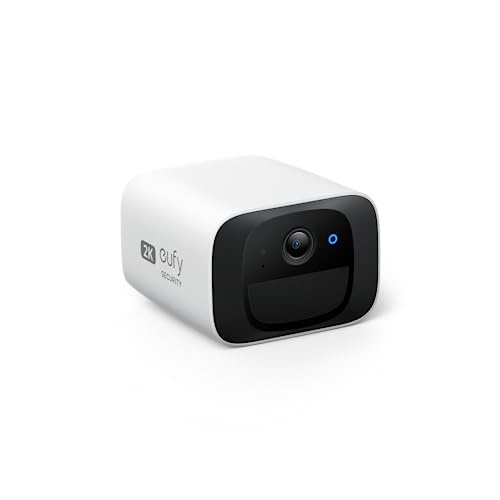
Everything the eufy SoloCam C210 needs sits inside one sealed IP67 body: no monthly fee to run it, and no copy of the footage anywhere else.
Everything the eufy SoloCam C210 records stays inside the camera itself: 8 GB of built-in eMMC storage, which eufy rates at up to three months of footage, and no cloud option behind it. Nothing is owed after the purchase, and the footage exists in exactly one copy. Two households should rule it out on the spot: one running Apple Home, because HomeKit is not supported, and one unwilling to fetch a camera down and recharge it roughly four times a year, because no solar panel is included. Everyone else is looking at a 2K day-and-night camera for a single spot, running on a battery instead of a cable, and on that job it holds up.
The rest of the hardware: on-device AI that separates human movement from animals and wind-blown branches, a rechargeable battery rated at up to three months per charge, an IP67 seal, and a body roughly five and a half inches long and comfortably under a pound. The radio is 2.4 GHz only, and HomeBase 3 is listed as compatible.
Where the eufy SoloCam C210 puts its footage
Storage is the fact that shapes everything else here. The camera records to 8 GB of eMMC inside its own housing, and eufy rates that at up to three months of footage. No monthly bill, no plan to keep current, no clip leaving your property on its way to somebody else's server. For plenty of buyers that settles the question on its own.
Then there's the other side of it. Read the wording carefully: up to three months. That's a ceiling rather than a promise, and every hour of recording draws on the same 8 GB. A camera aimed at a sidewalk with all-day foot traffic works through that pool far quicker than one aimed at a side gate nothing crosses for a week. Retention here is a function of how eventful your view is, which is the one variable no spec sheet can know in advance. So treat three months as the best case for a quiet view and work down from there, rather than up.
On-device storage also means single-copy storage. Whatever the eufy SoloCam C210 has recorded sits in exactly one place, and that place is the box screwed to your wall. Excellent for privacy, since nothing travels. Awkward for the specific scenario security cameras exist to document, where somebody takes an interest in the camera itself. Mounting height carries more weight here than it would on a camera whose footage is already somewhere else.
None of that is a defect. It follows from a design sold once with no plan attached: a camera built that way keeps its footage where it sits. Inside itself is the honest answer.

Detection that runs without a server
The sealed design also buys alerting that costs nothing to keep alive. On-device AI decides whether what moved was a person or was an animal or a branch in the wind, and only the first case earns a notification. That work happens in the camera. eufy's own line for it is one-time purchase, no monthly fees, on-device storage and AI, and that ordering is the honest one: the processing lives here, so nothing has to be billed to keep it running.
Plenty of cameras in this category lock you into a monthly plan. This one asks for nothing after the purchase, and the axis it sorts on is human or not human. That's the distinction eufy built in, and it's the distinction you get.
For most of the yards this camera ends up watching, human-or-not is the right question anyway. Wind-driven false alerts are the most reliable way for a security camera to end up muted, and a muted camera is decoration. Filtering branches and animals out of the notification stream isn't a luxury, then. It's the difference between a camera you still read in month four and one you stopped opening in week two.
On this point the eufy SoloCam C210 is unusually clean, because the whole detection stack ships in the box. Nothing about the alerting depends on a payment staying current.

Battery life, and the solar question
Power is where the design takes something back. The camera runs on a rechargeable battery rated for up to three months per charge, and no integrated solar panel comes with it. Settle that before anything else, because it decides what living with this camera actually involves: topping it up is a manual job, four times a year if it hits the rating and more often if it doesn't.
Three months is a respectable number for a battery camera. Note the wording again, though. Up to three months assumes a moderate event rate, and every wake-up, every clip, every stretch of after-dark recording draws on the same charge. A view with a dog, a delivery route and a slice of the street lands under that figure rather than over it.
Which makes the mount decision the important one on the eufy SoloCam C210. Put it somewhere that comes down in two minutes rather than somewhere that needs a ladder and a spotter. That single choice does more for how you feel about this camera in year two than any number on the spec sheet.
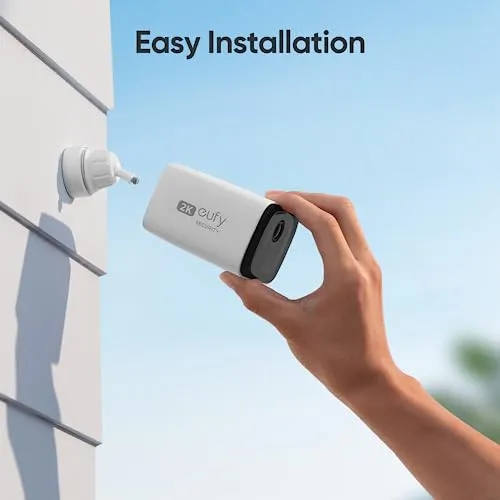
What the battery buys, meanwhile, is the install itself. Wire-free means one drill hole, no cable route to plan, no outlet to be near, no electrician. For renters, for brick, for a spot with nothing but siding behind it, that's the entire reason to choose a camera built this way.

Weather resistance on a camera that holds its own footage
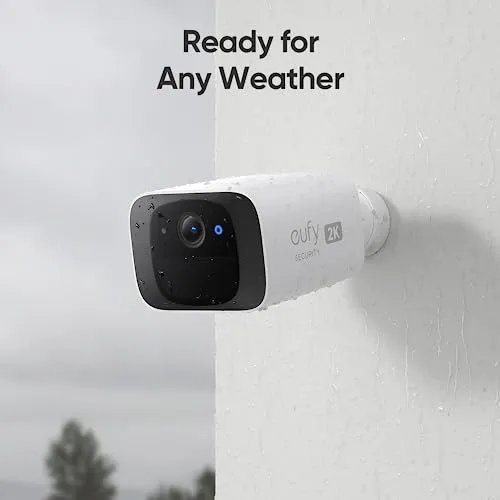
IP67 is the rating to look at here, and eufy scopes it to weather: rain, snow and dust all sit inside that envelope, which is the baseline any outdoor camera has to clear before anything else about it matters.
What makes the rating carry more weight on this one is what sits behind it. Footage, processing and power are all in there, and the footage has no copy anywhere else. A seal failure here doesn't just cost you the hardware. It costs you what the hardware was holding.
Physically it stays small: roughly five and a half inches long, four across, under three deep, and comfortably under a pound. Light enough that the mount doesn't have to be structural, which in practice means the drill hole can go into siding instead of hunting for a stud. Small enough, too, that it doesn't announce itself from the street.
Two installer notes regardless of the rating. Aim the lens away from the direction weather actually arrives from where you have the choice, because water sitting on glass ruins 2K footage as thoroughly as a dead sensor would. And on an exposed wall, a bead of silicone behind the bracket costs ten minutes and stops water wicking into the hole you just drilled. IP67 covers the camera. Your wall is your problem.
2.4 GHz Wi-Fi, HomeBase 3 and no HomeKit
The network is the other boundary worth checking. This is a 2.4 GHz camera and only a 2.4 GHz camera, so the signal at the mounting spot is a check to run before you drill rather than after.
HomeBase 3 compatibility is the one seam in an otherwise closed design. The camera stands on its own, and it also pairs with eufy's hub, which is the piece to research if a second and a third camera are coming. One camera in one spot never needs it. A setup that intends to grow probably does.
HomeKit is not supported, and eufy prints that in the product title rather than burying it. So an Apple-run household doesn't get to fold this camera in alongside everything else in Home. That's a real loss in some houses and completely irrelevant in most, which is why it belongs in a discussion of who the design suits rather than in a list of faults.
Put together, the eufy SoloCam C210 asks you to accept its boundaries on the day you buy rather than discover them at a renewal date. I'll take that arrangement over the alternative most days, provided the boundaries land where your particular spot needs them.
Pros: What we liked
- Pro: 2K capture holds detail day and night, down to faces and plate numbers
- Pro: No monthly fee: on-device storage and AI mean one purchase, no bill
- Pro: On-device AI flags human movement and filters animals and wind-blown branches
- Pro: IP67 sealing rated against rain, snow and dust year-round
- Pro: Wire-free mounting through a single drill hole, no cable route to plan
Cons: What could be better
- Con: Storage is the built-in 8 GB eMMC on the camera itself, with no cloud option
- Con: No solar panel in the box, so every recharge is a manual trip to the mount
- Con: The three-month battery figure is a ceiling, and a busy view drains it sooner
- Con: 2.4 GHz Wi-Fi only, so placement is bound to what one band can reach
- Con: HomeKit is not supported, so it stays outside an Apple Home setup
Final Verdict
The whole decision lands on one spot on a wall: somewhere inside a solid 2.4 GHz signal, aimed at the one approach that matters, and easy enough to get at four times a year. Where that spot exists, the eufy SoloCam C210 covers it for a single purchase, with 2K day and night, alerts only for people, an IP67 body and one drill hole. Where it doesn't, or where the footage has to live anywhere other than on the camera itself, this is a clear no rather than a close call.
One figure decides more here than anything printed on the spec sheet, and it isn't a figure eufy can supply: how much actually moves through that view. Up to three months of footage and up to three months of battery are both quiet-scene ceilings, and a busy scene draws on both. Work that out before ordering, and the compromises are ones you agreed to going in.
The Verdict
Everything the eufy SoloCam C210 needs sits inside one sealed IP67 body: no monthly fee to run it, and no copy of the footage anywhere else.