A solar camera answers one question: what goes on the wall where there is no outlet and no way to run one? That rules out most of what we recommend elsewhere in this guide. The wired picks deliver the most detail, but they stop at the last cable run. The battery all-rounders go anywhere, then hand you a recharge every few months at the top of a ladder, in the corner of the yard you visit least.
A panel does not make a camera better. It makes it self-maintaining, and charges for that in other currencies: these are outdoor-only units built around a power budget rather than a wall socket. That budget shapes how they record, how they connect, and how honestly they perform in February — and it makes the mounting spot, not the spec sheet, the real decision.
Our Top Picks
Compare all 11 picks
| Spec | #1 eufy SoloCam S220 | #2 Rebluum Wireless Outdoor Security Camera | #3 Poyasilon CQ1X Solar Outdoor Security Camera | #4 AOSU Solar Wireless Security Camera 2-Cam Kit | #5 REOLINK Argus PT Security Camera with Solar Panel | #6 IHOXTX Solar Flood Light Security Camera | #7 FOAOOD Solar Wireless Security Camera | #8 Cinnado B6 Outdoor Security Camera (2-Pack) | #9 eufy SoloCam S340 Solar Security Camera | #10 SEHMUA Solar Security Camera | #11 PEEIPM Solar Outdoor Security Camera |
|---|---|---|---|---|---|---|---|---|---|---|---|
| Score | 9.4 | 9.6 | 9.6 | 9.6 | 9.4 | 9 | 9 | 9 | 9 | 9 | 9 |
| Form factor | Outdoor (camera), Wi-Fi, 2K | Outdoor (camera), Battery-powered, 2K | Outdoor (camera), 2K | Outdoor (camera), 2K | Outdoor (camera), 2K | Outdoor (camera) | — | Outdoor (camera), Battery-powered, 2K | Outdoor (camera) | Outdoor (camera), Battery-powered, 2K | Outdoor (camera), Battery-powered, 1080p |
| Platform / ecosystem | — | Alexa | — | — | Alexa, Google Home | — | — | Alexa, Google Home | — | — | — |
| Specific feature | Weatherproof, No subscription / no monthly fee | Night vision, Motion detection, Pan / tilt, Two-way audio | Night vision, Motion detection, AI detection, Pan / tilt, Siren | Night vision, Motion detection, No subscription / no monthly fee, Pan / tilt, Auto-tracking | Night vision, Motion detection, Weatherproof, Pan / tilt, Two-way audio | Night vision, AI detection, Waterproof, Two-way audio | Night vision, AI detection, Weatherproof, Two-way audio | Night vision, AI detection, 360-degree view | AI detection, No subscription / no monthly fee, Pan / tilt | Night vision, Motion detection, Pan / tilt, Spotlight | Night vision, AI detection, Waterproof |
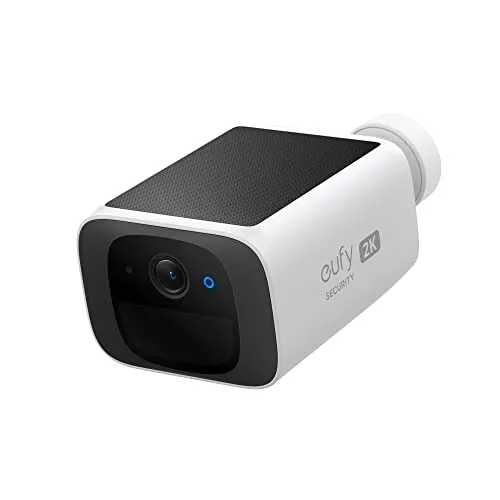
eufy SoloCam S220
The Eufy Security SoloCam S220 represents a significant leap forward in home security technology.
Read our full reviewCheck Price on Amazon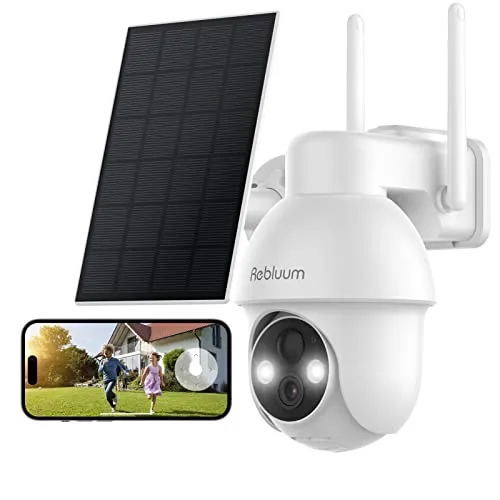
Rebluum Wireless Outdoor Security Camera
The Rebluum Security Camera Wireless Outdoor is a paragon of modern surveillance.
Read our full reviewCheck Price on Amazon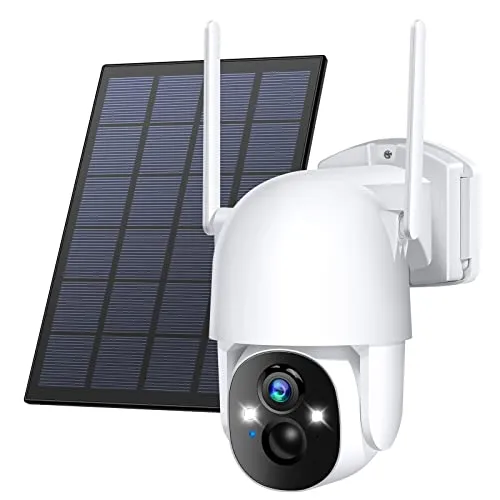
Poyasilon CQ1X Solar Outdoor Security Camera
The Poyasilon CQ1X Wireless Camera represents a significant stride forward in home and outdoor security technology.
Read our full reviewCheck Price on Amazon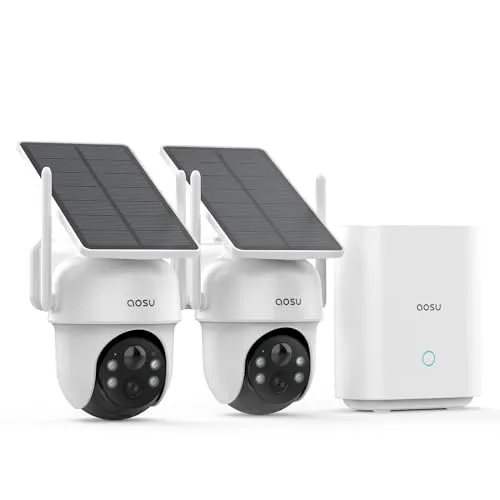
AOSU Solar Wireless Security Camera 2-Cam Kit
The AOSU Security Camera stands as a paragon of modern home security solutions, blending innovative technology with user-centric design.
Read our full reviewCheck Price on Amazon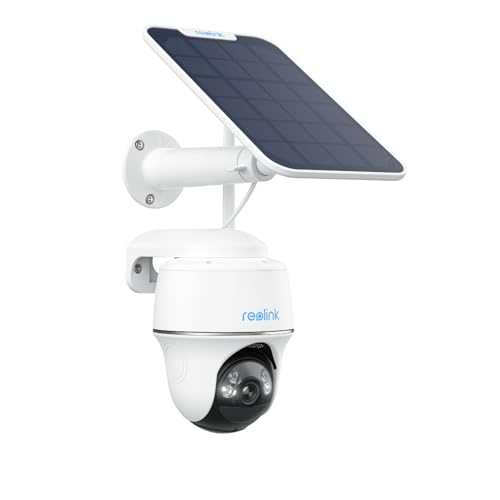
REOLINK Argus PT Security Camera with Solar Panel
The REOLINK Argus PT is a cutting-edge solution for those seeking a versatile, efficient, and smart security camera.
Read our full reviewCheck Price on Amazon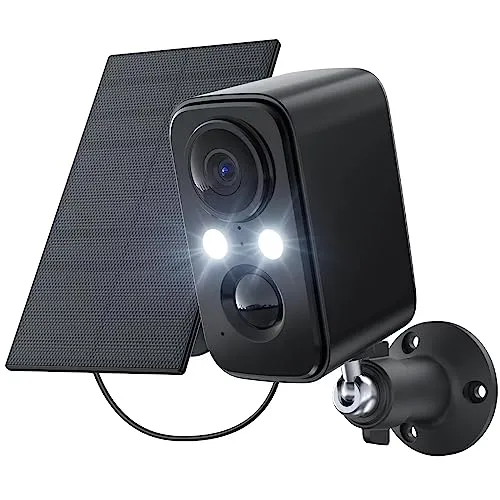
IHOXTX Solar Flood Light Security Camera
After a comprehensive examination, the IHOXTX Security Cameras Wireless Outdoor emerges as a top contender in home security solutions.
Read our full reviewCheck Price on Amazon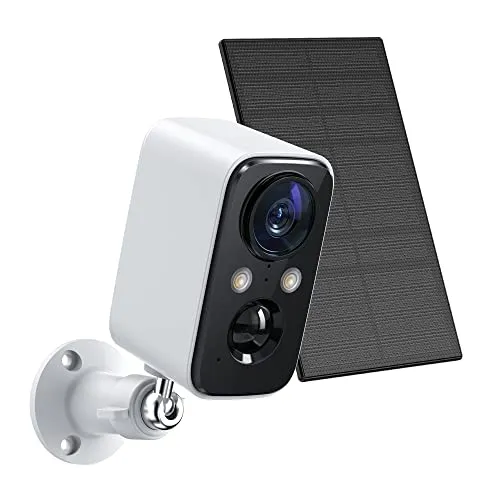
FOAOOD Solar Wireless Security Camera
The FOAOOD Cameras for Home Security system stands out with its comprehensive set of features designed to offer a superior security experience.
Read our full reviewCheck Price on Amazon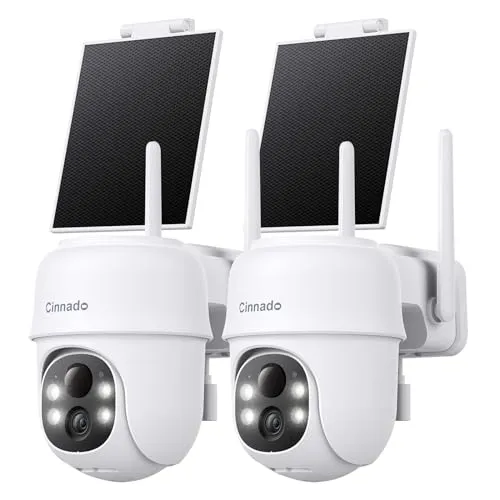
Cinnado B6 Outdoor Security Camera (2-Pack)
In conclusion, the Cinnado Security Cameras Wireless Outdoor-2K Camera for Home Security, model B6, is a robust, versatile, and intelligent solution for modern home security needs.
Read our full reviewCheck Price on Amazon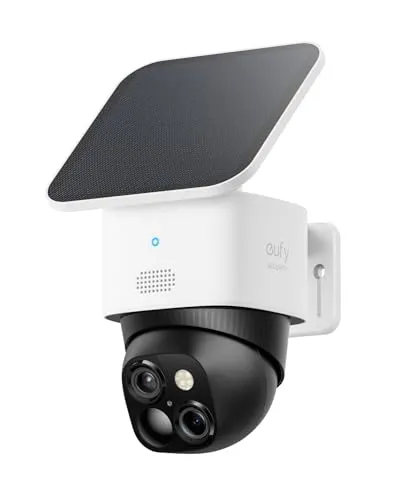
eufy SoloCam S340 Solar Security Camera
The Eufy Security SoloCam S340 stands out as a top-tier choice for homeowners seeking a reliable, eco-friendly, and comprehensive surveillance solution.
Read our full reviewCheck Price on Amazon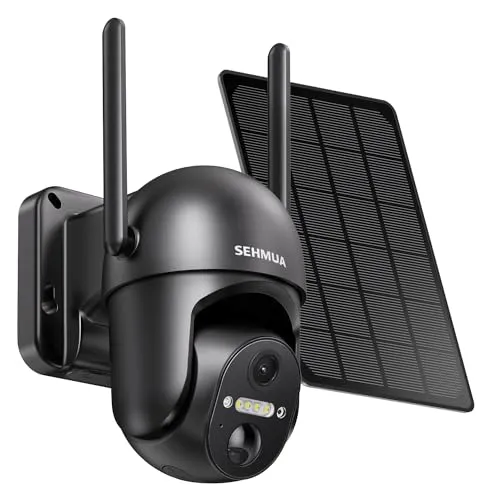
SEHMUA Solar Security Camera
In conclusion, the SEHMUA Solar Security Camera offers a comprehensive, eco-friendly, and user-friendly solution for outdoor surveillance.
Read our full reviewCheck Price on Amazon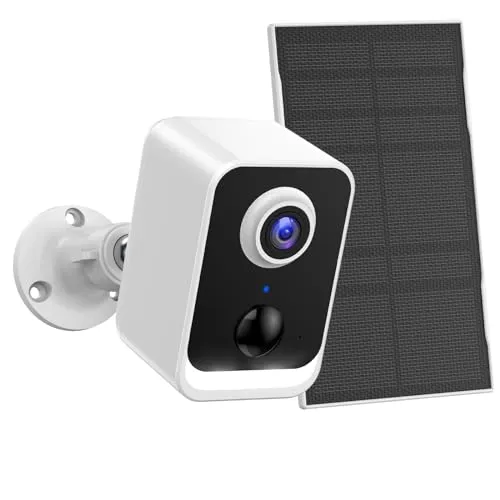
PEEIPM Solar Outdoor Security Camera
In summary, the PEEIPM Security Camera offers a compelling array of features that set it apart from conventional security cameras.
Read our full reviewCheck Price on AmazonBuying Guide
Audit the sun before you audit the features. A panel needs hours of direct light, not ambient daylight, and nearly every camera here carries the same caveat in its own review: performance depends on adequate sun. Judge the spot in February, under a shaded eave or a north wall, not in July.
Then accept what a power budget buys. These record events, not continuous footage, and every spotlight burst, siren, and PTZ sweep draws down the same battery — so tuning motion sensitivity is real setup work, not an optional step. Many are 2.4 GHz-only, which helps at distance but caps bandwidth, and at least one falls back to SD-grade footage when the link weakens. Finally, check storage before checkout: cards are usually sold separately, cloud tiers can turn paid once a trial ends, and the no-subscription models push you back onto local storage you manage yourself.
Related Articles
Conclusion
Solar is a maintenance decision dressed as a power decision. Buy one because the mounting spot cannot take a cable and you do not want a recharge on the calendar — not because a panel sharpens footage. It does not. What you trade is continuous recording for event recording, mains reliability for weather dependence, and a fast install for a careful look at where the light falls. Get the placement right and these vanish into the wall for years.
This page is maintained, not archived. As new solar camera reviews land, the lineup is re-ranked on the same basis and picks that slip get replaced. Check back before you buy.
Frequently Asked Questions
What happens to a solar camera through a cloudy winter?
The panel trickle-charges a battery rather than powering the camera directly, so short days are a deficit problem, not an outage. Across these models the outcome is consistent: a spot with real winter sun coasts, while a shaded or north-facing mount eventually needs a manual top-up charge.
Do solar cameras record continuously?
Generally no. These are event-driven: PIR motion detection wakes the camera, it records a clip, then it sleeps again — that detection method is named in review after review here, and one pick's review lists the lack of continuous recording outright. For an unbroken timeline, that is a wired camera's job.
Why are so many solar cameras 2.4 GHz only?
Range and power. The 2.4 GHz band reaches further across a property and draws less energy than 5 GHz, which suits a camera at the far fence line. Several models here list that limit as a stated drawback, and their reviews also flag setup as the fiddly part. A few support both bands.