<p>An air purifier is one of the few appliances you are told never to turn off, which makes its running cost the whole argument. That rules out much of what we recommend elsewhere in this guide — the extra-large-room machines earn their coverage ratings with a big fan, and a big fan only justifies itself when it runs hard. Leave one on around the clock and the electricity, not the filter, becomes the number you notice.</p>
<p>The units here take the opposite bet. Most move less air per hour and cover less floor, and in exchange draw little enough that running one continuously stops being a decision. They share two traits — near-silent at low speed, cost-effective to run. What you usually give up is coverage, and in most cases, the app.</p>
Our Top Picks
Compare all 4 picks
| Spec | #1 Jafanda JF100 Air Purifier | #2 MOOKA M02 Air Purifier | #3 CHIVALZ Air Purifiers 2-Pack | #4 Blueair Blue Pure 411a Max |
|---|---|---|---|---|
| Score | 9.4 | 9.4 | 9.2 | 9 |
| Form factor | Portable | — | — | — |
| Specific feature | True HEPA, H13 grade | H13 grade | H13 grade, Aromatherapy | — |
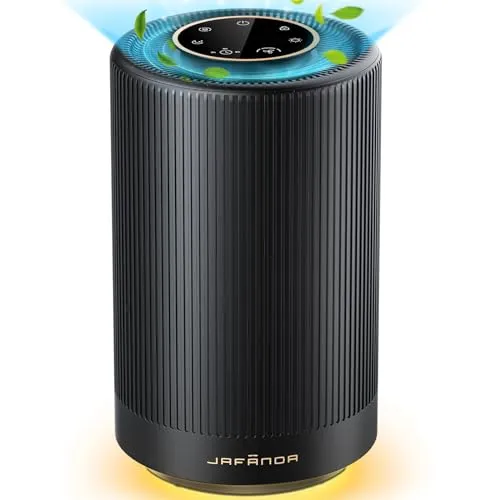
Jafanda JF100 Air Purifier
In sum, the Jafanda JF100 Air Purifier is a well-rounded device that excels in its core function of purifying indoor air.
Read our full reviewCheck Price on Amazon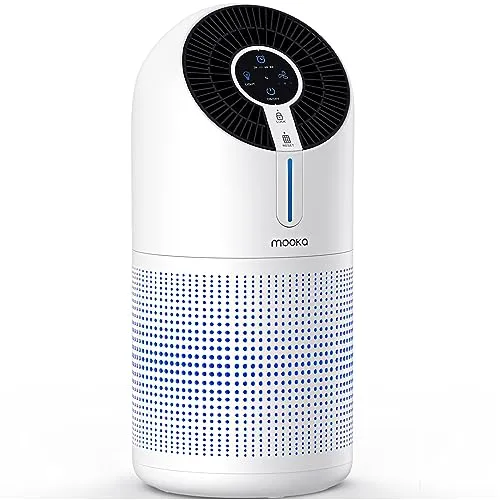
MOOKA M02 Air Purifier
The MOOKA M02 combines true H13 HEPA 3-stage filtration, 1095ft² coverage and 20dB whisper-quiet operation into a strong large-room pick for allergy-prone homes, minus a remote or smart controls.
Read our full reviewCheck Price on Amazon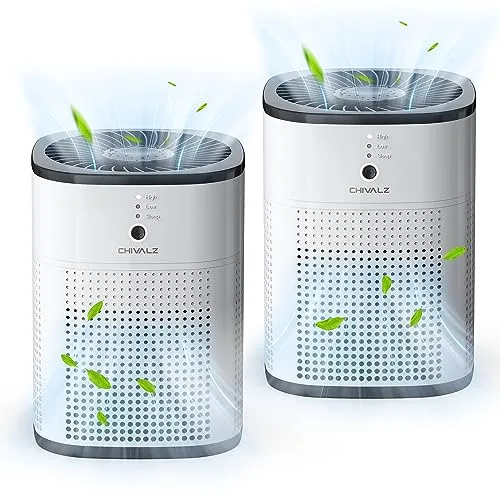
CHIVALZ Air Purifiers 2-Pack
The CHIVALZ Air Purifiers for Bedrooms represent a fusion of efficiency, convenience, and innovative features.
Read our full reviewCheck Price on Amazon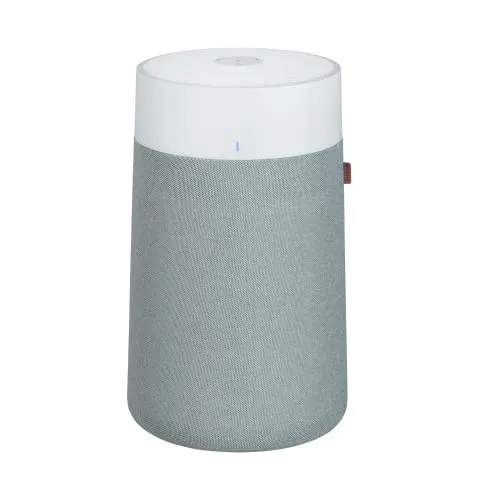
Blueair Blue Pure 411a Max
The Blueair Blue Pure 411a Max stands out as a top-tier air purifier for small spaces, delivering on both performance and aesthetics.
Read our full reviewCheck Price on AmazonBuying Guide
<p>Undersize on purpose, but only by a little. A low-draw unit stays efficient because its fan is small; force it to top speed all day to keep up with an open-plan room and the advantage is gone. Pick a room you can close — and consider a pair rather than a bigger machine, since small purifiers are often sold in twos, covering two rooms or one room with both fans on low.</p>
<p>Efficiency does nothing for your filter bill. Replacement filters land on the cons list of plenty of these purifiers, and a small purifier worked hard reaches that interval sooner, not later. Budget the consumable separately from the wattage. Accept the missing app: most low-draw purifiers skip remotes, Wi-Fi, and auto mode — no loss if you set one speed and leave it, but if you want the machine to throttle itself, the main guide's smarter picks fit better.</p>
Related Articles
Conclusion
<p>Efficiency is not a feature you can read off a spec sheet — it is a consequence of how hard a purifier has to work in the room you put it in. Most here made the same trade: a smaller fan and a smaller footprint in exchange for a machine you can leave running without thinking about it. That suits bedrooms, offices and nurseries; the odd larger pick reaches further. Judge them on the room, not the rating.</p>
<p>This page draws from the same review archive as the main guide and re-ranks as new appraisals land, so the lineup below reflects what currently holds up, not what once did.</p>
Frequently Asked Questions
What actually makes one air purifier more efficient than another?
Fan power, mostly. A purifier's draw scales with how much air it moves, so a compact unit rated for a bedroom will usually undercut a machine built for an open floor. Lower speed settings help, but the size of the fan sets the ceiling.
Is a pair of small purifiers better than one large one?
For efficiency, often yes — small purifiers are frequently sold in pairs. Two small fans running low can hold two rooms, or one room more evenly, and neither has to strain. The catch is two sets of filters to buy and two units to find space for.
Why do efficient purifiers so often skip Wi-Fi and app control?
Most purifiers built for low draw skip them entirely — no smart features is a standing entry on their cons lists. Whether that matters depends on you: a manual unit left on low is genuinely low-draw, but it will never throttle itself when the air is already clean.