Clip 5 vs Go 4: Which Should You Buy?
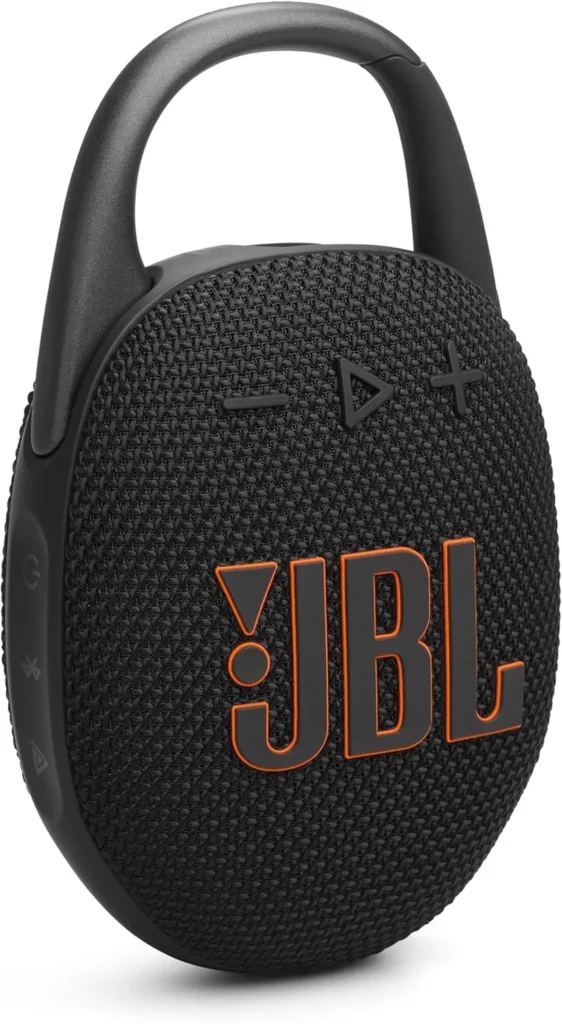
JBL Clip 5 Bluetooth Speaker
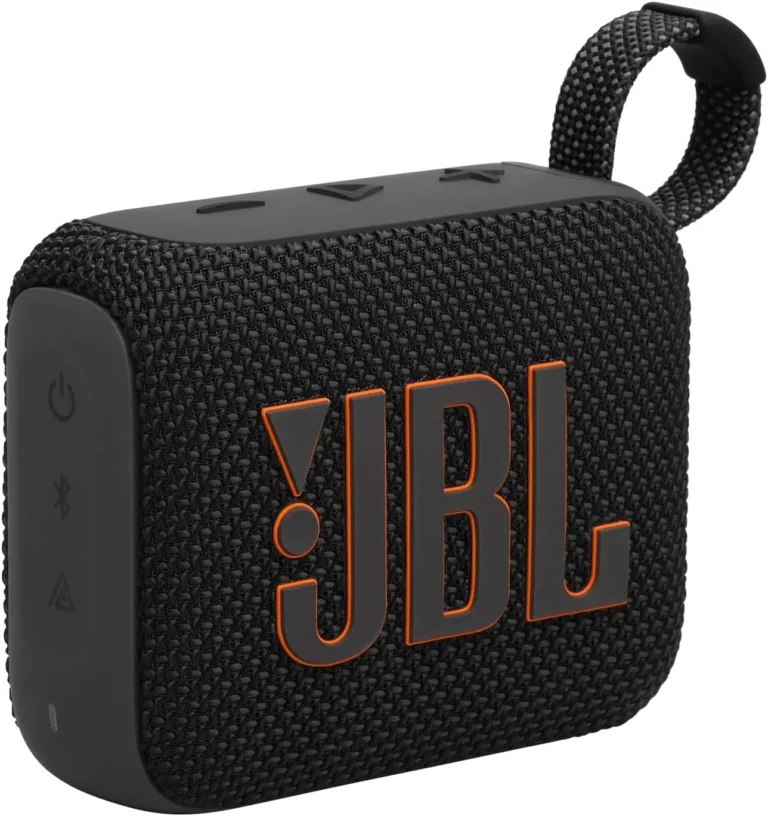
JBL Go 4
JBL's two smallest waterproof speakers solve the same problem in two different shapes. The Go 4 is a pocket brick; the Clip 5 is an egg with a carabiner. Both run JBL Pro Sound tuning, both carry the same IP67 rating, both pair over Bluetooth 5.3 with AuraCast, and both landed within a tenth of a point of each other in our testing. So this isn't a question of which speaker is better in the abstract — it's a question of which trade-offs fit how you'll actually use it.
Three differences decide it. The Clip 5 is the louder, fuller-sounding of the two and holds its battery far closer to the rating. The Go 4 is smaller, cheaper, and the better pick if pure pocketability and price lead your list. Almost everything else — waterproofing, the AuraCast pairing pool, the lack of a microphone — is effectively a wash. Below, we break down where each one wins and who should buy which.
How They Compare
| Category | Winner | Why |
|---|---|---|
| Sound quality | JBL Clip 5 Bluetooth Speaker | The Clip 5's 7W output and dedicated passive radiator give it more volume and meaningfully deeper bass than the Go 4's 4.2W 2.0 setup. Both run JBL Pro Sound tuning and stay clean at moderate levels, but the Go 4 tops out earlier and was never built to fill a room, while the Clip 5's low-end starts masking mids only past ~80%. For sheer sound, the Clip 5 is the bigger speaker. |
| Build and waterproofing | Tie | A genuine tie. Both carry the same IP67 rating — dust-tight and good for 1m of submersion for 30 minutes — and both feel sturdier than their price suggests. The difference is shape, not toughness: the Clip 5's redesigned carabiner clips to straps, handles, and bike frames but its egg body won't stand flat, while the Go 4 sits flat on a shelf but has a less versatile loop and an uncovered USB-C port. |
| Battery life | JBL Clip 5 Bluetooth Speaker | The clearest gap in the comparison. The Clip 5 is rated for 12 hours and holds 10-11 in real-world moderate use; the Go 4 is rated for 7 but drops to 3-5 hours once you push the volume, with some owners reporting faster-than-normal capacity loss within months. Both add roughly 2 hours via Playtime Boost. For runtime, the Clip 5 wins comfortably. |
| Connectivity and features | Tie | Effectively even. Both run Bluetooth 5.3 with AuraCast, share the same JBL pairing pool (Charge 6, Flip 7, Xtreme 4, and each other), and both break compatibility with older PartyBoost speakers. Neither has a microphone or multipoint pairing. Both expose a full EQ through the JBL Portable app — though on the Go 4 that EQ is overridden whenever AuraCast pairing is active. |
| Value | JBL Go 4 | The Go 4's trump card. It delivers JBL Pro Sound, IP67, app EQ, and AuraCast for the lowest price in JBL's lineup — most of the Clip 5's feature set for noticeably less. The Clip 5 earns its premium with better sound, longer battery, and the clip, but on pure dollars-to-features the Go 4 is the stronger buy. |
#1 JBL Clip 5 Bluetooth Speaker (8.4/10)
A genuine sound-quality step up from the Clip 4 with AuraCast stereo pairing and real IP67 durability — held back only by an occasional random-shutoff quirk.
Strengths
- AuraCast stereo pairing works reliably with a second Clip 5 unit
- IP67 rating holds up in real pool, sand, and rain exposure
- Redesigned carabiner opens wider and feels more secure than the Clip 4
- Bass response noticeably fuller than the Clip 4 thanks to retuned crossover
- USB-C charging finally replaces the Clip 3's Micro-USB port
- JBL Portable app adds a custom EQ without gating core functionality
- Wide color range plus a meaningful battery-extending Playtime Boost mode
Weaknesses
- Random auto-shutoff issue affects a small but consistent cluster of units
- AuraCast is not backward-compatible with older PartyBoost JBL speakers
- No built-in microphone and no multipoint Bluetooth for source switching
- Egg-shaped body cannot stand flat on a tabletop without a third-party stand
Review verdict: A genuine sound-quality step up from the Clip 4 with AuraCast stereo pairing and real IP67 durability — held back only by an occasional random-shutoff quirk.
- AuraCast stereo pairing works reliably with a second Clip 5 unit
- IP67 rating holds up in real pool, sand, and rain exposure
- Redesigned carabiner opens wider and feels more secure than the Clip 4
- Bass response noticeably fuller than the Clip 4 thanks to retuned crossover
- USB-C charging finally replaces the Clip 3's Micro-USB port
- Random auto-shutoff issue affects a small but consistent cluster of units
- AuraCast is not backward-compatible with older PartyBoost JBL speakers
- No built-in microphone and no multipoint Bluetooth for source switching
- Egg-shaped body cannot stand flat on a tabletop without a third-party stand
#2 JBL Go 4 (8.4/10)
A genuinely impressive entry-level Bluetooth speaker — JBL Pro Sound, IP67, EQ app, and Auracast pairing — held back only by a battery that doesn't fully live up to its 7-hour spec.
Strengths
- JBL Pro Sound delivers clean, loud audio that punches well above the palm-sized form factor
- IP67 rating handles full submersion in pool, lake, shower, or rain without concern
- JBL Portable App provides customizable EQ and audio presets — rare at this price bracket
- Auracast multi-speaker pairing connects with other Go 4 units for stereo or with other Auracast-enabled JBL models for party mode
- Post-consumer recycled plastic chassis and FSC-certified packaging — genuine sustainability story at entry-level pricing
Weaknesses
- Real-world battery life often falls short of the 7-hour spec, especially at higher volumes — runtime drops to 3 to 5 hours under sustained use
- Aggressive 10-to-20-minute auto-shutoff during idle pauses disrupts workflow when pausing for calls or video
- Auracast multi-speaker pairing overrides custom EQ settings, blocking app-level audio control for power users
Review verdict: A genuinely impressive entry-level Bluetooth speaker — JBL Pro Sound, IP67, EQ app, and Auracast pairing — held back only by a battery that doesn't fully live up to its 7-hour spec.
- JBL Pro Sound delivers clean, loud audio that punches well above the palm-sized form factor
- IP67 rating handles full submersion in pool, lake, shower, or rain without concern
- JBL Portable App provides customizable EQ and audio presets — rare at this price bracket
- Auracast multi-speaker pairing connects with other Go 4 units for stereo or with other Auracast-enabled JBL models for party mode
- Post-consumer recycled plastic chassis and FSC-certified packaging — genuine sustainability story at entry-level pricing
- Real-world battery life often falls short of the 7-hour spec, especially at higher volumes — runtime drops to 3 to 5 hours under sustained use
- Aggressive 10-to-20-minute auto-shutoff during idle pauses disrupts workflow when pausing for calls or video
- Auracast multi-speaker pairing overrides custom EQ settings, blocking app-level audio control for power users
How we compared the Clip 5 and Go 4
Both speakers were judged on the five things that actually decide an ultra-portable purchase: sound, build and waterproofing, battery, connectivity, and value. Spec sheets aren't much help here — on paper the two look nearly identical — so the weighting leans on what large pools of verified JBL owners report after weeks of real use: where the battery really lands at volume, whether the IP67 rating survives a pool rather than a press release, and which quirks show up often enough to matter.
That's why the two tie on paper-level specs like waterproofing and Bluetooth but separate clearly on sound and battery, where real-world behavior diverges from the rated numbers. Scores reflect each speaker's standing against current rivals, and we revisit head-to-heads as new JBL models ship and street prices move.
Should you step up to a bigger JBL instead?
If neither the Clip 5 nor the Go 4 quite fits, the gap above them is well covered inside the same AuraCast ecosystem. The JBL Flip 7 is the natural next step for more volume and battery without jumping to a full party speaker. The JBL Charge 6 goes further — a 24-hour battery, louder and fuller sound, and a built-in USB-C power bank — for roughly four times the Go 4's price, which is the right call if all-day outdoor playback is the goal.
Both pair with the Clip 5 and Go 4 over AuraCast, so starting small and adding a larger speaker later is a sensible path. Just remember the hard line: none of these pair with older PartyBoost speakers like the Flip 5 or Charge 4.
Conclusion
For most buyers, the JBL Clip 5 is the one to get. It plays louder, its passive radiator gives it low-end the Go 4 can't match, and it holds 10-11 hours of real-world battery against the Go 4's 3-5 under sustained use — the two things you'll notice most day to day. The integrated carabiner also makes it the more versatile speaker, clipping to a backpack strap, a shower caddy, or a bike frame without a second thought. The one caveat to know going in is the random auto-shutoff issue affecting a small cluster of units; it's warranty-covered, but worth a return if you draw a bad one.
The JBL Go 4 still wins on the things some buyers care about most: it's smaller, it's noticeably cheaper, and it sits flat on a counter where the Clip 5 rolls onto its side. If your speaker lives on a bathroom shelf or in a jacket pocket and you mostly listen at conversational volume, the Go 4 gives up very little for the lower price. Just go in knowing the battery underperforms its 7-hour spec the moment you turn it up, and that its idle auto-shutoff is more aggressive than most.
Both are easy recommendations within their lane. Buy the Clip 5 for sound, battery, and the clip; buy the Go 4 to spend less and carry less.
Frequently Asked Questions
Is the JBL Clip 5 or Go 4 better?
For most people the Clip 5. It plays louder, has fuller bass thanks to its passive radiator, and holds far more real-world battery (10-11 hours vs 3-5 under load), plus the carabiner adds versatility. The Go 4 is the better pick only if you want the smallest, cheapest option and mostly listen at moderate volume.
Can the JBL Clip 5 and Go 4 pair together?
Yes. Both use AuraCast, so a Clip 5 and a Go 4 can pair for multi-speaker playback, along with other AuraCast-enabled JBL models like the Charge 6, Flip 7, and Xtreme 4. Neither pairs with older PartyBoost speakers such as the Flip 5 or Charge 4.
Which has better battery life, the Clip 5 or the Go 4?
The Clip 5, clearly. It's rated for 12 hours and holds 10-11 at moderate volume, while the Go 4 is rated for 7 but drops to 3-5 hours under heavier use. Both add about 2 hours with Playtime Boost mode.
Is the JBL Clip 5 worth the extra money over the Go 4?
If you want more volume, deeper bass, longer battery, and the clip-anywhere carabiner, yes. If you mainly want a tiny, inexpensive waterproof speaker for the shower, kitchen, or a bag, the Go 4 covers that for less and gives up little at moderate volume.