JBL Go 4 Review: Big Sound, Small Speaker, Real Trade-Offs
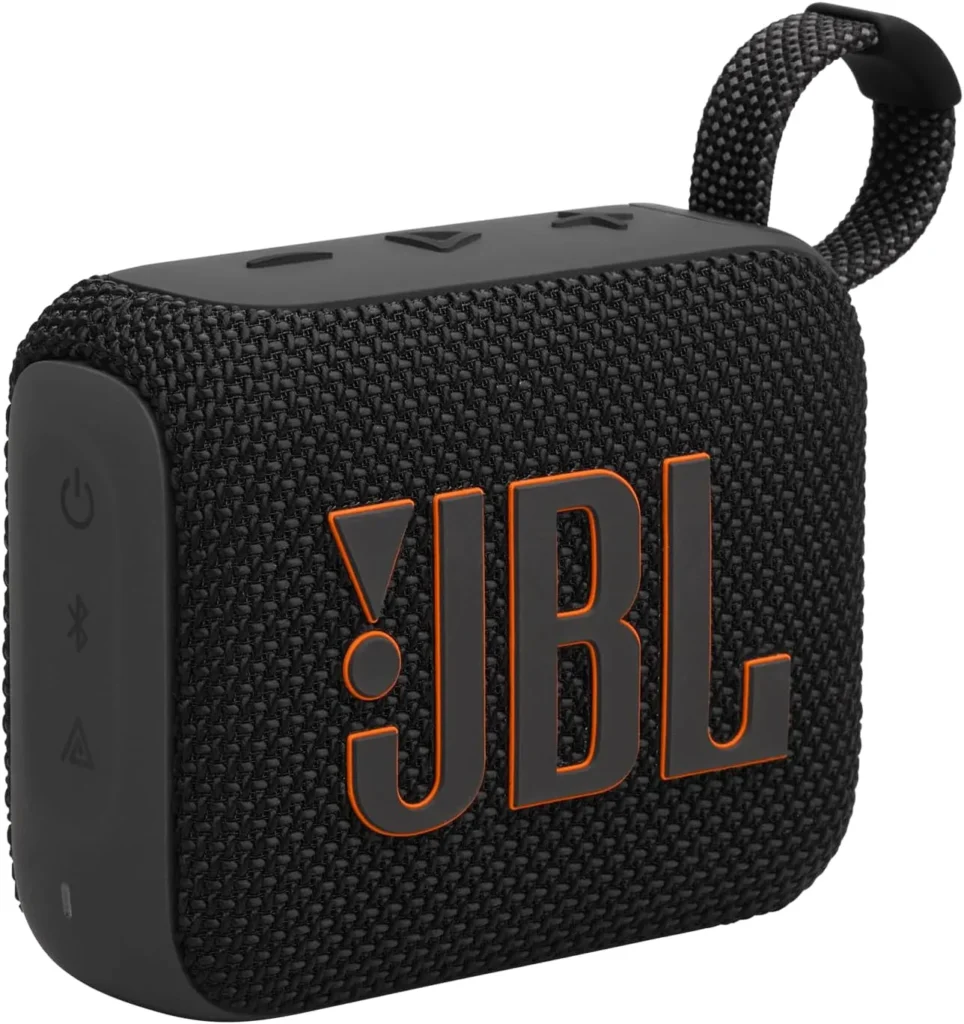
A genuinely impressive entry-level Bluetooth speaker — JBL Pro Sound, IP67, EQ app, and Auracast pairing — held back only by a battery that doesn't fully live up to its 7-hour spec.
Entry-level Bluetooth speakers used to mean cutting corners. However, the JBL Go 4 is the strongest evidence yet that the category has matured. For roughly the price of a fancy lunch, you get JBL Pro Sound tuning, IP67 waterproofing, Auracast multi-speaker pairing, and a companion app with customizable EQ. In fact, most premium speakers from five years ago didn't offer half that. However, this category still has trade-offs. The 7-hour battery rating is contested in real-world use. Additionally, the auto-shutoff feature can frustrate. Meanwhile, the Auracast implementation has rough edges around EQ control. For most buyers, none of these matter much. For others, they're decisive. Ultimately, the question is whether the JBL Go 4 fits your specific use case.
Sound quality of the JBL Go 4
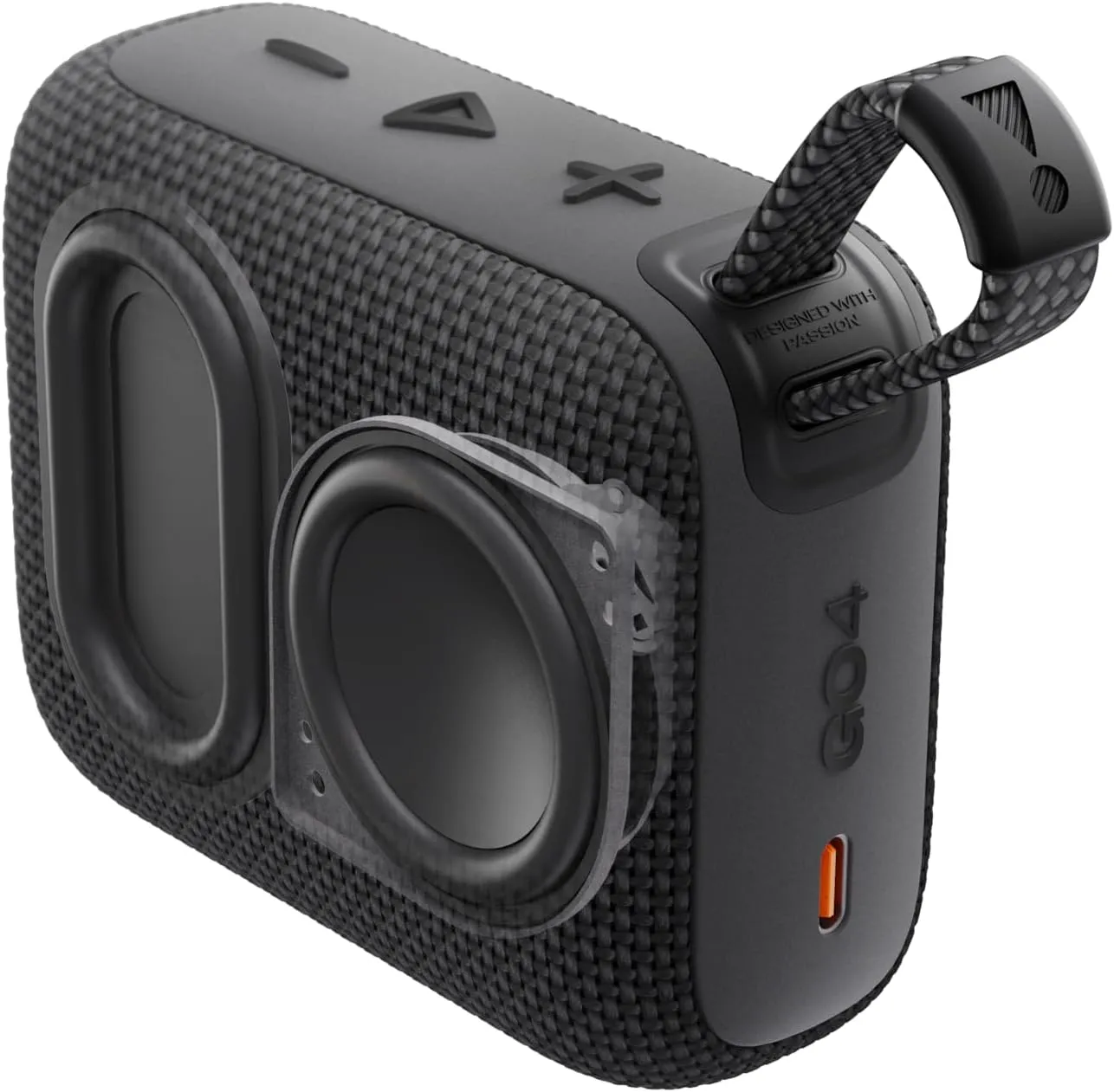
The JBL Go 4 uses JBL Pro Sound tuning with a 2.0 stereo configuration. At conversational volumes, the speaker delivers surprisingly clean output for its palm-sized form factor. Furthermore, mids carry vocals well. Highs are present without being harsh. Meanwhile, bass is present but doesn't try to overcompensate. For a unit this small, the tuning is genuinely good.
The 4.2-watt RMS output won't fill a backyard party. However, it's plenty for a bathroom, kitchen, hotel room, or close-range outdoor listening. The volume genuinely surprises for the size class. That's a real outcome, not a marketing claim.
Where the speaker stands out from cheaper competitors is the JBL Portable App. Specifically, the app gives access to a customizable EQ and audio presets. Most speakers in this price bracket ship with locked-down tuning. In contrast, the Go 4 lets you adjust bass, mids, and treble to taste. For listeners who care about that control, the app alone justifies the JBL price premium over generic alternatives.
The standout audio differentiator is Auracast. Two Go 4 units can pair for true stereo separation. Alternatively, multiple Auracast-enabled JBL speakers can sync for party-mode playback. In practice, the pairing process is straightforward. However, the EQ controls disappear once Auracast is active, which is a real workflow limitation for power users.
Build, ruggedness, and the IP67 rating
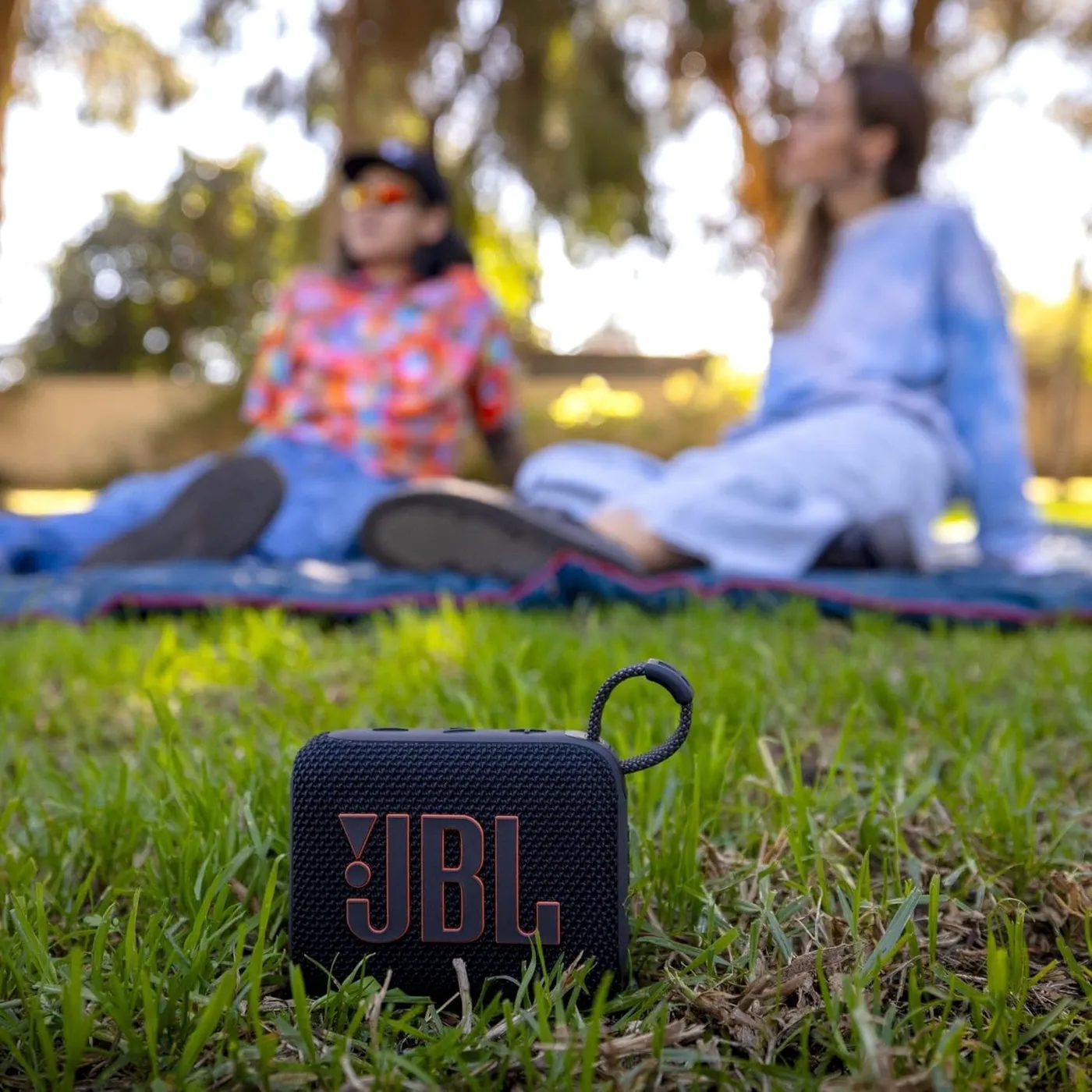
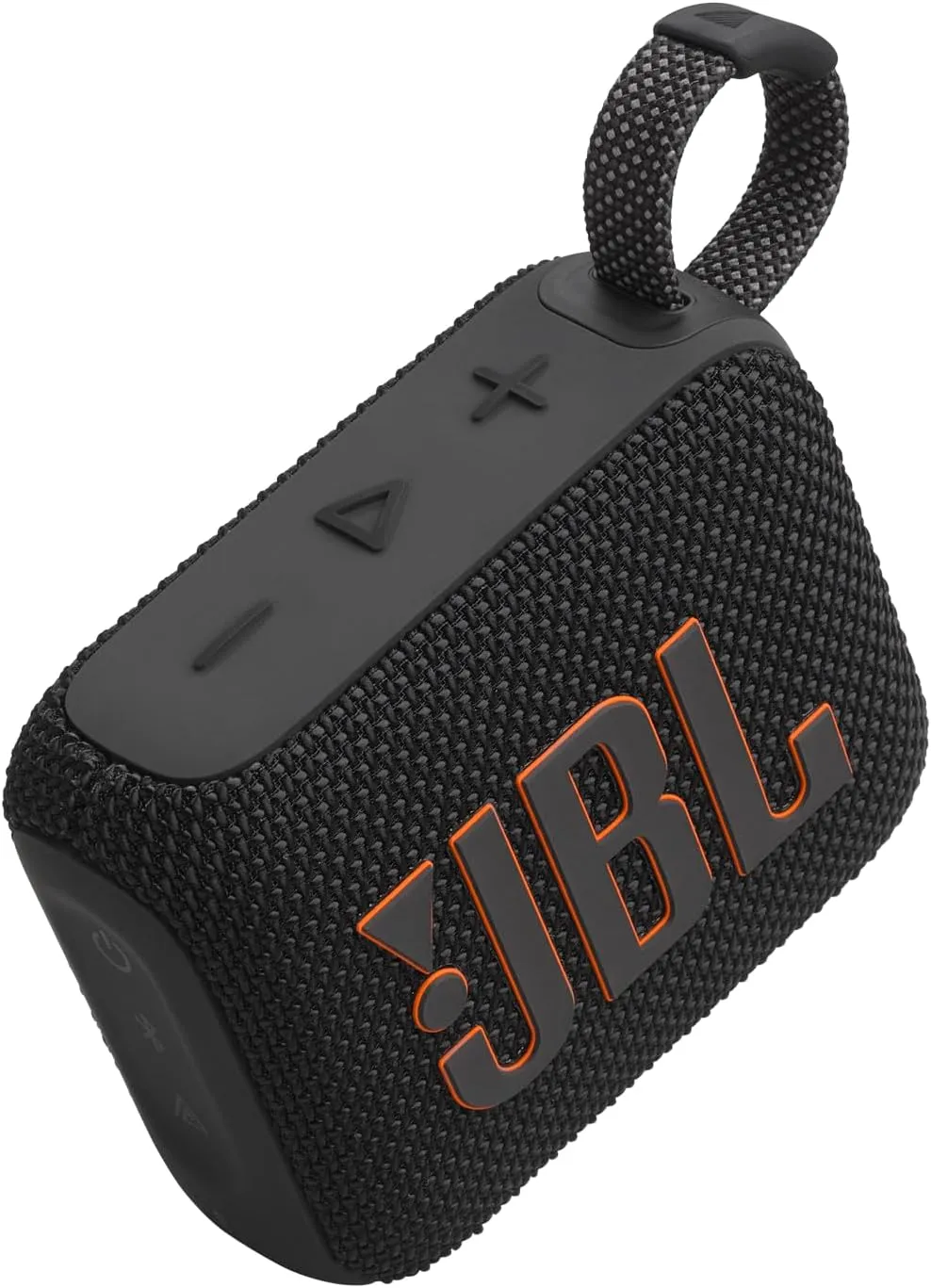
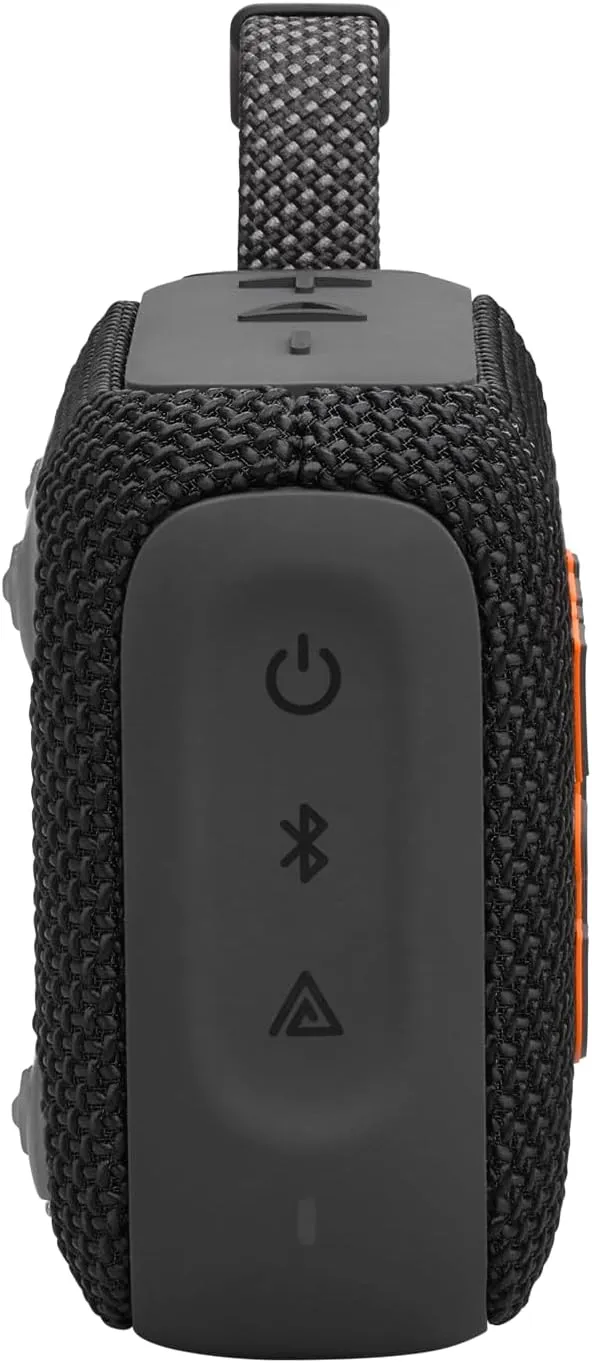
Build quality is where the JBL Go 4 outperforms its entry-level price bracket. The chassis is a dense plastic-and-fabric mix. Notably, the fabric wraps a rigid frame and provides surface grip. Control buttons sit on the top edge with raised tactile feedback. Furthermore, the integrated carabiner loop attaches to backpacks, belts, and similar carry points. At 6.7 ounces, it disappears in a pocket or bag.
The IP67 rating is the headline durability spec. Specifically, IP67 means the unit is dust-tight and survives full submersion in fresh water to one meter for thirty minutes. In practice, this covers shower, pool, beach, and rain exposure without concern. The speaker has survived hot-tub submersion for hours without damage. That's beyond what JBL officially claims.
The USB-C charging port lacks a cover. As a result, the exposed port raises questions about the IP67 claim. Water could enter during charging or sit inside the port long-term. However, JBL's official position is that the port is sealed against ingress when not connected. In real-world use, the design choice hasn't produced water-ingress problems. Still, exposed USB-C ports on rugged-rated speakers are unusual. Treat this as a minor design quirk rather than a deal-breaker.
Color options span the lineup. For instance, Black, Blue, Purple, Red, Pink, Sand, Squad, White, and Black & Orange give buyers genuine choice. Meanwhile, the fabric finish absorbs scratches better than gloss-plastic competitors. As a result, the speaker is genuinely built to last, even if some battery durability questions linger.
Battery life and the 7-hour question
Battery life is where the JBL Go 4 review picture gets complicated. JBL rates the battery at 7 hours, plus an additional 2 hours via Playtime Boost mode. Specifically, a 700 mAh lithium-ion cell powers a 4.2-watt amplifier. On paper, the numbers add up.
In practice, real-world battery life is more nuanced. Close to the 7-hour rating is achievable during casual listening at conversational volumes. However, runtime drops to 3 to 5 hours under heavy use. Furthermore, this pattern is consistent enough to warrant attention. Higher volumes accelerate drain significantly. Additionally, higher bass output also taxes the battery.
A second battery issue emerges with longer-term use. Specifically, measurable battery degradation surfaces within seven months of routine listening for some units. That's faster than competing speakers in the same price bracket. For reference, lithium-ion cells in compact speakers typically maintain 80% capacity past the one-year mark. As a result, the speaker appears to underperform that expectation in a non-trivial cluster of cases.
The auto-shutoff behavior compounds the perception of poor battery performance. Specifically, JBL designed the speaker to power down after roughly 10 minutes of audio inactivity. The intent is battery preservation. However, the practical effect is workflow friction. For example, pausing playback to take a call or watch a video forces a manual restart. Indeed, this stands out as the speaker's most annoying daily friction point.
For the right use case, none of this matters. Casual listeners at moderate volumes will hit the rated battery life. However, for heavier users, plan accordingly. As a result, a portable USB-C battery pack is a sensible accessory purchase.
Auracast pairing and the JBL Portable App
The JBL Go 4 ships with two software features that punch well above entry-level expectations. The first is the JBL Portable App. Additionally, the second is Auracast multi-speaker pairing. Together, these features differentiate the speaker from cheaper Bluetooth speakers significantly.
The JBL Portable App gives full access to an equalizer and audio presets. Specifically, bass, mids, and treble are all adjustable. Furthermore, several presets ship as starting points. For someone who has only ever owned cheap Bluetooth speakers, this level of control is novel. However, the experience isn't flawless.
Auracast support is where things get more complicated. In theory, Auracast is an open Bluetooth audio-broadcasting standard. Specifically, multiple device manufacturers can use it for interoperable multi-speaker setups. In practice, JBL has implemented Auracast as a JBL-only protocol. As a result, the Go 4 pairs only with other Auracast-enabled JBL speakers. The pairing pool includes Charge 5, Charge 6, Flip 6, Flip 7, Clip 5, and Xtreme 4. Other recent JBL models work as well. However, it does not cross-pair with Sony, Bose, Anker, or other Auracast-capable brands in practice.
The more frustrating limitation is what happens to EQ when Auracast is active. Specifically, once two speakers pair, the custom EQ from the host device gets overridden by Auracast defaults. For power users, this is a significant workflow regression. However, for everyday listeners who don't customize EQ heavily, the issue is invisible.
A separate compatibility note matters here. Notably, the Go 4 does not pair with older JBL speakers using the legacy PartyBoost protocol. That excluded list includes Flip 5, Charge 4, and Pulse 5 and older models. For example, if you own a JBL Flip 5 and expect to stereo-pair it with the Go 4, the answer is no. Ultimately, that's a real ecosystem gotcha worth knowing before purchase.
Is the JBL Go 4 worth the price?
Value is where the JBL Go 4 makes its strongest case. Specifically, the speaker sits at the entry-level price point in the JBL lineup. Competitors at this tier typically offer either decent sound or basic features, but not both. In contrast, the Go 4 delivers JBL Pro Sound tuning, an EQ app, IP67 rating, and Auracast pairing as a single bundle. For buyers comparing across brands, nothing else in this price bracket comes close.
The natural comparison is the JBL Charge 6. Specifically, the Charge 6 offers a 24-hour battery, IP68 rating, louder output, and integrated USB-C power-bank functionality. However, it costs roughly four times as much. For buyers who don't need maximum battery or output, the speaker hits the better value point. Conversely, for buyers who do, the Charge 6 justifies the gap.
Meanwhile, the Soundcore Rave 3S and similar party speakers offer more raw output at higher prices. The Turtlebox Ranger competes from a completely different angle — premium rugged-first design. Specifically, magnetic mounting and 105 dB output come at roughly five times the cost. For pool, kayak, golf-cart, or job-site use, the Turtlebox is the right speaker. However, for backpack, travel, shower, or kitchen use, the speaker wins decisively on price.
Sustainability also enters the calculation. Specifically, the Go 4 chassis incorporates post-consumer recycled plastic. Furthermore, packaging uses FSC-certified paper and soy ink. For environmentally conscious buyers, this is a real point of distinction in a category dominated by virgin plastics.
The bottom line is straightforward. For the right buyer, the JBL Go 4 delivers premium features at an entry-level price. Ultimately, the trade-offs are real but contained.
Pros: What we liked
- Pro: JBL Pro Sound delivers clean, loud audio that punches well above the palm-sized form factor
- Pro: IP67 rating handles full submersion in pool, lake, shower, or rain without concern
- Pro: JBL Portable App provides customizable EQ and audio presets — rare at this price bracket
- Pro: Auracast multi-speaker pairing connects with other Go 4 units for stereo or with other Auracast-enabled JBL models for party mode
- Pro: Post-consumer recycled plastic chassis and FSC-certified packaging — genuine sustainability story at entry-level pricing
Cons: What could be better
- Con: Real-world battery life often falls short of the 7-hour spec, especially at higher volumes — runtime drops to 3 to 5 hours under sustained use
- Con: Aggressive 10-to-20-minute auto-shutoff during idle pauses disrupts workflow when pausing for calls or video
- Con: Auracast multi-speaker pairing overrides custom EQ settings, blocking app-level audio control for power users
Best For
- Casual listeners who want JBL Pro Sound quality at an entry-level price point
- Travelers and commuters needing pocket-sized portability with IP67 protection
- Shower, kitchen, bathroom, and bedside users who value waterproof construction
- JBL ecosystem owners expanding an Auracast-compatible multi-speaker setup
- Buyers who want a customizable EQ via app at a price that usually doesn't include one
Not Ideal For
- Users planning all-day continuous outdoor playback — the battery underperforms its spec under heavy use
- Anyone wanting compatibility with older JBL Flip or Charge speakers using the legacy PartyBoost protocol
- Buyers prioritizing maximum loudness for outdoor party scenarios at scale
| Specification | Details |
|---|---|
| Audio | 2.0 stereo with JBL Pro Sound tuning |
| Output | 4.2 W RMS |
| Battery | 700 mAh lithium-ion, 7 hours + 2 hours Playtime Boost |
| Bluetooth | 5.3 |
| Waterproofing | IP67 (dust-tight, full submersion to 1m for 30 min) |
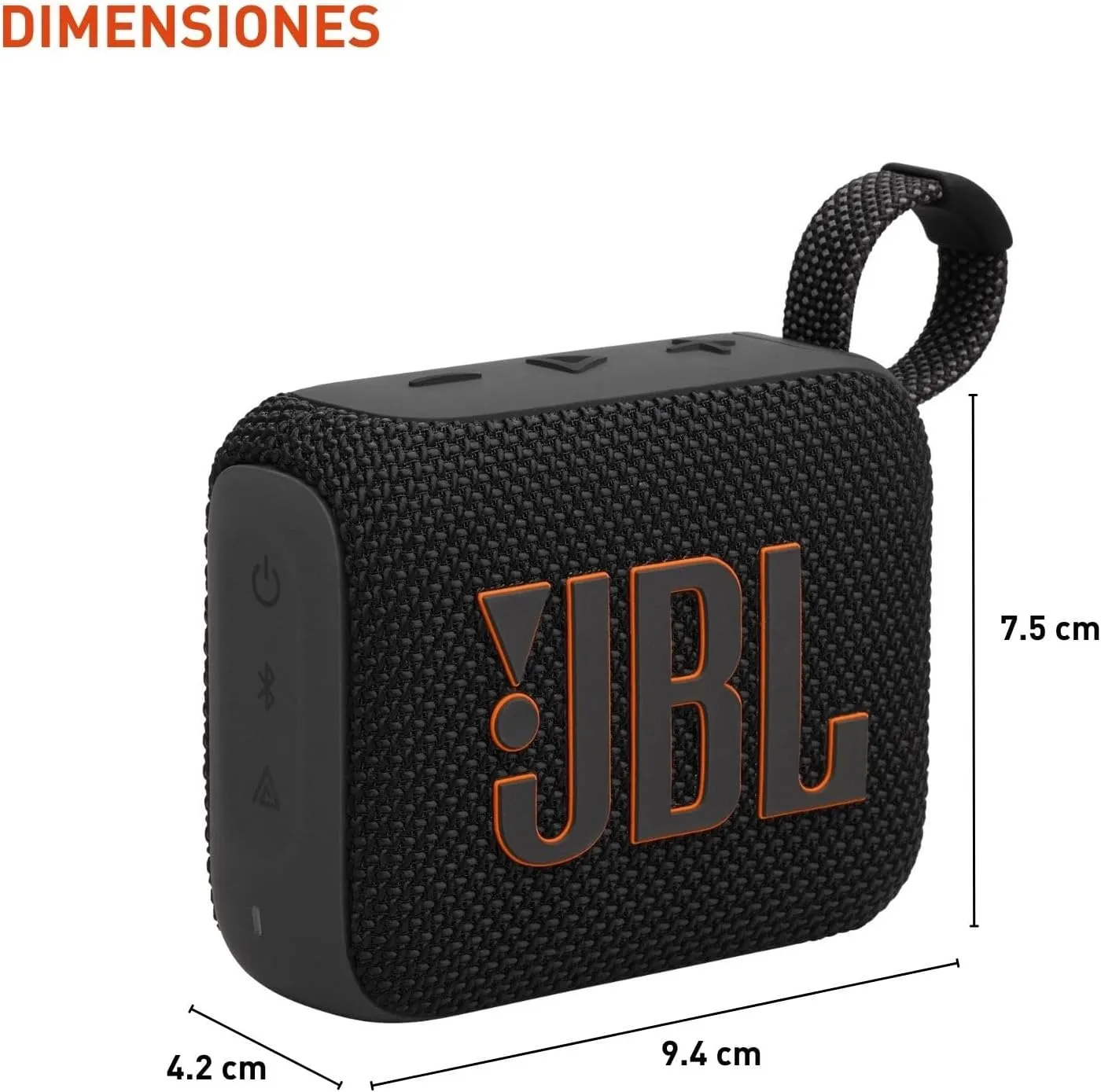
| Dimensions | 3.7" x 1.7" x 3" |
| Weight | 6.7 oz (0.19 kg) |
| Charging | USB-C cable included (no wall adapter) |
| App | JBL Portable App with customizable EQ and presets |
| Multi-speaker | Auracast pairing with other Auracast-enabled JBL models |
Alternatives Worth Considering
Final Verdict
The JBL Go 4 is a quiet category disruption. Specifically, entry-level Bluetooth speakers used to mean tinny audio, weak connectivity, and locked-down feature sets. In contrast, the speaker delivers genuinely good sound, IP67 ruggedness, customizable EQ, and Auracast pairing, all in a palm-sized package. For the casual listener, the shower singer, or the budget-conscious traveler, the speaker is an easy recommendation. Similarly, the same holds for any JBL ecosystem owner adding another node.
However, the unit is not perfect. Battery life under heavy use falls short of the 7-hour spec. Additionally, the Auracast implementation has rough edges around EQ control. Furthermore, the auto-shutoff timing introduces real daily friction. None of these are deal-breakers for the right buyer. As a result, the JBL Go 4 earns a strong recommendation with eyes open.
Frequently Asked Questions
How long does the JBL Go 4 battery actually last in real use?
At conversational outdoor volumes, the rated 7 hours is achievable. Under heavier use at higher volumes, runtime drops to 3 to 5 hours instead. The Playtime Boost mode adds roughly 2 hours but draws power faster.
Does the JBL Go 4 pair with older JBL Flip or Charge speakers?
No. The JBL Go 4 uses Auracast and cannot pair with PartyBoost-era JBL speakers like the Flip 5 or Charge 4. It pairs only with newer Auracast-enabled JBL models including Charge 6, Flip 7, Clip 5, and Xtreme 4.
Is the JBL Go 4 truly waterproof?
Yes — it carries an IP67 rating, meaning it's dust-tight and survives full submersion in fresh water to one meter for thirty minutes. The USB-C charging port lacks a cover, which is unusual for rugged-rated speakers, though JBL says the port is sealed against ingress when not connected.
Does the JBL Go 4 have an equalizer?
Yes. The JBL Portable App provides a customizable EQ with adjustable bass, mids, and treble, plus several audio presets. Notably, EQ control disables when Auracast multi-speaker pairing is active.
Is the JBL Go 4 an upgrade from the JBL Go 3?
Yes, but not dramatically. Sound is cleaner, Auracast pairing is new, and the JBL Portable App support is added. Battery life is comparable. For someone happy with a Go 3, the upgrade is incremental rather than essential.
Does the JBL Go 4 work with Auracast on non-JBL speakers?
No, despite Auracast being a published Bluetooth standard. In practice, JBL has implemented Auracast as a JBL-only protocol. The Go 4 will not cross-pair with Sony, Bose, Anker, or other Auracast-capable speakers from competing brands.
The Verdict
A genuinely impressive entry-level Bluetooth speaker — JBL Pro Sound, IP67, EQ app, and Auracast pairing — held back only by a battery that doesn't fully live up to its 7-hour spec.