JBL Grip Review: Big, Rugged Sound to Go
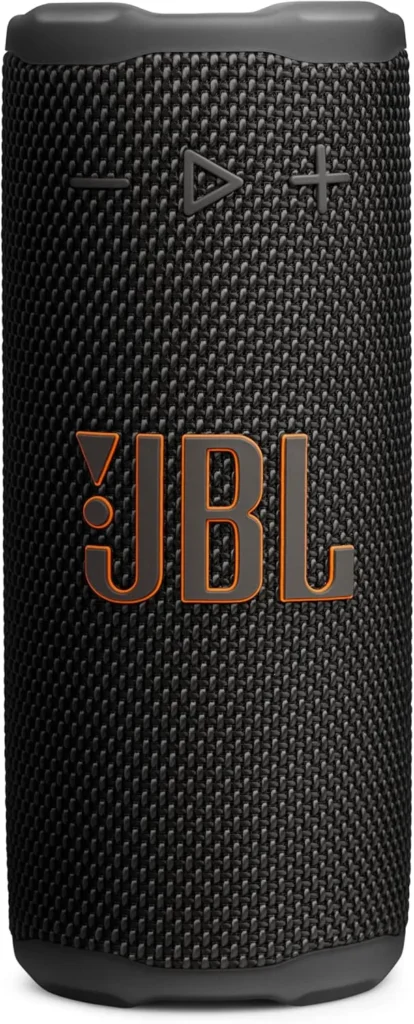
A rugged, big-sounding pocket speaker that punches well above its size — just plan to bring your own USB-C cable.
Most speakers this small are an afterthought — a tinny driver in a rubber shell, sold on the badge alone. The JBL Grip is the rare exception. It pairs genuinely big, bass-forward sound with IP68 toughness, a customizable light strip, and easy multi-speaker pairing. All of that fits in a body about the size of a tall drink can. For the crowded sub-$100 portable bracket, that's a lot of speaker. There's one quirk to plan for: JBL doesn't include a charging cable in the box. For most buyers, though, that's a minor footnote next to how much this little speaker gets right.
Sound quality of the JBL Grip
For a speaker you can wrap one hand around, the JBL Grip moves a surprising amount of air. A single full-range driver does the heavy lifting. JBL tunes it with the familiar bass-forward signature, and the low-end lands with real weight. There's none of the hollow thump you usually get at this size. At moderate volume, it stays clean and punchy. That's where a portable speaker actually lives, and it's easy to listen to for hours.
Push it harder and the picture holds together. Near the top of its range, the mids start to crowd the bass. Even so, it never collapses into the distortion that betrays cheaper rivals. That composure is the engineering story. The speaker pushes 16 watts through careful tuning, and AI Sound Boost analyzes the track in real time to wring more apparent loudness from a tiny enclosure.
The trade-off lives in the format. Output is mono, so a single unit pushes sound outward rather than painting a stereo image. In a backyard or a dorm room, that hardly matters. It fills the space and plays louder than the size implies. For critical listening, though, one speaker can't separate left from right. Pairing two units fixes that outright, and the jump in soundstage is dramatic.
The seven-band EQ in the companion app is no gimmick either. The default tuning leans warm and fun. A few minutes of tweaking can tame the bass for podcasts, or lift the treble for outdoor use where high frequencies vanish. As a result, one small speaker can cover very different jobs.
Design, build, and the ambient light
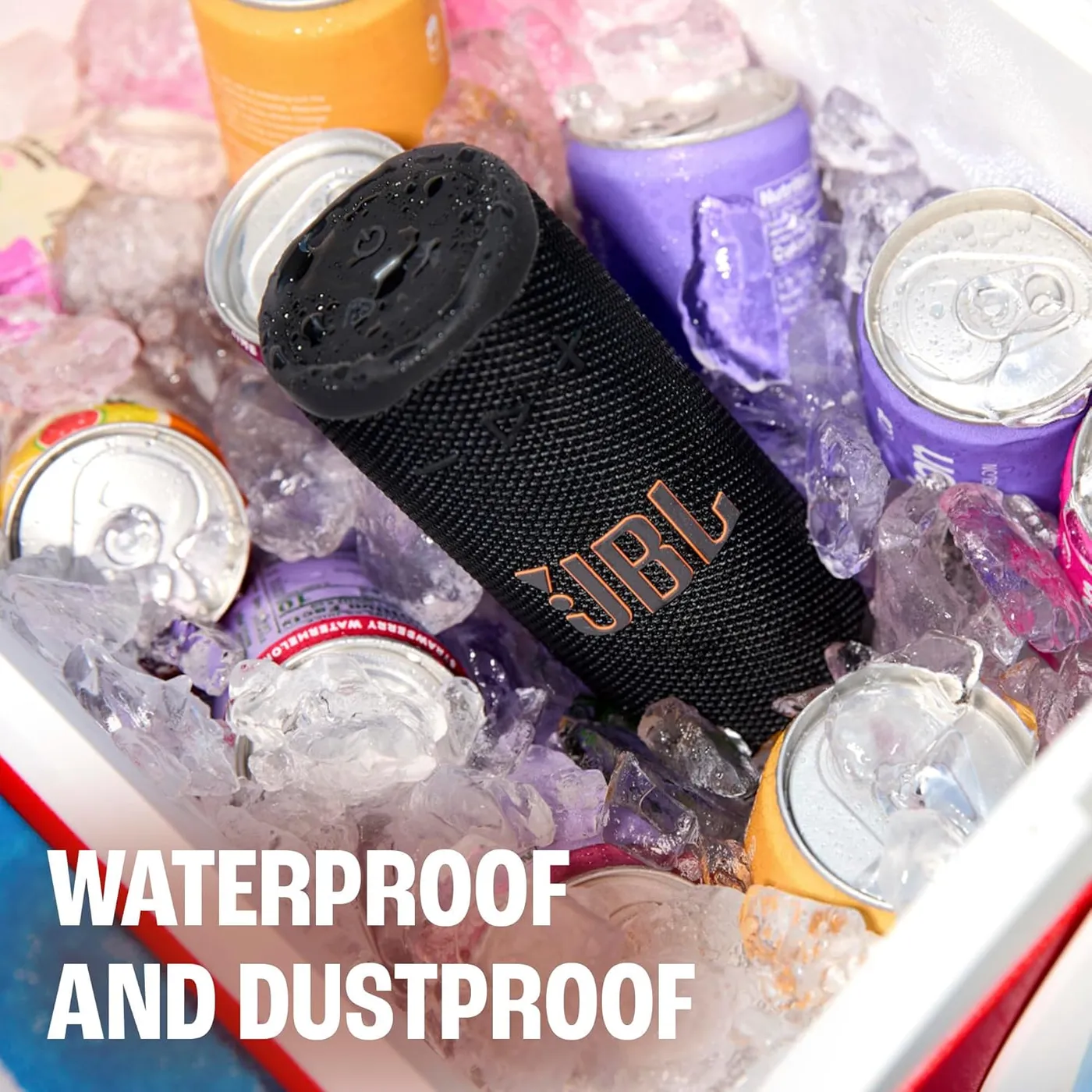
Build quality is where this little speaker earns its keep. The IP68 rating is no marketing gloss. It covers full submersion, dust ingress, and a one-meter drop onto concrete. You can take it to the pool, the beach, or a muddy campsite without flinching. The fabric-and-silicone shell shrugs off knocks, and the whole thing feels dense and solid. That mark follows IEC 60529, the international ingress-protection standard. It's worth knowing, because not every "waterproof" speaker is held to the same bar.
At roughly 0.85 pounds and about six inches tall, it's close to the size of a tall drink can. As a result, it's genuinely pocketable in a jacket or side pouch. It also slots into most cup holders and backpack sleeves. There's no built-in clip or strap, however, which is the one ergonomic miss. Add-on silicone sleeves with loops exist, but they're a separate purchase.
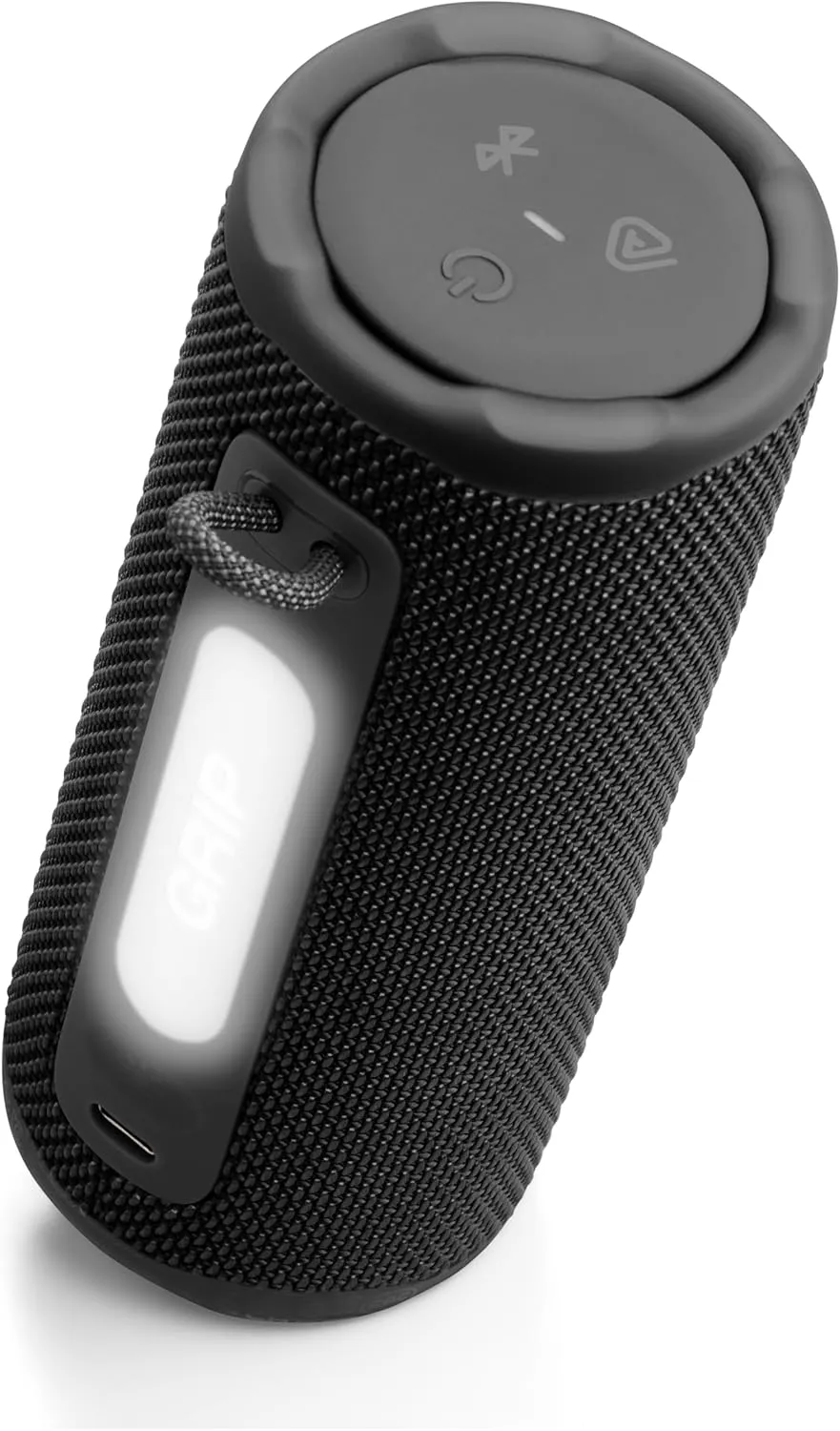
The ambient light strip is the visual signature. It runs up one side and shifts color in sync with the music. Themes and brightness are set from the app. In daylight it's easy to ignore. After dark, though, it turns a backyard or a tent into something more atmospheric. For anyone who wants their speaker to show off a little, it's a real draw.
The light does sip power, so leaving it on full brightness will shorten a session. That's an easy trade to manage, and the effect is worth it for the right setting.
Battery life and charging
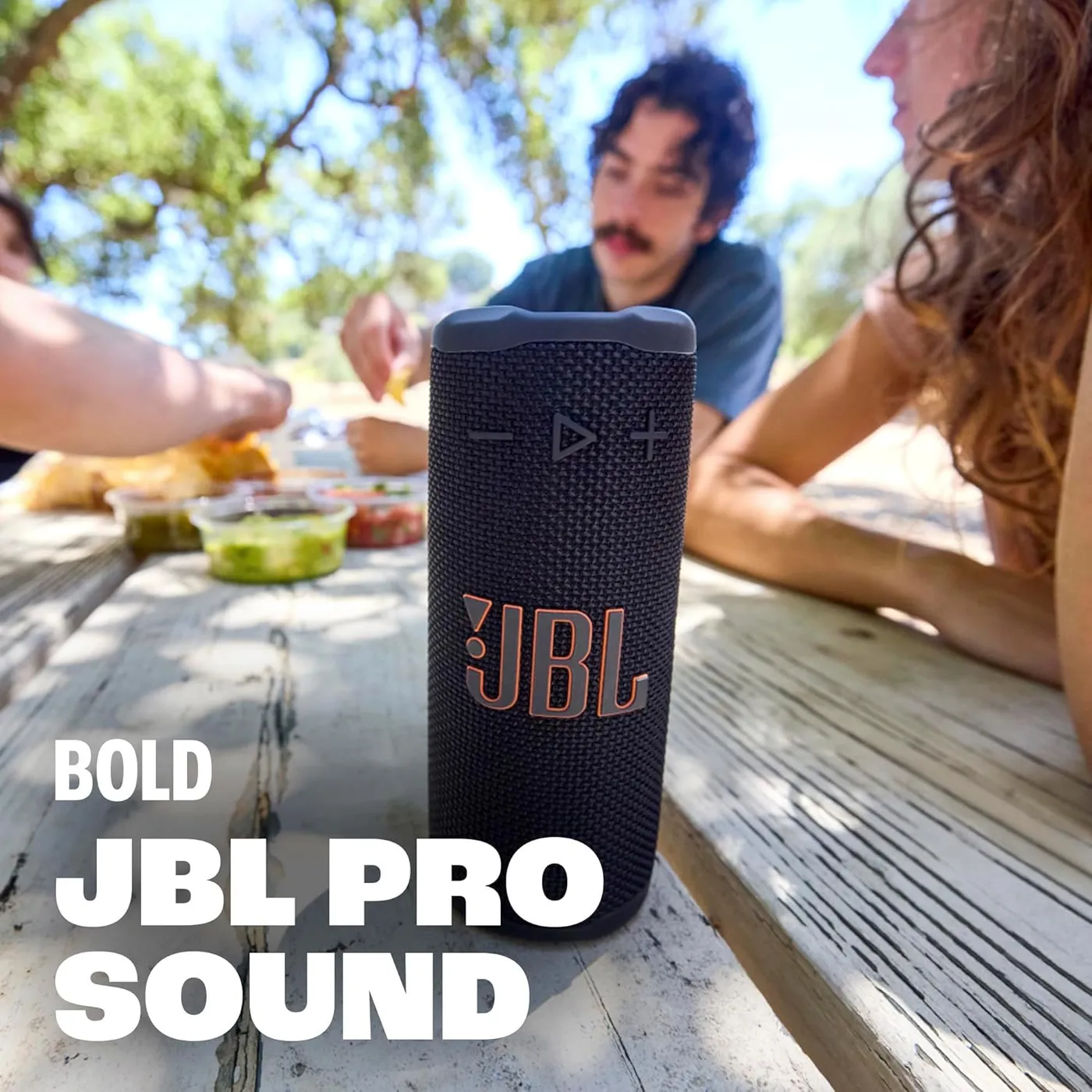
For its size, the Grip holds a real charge. JBL rates it at up to 14 hours — about 12 on a charge, plus a couple more in a lower-output Playtime Boost mode. At the moderate volumes most people actually use, it comfortably gets through a day at the beach or a long evening in the yard. Treat 14 hours as a best case rather than a promise, and you'll rarely feel short-changed.
Runtime does scale with how hard you push it. High volume and the ambient light both draw more power, so running both flat-out trims the figure noticeably. That's true of every speaker in this class, though, and it's easy to manage. Dim the light or ease off the volume, and the battery stretches right back out. For a speaker you'll toss in a bag and forget about, that flexibility matters more than a headline number.
Charging happens over USB-C, which brings the one packaging quirk worth flagging. JBL doesn't put a cable or wall adapter in the box, so you supply your own. For most people with a drawer full of USB-C cables, that's a non-issue — just have one ready before the first charge. An ordinary USB-A-to-USB-C cable does the job. Once it's connected, charging from empty is quick, and a short top-up buys a meaningful chunk of playtime. There's no wireless charging or dock, but for a speaker this portable, a single USB-C port is exactly what you want. It even tops up from the same charger as your phone, which keeps a travel kit simple.
Connectivity, the app, and multi-speaker pairing
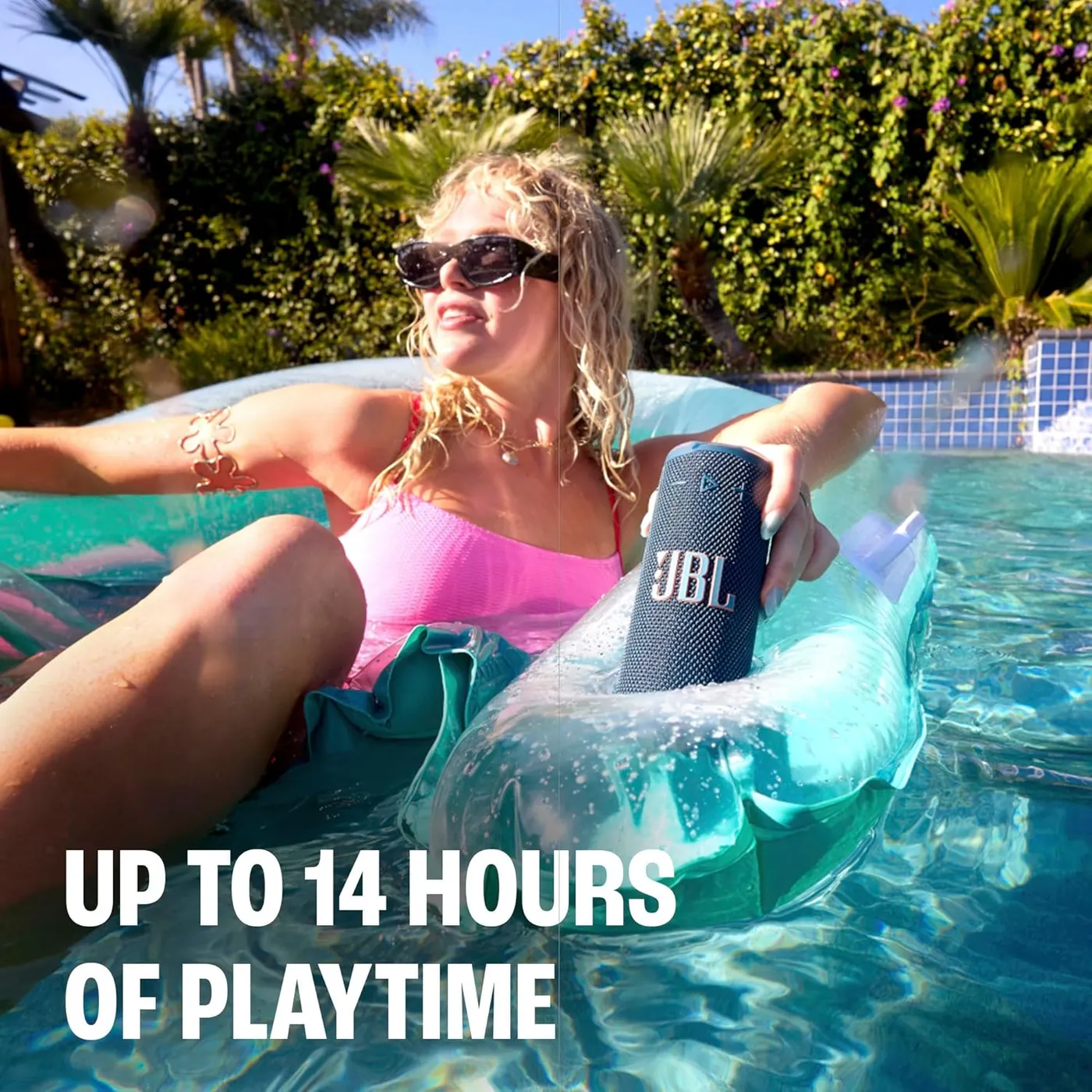
Bluetooth pairing is quick and stable. The JBL Grip connects to a phone in seconds. It holds the link across a typical room without dropouts or stutter. This speaker is built to move between a kitchen counter, a patio, and a bag. That reliability counts for more than any line on a spec sheet.
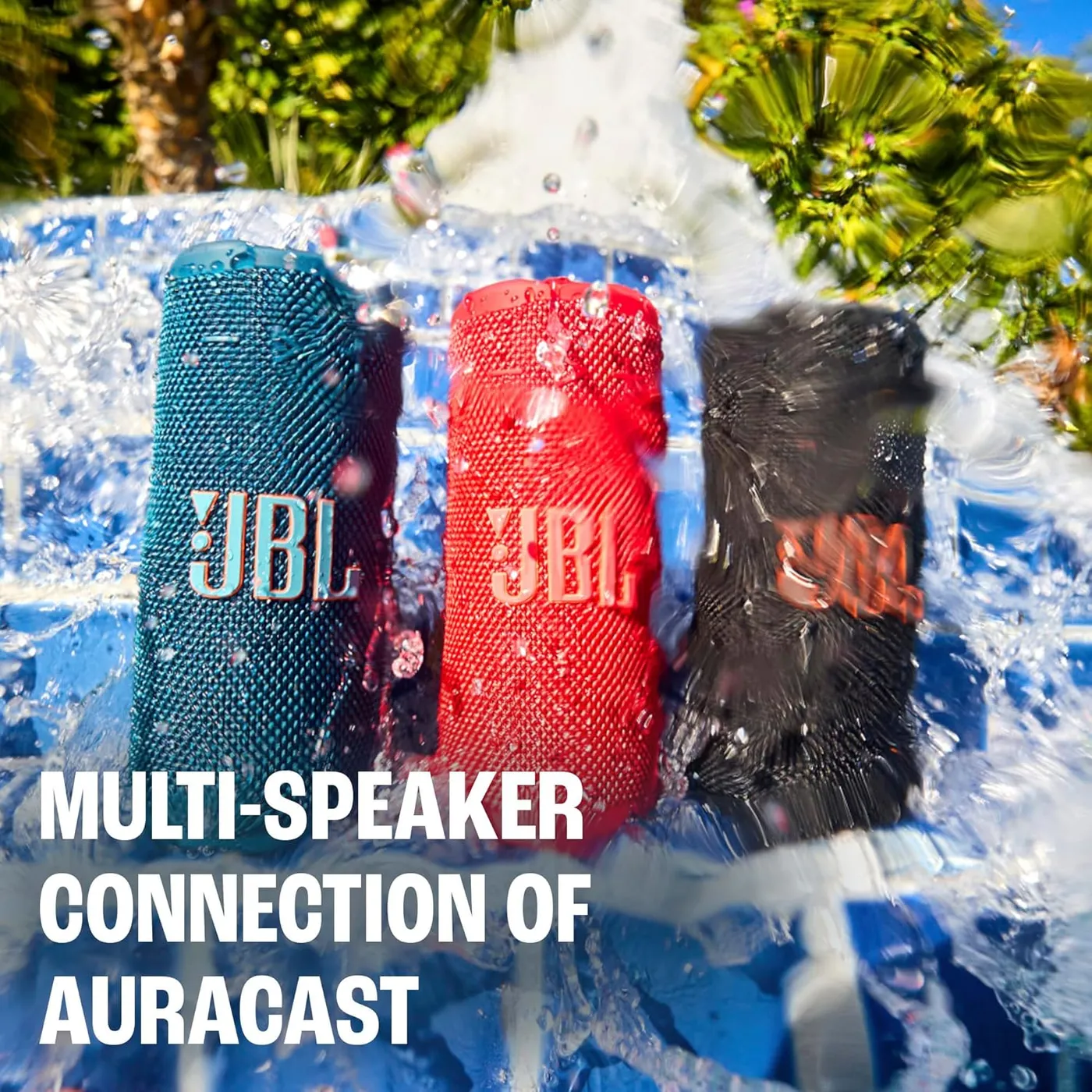
Multi-speaker pairing is the real party trick. Link two units, and you get proper left/right stereo. Tie several compatible JBL speakers together, and they play in sync through Auracast. Say you already own a recent JBL, like a Charge or another Grip. Adding this one expands the system instead of replacing it. That ecosystem pull is a genuine advantage, because each speaker makes the next one more useful.
The companion app ties everything together. Beyond the seven-band EQ, it handles firmware updates, light customization, a battery readout, and pairing setup. Checking an exact battery percentage is genuinely useful here. After all, runtime on this speaker varies with how you use it. Better still, the app stays out of the way and doesn't nag.
There's no 3.5mm input and no aux fallback. So this is a wireless-only speaker, a small limitation if you hoped to hardwire an older source. It also leans on the app for its best tricks. That said, the core listening experience works straight out of a basic Bluetooth pairing. For the way most people use a speaker like this, connectivity is a strength rather than a compromise.
Value and where it fits
Stacked against the field, the JBL Grip makes a strong value case in the sub-$100 bracket. The caveat is that you have to weight the right things. You're paying for real ruggedness, brand-grade tuning, the light show, and room to scale into a multi-speaker rig later. Next to no-name budget speakers, it sounds tighter and feels far more durable.
The closest in-house comparison is the JBL Clip 5. It's smaller, clips anywhere, and costs less. That makes it the better choice when portability and a built-in carabiner matter more than fuller sound. Step up to the JBL Flip 7 instead, and you gain a bigger driver, louder output, and longer endurance. The price jump is modest, so it's the move to make if room-filling volume is the priority. Meanwhile, the Bose SoundLink Micro plays in the same size class. It offers cleaner build polish and, notably, a charging cable in the box. The catch is that it costs more and tunes neutral rather than bass-forward.
Where this speaker wins is the blend. It's tougher than the Clip, more pocketable than the Flip, and more fun than the understated Bose. The only things holding it back are the bring-your-own cable and a battery that rewards a lighter touch. Neither is a performance flaw, and both are easy to live with.
So it comes down to expectations. Keep a USB-C cable handy and treat the rated battery as a ceiling, and the Grip is one of the easiest small speakers to recommend at the price. If you want every accessory in the box and all-day volume without a recharge, one of the alternatives might fit better — but for most buyers, the Grip lands squarely in the sweet spot.
Pros: What we liked
- Pro: Bass-forward sound with real low-end weight from a can-sized enclosure
- Pro: IP68 rating survives submersion, dust, and one-meter drops, not just splashes
- Pro: Customizable ambient light strip adds genuine after-dark atmosphere
- Pro: Pairs two units for true stereo and ties into JBL's multi-speaker ecosystem
- Pro: Seven-band EQ in the companion app meaningfully reshapes the sound
Cons: What could be better
- Con: No USB-C charging cable or wall adapter included in the box
- Con: Battery life scales with volume and the light show, so the 14-hour rating is a best case
- Con: Mono output needs a second unit for true stereo separation
Best For
- Beach, pool, and backyard listeners who need a speaker that survives abuse
- Cyclists, commuters, and travelers who want pocketable, grab-and-go audio
- Existing JBL owners who want to expand into a multi-speaker setup
Not Ideal For
- First-time buyers who expect a charging cable included in the box
- Anyone needing all-day runtime at high volume without a recharge
- Listeners who want true stereo imaging from a single speaker
| Specification | Details |
|---|---|
| Output Power | 16W, mono |
| Frequency Response | Up to 20 kHz |
| Battery Life | Up to 14 hours (12h + 2h Playtime Boost) |
| Waterproofing | IP68 (waterproof, dustproof, drop-proof) |
| Connectivity | Bluetooth with Auracast multi-speaker pairing |
| Charging | USB-C (cable not included) |
| Weight | 0.85 lb (~385 g) |
Alternatives Worth Considering
Final Verdict
The JBL Grip is the small speaker to point most people toward when they want something rugged, loud for its size, and genuinely fun to use outdoors. It nails the fundamentals — bass-forward sound, IP68 durability, and an ambient light that earns its place — and it slots neatly into JBL's wider speaker ecosystem. Plan to supply your own USB-C cable, and treat the 14-hour rating as a best case, and there's very little left to complain about. For anyone who wants brand-grade sound and real durability in a package that fits a cup holder, the JBL Grip is an easy recommendation in the under-$100 class.
Frequently Asked Questions
Does the JBL Grip come with a charging cable?
No. It charges over USB-C, but JBL doesn't include a cable or wall adapter, so you'll need to supply your own before the first charge.
Is the JBL Grip waterproof?
Yes. It carries an IP68 rating, which covers full submersion, dust, and a one-meter drop onto a hard surface — safe for pool and beach use.
How long does the battery actually last?
It's rated up to 14 hours, but real-world runtime drops sharply at high volume and with the ambient light running. Treat 14 hours as a best case.
Can you pair two JBL Grips for stereo sound?
Yes. Pairing two units through the JBL Portable app gives true left/right stereo, and several compatible JBL speakers can play in sync via Auracast.
The Verdict
A rugged, big-sounding pocket speaker that punches well above its size — just plan to bring your own USB-C cable.