JBL Charge 6 Review: 45W, AuraCast, AI Sound Boost
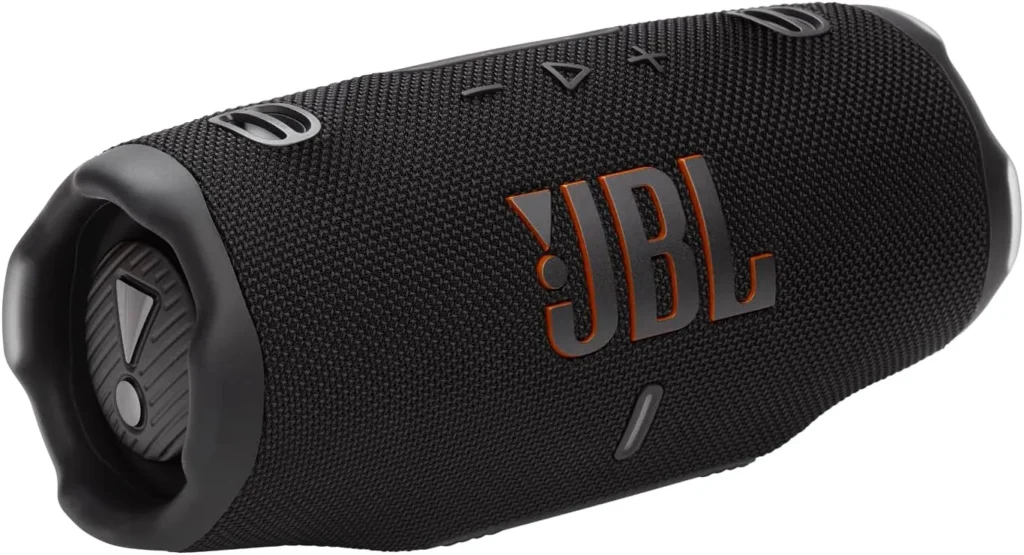
Strong sound, AuraCast pairing, and a powerbank that actually works — but the missing USB-C cable, divisive AI Sound Boost, and Charge-5-to-6 regressions hold it back.
The JBL Charge 6 sits in a spot JBL has owned for nearly a decade. This is the mid-size waterproof speaker, big enough to fill a backyard, small enough for a backpack strap. Headline changes versus the Charge 5: AuraCast stereo pairing, a more powerful 45W driver, a removable carrying strap. AI Sound Boost is the new and divisive addition. Whether the upgrade story holds together, however, depends on what got dropped. Several Charge 5 features have quietly disappeared. JBL's 28-hour battery claim needs serious caveats. And the box arrives without a USB-C cable — the most jarring omission at this price.
Sound quality of the JBL Charge 6
The JBL Charge 6 uses a redesigned racetrack woofer paired with a tweeter and dual passive radiators. Output rises to 45W, up from the Charge 5's 30W. That step matters in real listening tests. Volume now reaches genuinely loud — enough to fill a backyard or compete with conversation in an open patio setting. JBL's clipping management at high volumes is among the best in the category. Push the speaker to painful levels and distortion doesn't creep in. That's not a claim every portable speaker can back up.
The sound signature leans warm and bass-forward, which is the JBL house style. Bass response is genuinely strong for a unit this size. Vocal clarity is good at moderate volumes but starts to wash out against the bass past 70-75% output. Listeners coming from a Charge 4 will hear meaningfully deeper low end and fuller midrange. Charge 5 owners will hear a smaller jump. The 45W boost is real, but the Charge 5 was already loud enough for most use cases.
The one polarizing element is AI Sound Boost, the headline new feature. It's a real-time DSP processor that prioritizes the center channel of the mix, primarily vocals and lead instruments. JBL's intent is louder-perceived loudness without raising actual output. In practice it works as designed, but the trade-off splits listeners. For carefully mastered material with deliberate stereo imaging or dynamic arrangement, the algorithm can audibly damage the mix. The boost overprioritizes center content at the cost of stereo imaging and harmonic balance. Casual listeners who want vocals to cut through outdoor noise will love it. Anyone wanting accurate playback should disable it in the JBL Portable app.
Build quality and waterproofing
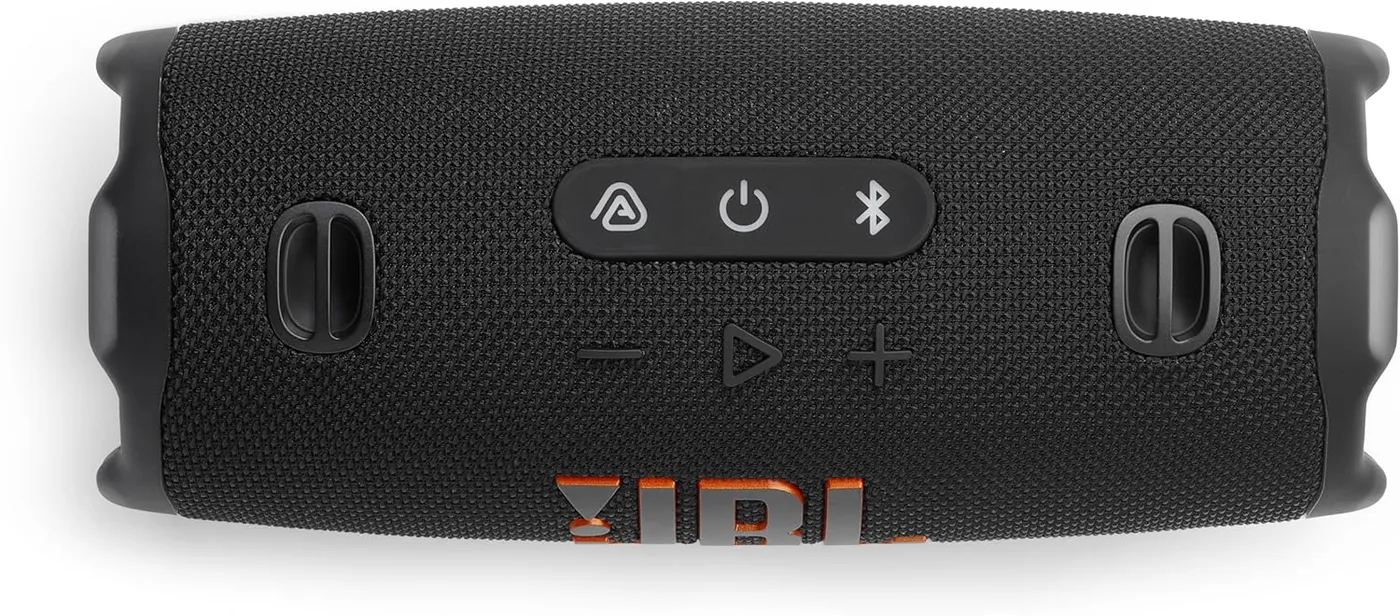
The Charge 6 carries IP67 dust and water resistance, matching the Charge 5. JBL certifies it under IEC 60529 standards for dust and water ingress. Drop-proof certification is new to this generation. Pool drops, beach sand, light rain, and brief shower mounting are all handled in real use. Drop ratings cover falls onto hard surfaces from roughly one meter, which protects against most real-world accidents. Falls onto concrete and rocky terrain don't typically damage the cabinet. A new removable carrying strap is the most meaningful physical design addition. It clips to integrated mounting points at each end of the speaker and provides a comfortable shoulder carry. For backyard parties, beach trips, or carrying alongside a beach bag, the strap is a substantial upgrade. Charge 5's fixed handle loop didn't offer the same flexibility.
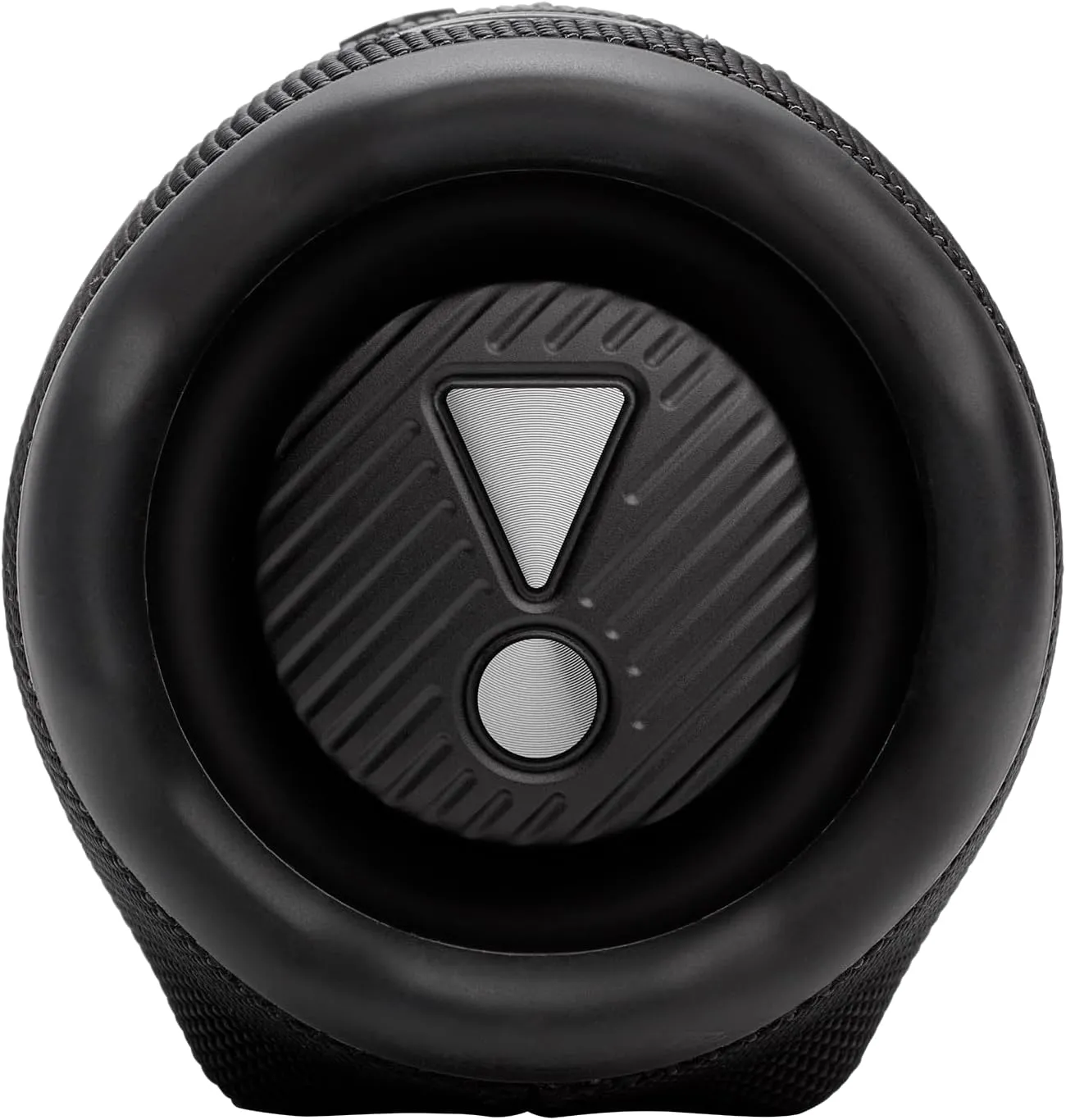
Two design changes versus the Charge 5 warrant flagging directly. JBL removed the rubber flap covering the USB-C charging port. The change has raised reasonable questions about how the speaker still claims IP67 protection with an exposed port. Officially, the standard does cover this configuration. IP67 certifies the unit as a whole, not just one component. Closer attention is required, however, when storing the speaker damp. Bag storage with the port facing down warrants the same caution. A second change is the loss of raised tactile control buttons. Charge 6 controls are now flush against the speaker body. Cleaner aesthetics, however, come at the cost of blind operation when the speaker is mounted out of sight.
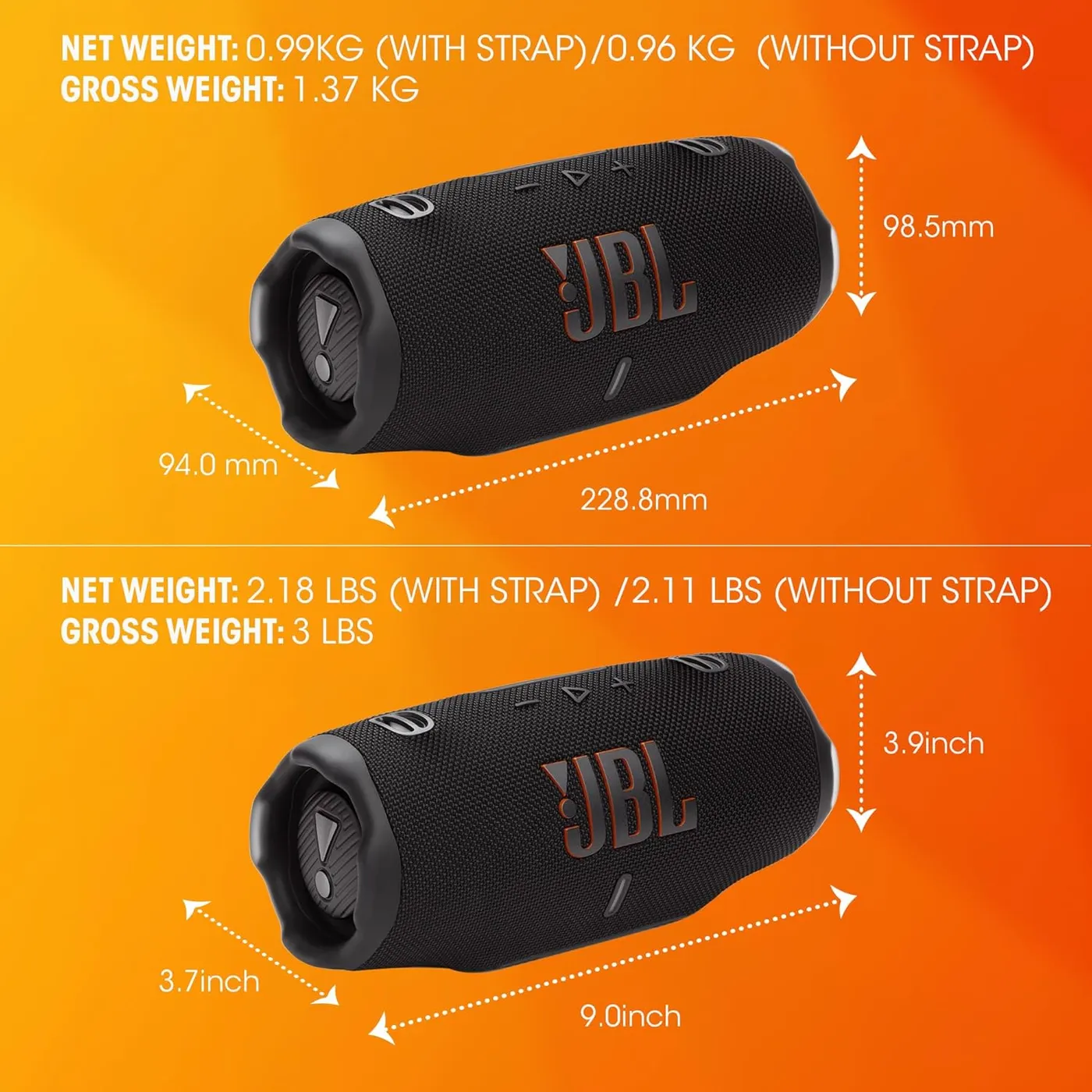
Weight has climbed to roughly 1 kg, up modestly from the Charge 5's 960g. The increase is noticeable when carrying the speaker for any distance, though the new strap mitigates the issue. Build quality itself feels substantially more rugged than the Charge 5. Reinforced rubber bumpers sit at each end. The fabric grille should resist UV and saltwater exposure well.
AuraCast and connectivity
Bluetooth 5.3 pairs quickly with phones, tablets, and laptops, and the connection holds at typical indoor distances of 12-15 meters. Outdoor range drops to 8-10 meters with line-of-sight, which is standard for the protocol and form factor. The standout connectivity feature is AuraCast support. It replaces JBL's older PartyBoost protocol used in the Charge 5 and earlier generations.
AuraCast lets two Charge 6 units pair for true stereo. It can also sync any number of AuraCast-capable JBL speakers for simultaneous playback. Two-unit stereo pairing works reliably for parties and outdoor events. The headline compatibility note: AuraCast and PartyBoost are not cross-compatible. Older JBL speakers with PartyBoost won't pair with the JBL Charge 6. That covers Charge 5, Flip 5, Flip 6, and Xtreme 3 owners — and breaks stereo plus multi-speaker playback across generations. This is a hard break in the JBL ecosystem and worth confirming before you upgrade. For new buyers, AuraCast is the better protocol going forward. For anyone holding a PartyBoost lineup, however, the upgrade locks you into rebuilding the ecosystem from scratch.
The Charge 6 lacks a built-in microphone, so speakerphone calls have to stay on your phone. Multipoint Bluetooth — connecting to two source devices simultaneously — is also absent. For most listeners that's fine. For anyone juggling a phone and laptop throughout the day, however, you'll re-pair manually each time you switch devices.
Battery life and the powerbank function
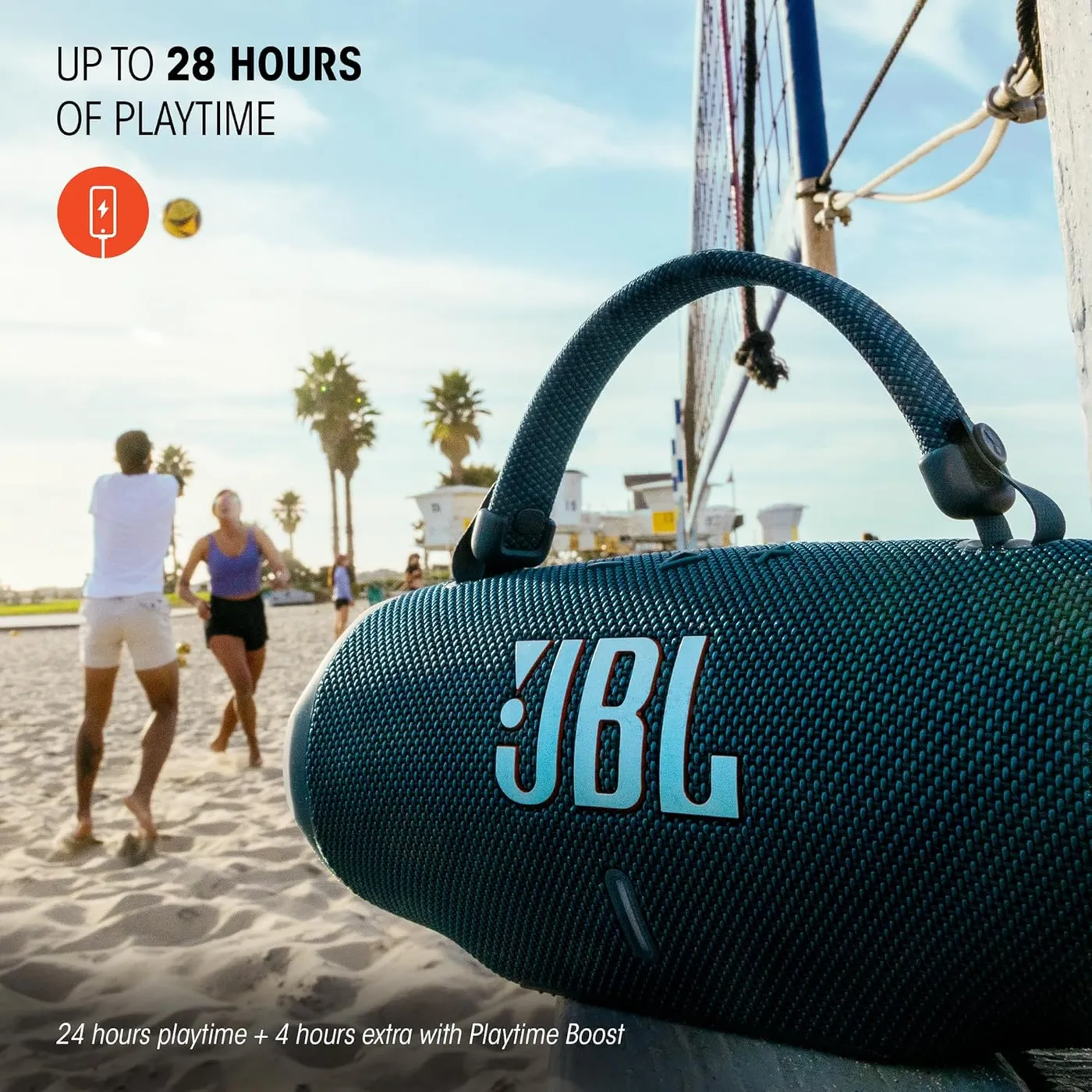
JBL rates battery life at 28 hours, the highest of any current Charge generation. The headline number is achievable, but only under specific conditions. At moderate volume — roughly 50% — with AI Sound Boost disabled, the JBL Charge 6 holds 20-22 hours consistently. With AI Sound Boost active and bass-heavy content at moderate volume, runtime drops to 15-17 hours. At high volume with bass-heavy music, expect closer to 8-10 hours of continuous use. Realistic mixed-volume use lands around 15 hours before recharge. That's well below the advertised 28 hours, though still strong for the category.
Charging the JBL Charge 6 is via USB-C with no cable in the box. It's the most jarring omission at this price. At a mid-tier retail price, buyers reasonably expect a cable included. JBL's choice not to include one is a deliberate cost-out, and the company defends it as environmentally motivated. The practical effect: anyone without a USB-C cable on hand needs to source one. The speaker is unusable until you do. A full charge from empty takes roughly 2 hours.
A built-in powerbank function works as designed and is genuinely useful for travel. The Charge 6 carries a USB-A output port that can charge phones, earbuds, or other devices. A full phone charge across two layovers on a flight day still leaves reserve battery in the speaker. This feature is rarely deployed but valuable when it's needed.
JBL Portable app and the AI Sound Boost question
The JBL Portable app is optional but unlocks meaningful functionality. Features include a custom graphic EQ with preset profiles and AuraCast multi-speaker management. Firmware updates and the AI Sound Boost toggle round out the controls. It's well-designed, pairs reliably, and doesn't gate core speaker functionality behind login. The Charge 6 works fully as a Bluetooth speaker without ever installing the app. That's the right approach at this price point, where forced app dependency is increasingly common and increasingly resented.
AI Sound Boost is the headline new app feature and deserves a closer look. The mode applies real-time DSP processing to incoming audio. Center channel content gets prioritized — vocals, lead instruments, and anything positioned dead-center in the mix. Intent is to make the speaker feel louder than its actual output. JBL's boost pushes perceived loudness on the elements listeners focus on. In casual outdoor settings the effect works as advertised. Vocals cut through ambient noise and conversation more cleanly than they would with flat playback.
The trade-off is that careful stereo mixes and dynamically arranged tracks lose harmonic balance and spatial separation. The algorithm overprioritizes center content. Cost: mix integrity. Casual listeners will likely not notice or care. Anyone wanting accurate playback should disable the feature in the app on first setup.
For power users on the JBL Charge 6, the app's custom EQ pairs well with source-side EQ. Spotify, Apple Music, and other streaming services all stack cleanly. Power users stack the Spotify EQ with the JBL Portable app EQ for maximum bass response without distortion. The technique works because the JBL clipping management is robust enough to handle aggressive pre-EQ. For most listeners the app's presets cover typical use cases without needing manual tuning.
Value vs the Charge 5 and the upgrade question
At its typical mid-tier retail price, the JBL Charge 6 sits in a competitive bracket of portable speakers. Direct competitors include the Bose SoundLink Flex, the Sony ULT Field series, and the older Charge 5. All three remain widely available at meaningful discounts. Against the Bose, JBL wins on output, battery life, AuraCast pairing, and the powerbank function. The Bose, in turn, holds the edge on tighter bass tuning, built-in microphone, and overall build polish. Sound character is again the deciding factor. The Bose is the more neutral listen, the JBL the more energetic.
Against the Charge 5, the upgrade picture is mixed. AuraCast and the new 45W driver are real improvements, and the carrying strap adds genuine utility for travel. Set against those: the missing port cover, the loss of raised tactile buttons, and slightly shorter typical battery life. AI Sound Boost adds another polarizing variable. Most existing Charge 5 owners can reasonably skip this generation, especially if their PartyBoost ecosystem is invested. For single-speaker use, a discounted Charge 5 is sometimes the smarter buy.
Against the smaller Flip 6, the Charge 6 wins on output, bass extension, battery, and the powerbank function. The Flip 6 wins on weight, price, and one-handed portability. The size class genuinely matters — the JBL Charge 6 is meaningfully larger and heavier than the Flip 6. Anyone needing true backpack-strap portability should consider the smaller speaker instead. For everything bigger than a clipped Flip-class speaker, however, the JBL Charge 6 is the right pick.
For anyone coming from a Charge 4 or earlier, the upgrade is straightforward and worthwhile. USB-C charging, AuraCast pairing, 45W output, and the carrying strap together justify the move. Charge 5 owners without a PartyBoost ecosystem face a closer call. Owners with multiple PartyBoost speakers, however, can more clearly skip this generation. The ecosystem break is the dealbreaker.
Pros: What we liked
- Pro: 45W of clean output produces real room-filling volume without clipping at high levels
- Pro: AuraCast stereo pairing connects with the broader JBL ecosystem reliably
- Pro: Built-in powerbank actually works — charges a phone across multiple plane layovers
- Pro: Removable carrying strap is a genuinely useful addition for outdoor portability
- Pro: JBL Portable app EQ pairs well with source-side EQ for fine-tuned bass response
- Pro: IP67 waterproof and drop-proof construction confirmed in real outdoor use
- Pro: Clean clipping management lets the speaker reach painful volumes without distortion
Cons: What could be better
- Con: No USB-C charging cable included in the box at this price point
- Con: AI Sound Boost is divisive — overprocesses center vocals and feels intrusive by default
- Con: 28-hour battery claim achievable only at modest volume; real-world lands closer to 15
- Con: Several Charge 5 features were dropped: charging-port cover, raised tactile buttons, lighter weight
Best For
- Listeners coming from a Charge 4 or earlier wanting a major upgrade with modern features
- Outdoor users prioritizing 45W output and drop-proof durability for pool, patio, and travel
- JBL ecosystem buyers planning to pair multiple speakers via AuraCast for stereo or party mode
- Anyone needing a portable speaker that doubles as a phone powerbank for travel
Not Ideal For
- Charge 5 owners who don't need AuraCast — the upgrade comes with real feature regressions
- Pro audio listeners wanting neutral reproduction — AI Sound Boost interferes with mixes
- Buyers expecting a complete unboxing — no USB-C cable means an immediate extra purchase
| Specification | Details |
|---|---|
| Output Power | 45W RMS |
| Driver | Racetrack woofer + tweeter + dual passive radiators |
| Battery Life | 28 hours rated; 15-22 hours real-world depending on volume and AI Sound Boost |
| Waterproofing | IP67 (dust + water; 1m for 30 min) |
| Drop Protection | Drop-proof certified to roughly 1 meter |
| Bluetooth | 5.3 with AuraCast |
| Charging | USB-C in (cable not included); USB-A powerbank out |
| Weight | ~1 kg |
Alternatives Worth Considering
Final Verdict
The JBL Charge 6 delivers the headline upgrades JBL needed. AuraCast pairing, 45W output, a removable carrying strap, and a working powerbank function are all real. AI Sound Boost is the divisive new feature. The missing USB-C cable is the most jarring omission at this price. Charge 5 owners face a more complicated upgrade decision than the marketing suggests. Real regressions on port cover, tactile buttons, and weight come alongside the legitimate gains. Anyone upgrading from a Charge 4 or earlier will find this an easy recommendation. Charge 5 owners should look closely at their PartyBoost ecosystem before pulling the trigger. As a standalone purchase for someone new to JBL's portable line, the Charge 6 earns its place. The unboxing caveat is real: you'll need a USB-C cable on hand from day one.
Frequently Asked Questions
Does the JBL Charge 6 come with a USB-C cable?
No. JBL ships the Charge 6 without a charging cable. You'll need to supply your own USB-C cable — the most jarring omission at this price.
Can the JBL Charge 6 pair with my older JBL Flip or Charge speakers?
No. The Charge 6 uses AuraCast, while the Charge 5, Flip 5, Flip 6, and Charge 4 use PartyBoost. The two protocols are not cross-compatible — only AuraCast-capable speakers will pair for stereo or multi-speaker playback.
Is the 28-hour battery claim realistic?
At moderate volume with AI Sound Boost disabled, yes — the speaker holds 20-22 hours. Most real-world use lands closer to 15. High-volume bass-heavy playback drops runtime to 8-10 hours, and AI Sound Boost active draws additional power.
Is the JBL Charge 6 a worthwhile upgrade from the Charge 5?
Mixed. AuraCast, 45W output, and the carrying strap are real upgrades. But the Charge 6 drops the charging-port cover, raised tactile buttons, and slightly shorter typical battery life of the Charge 5 — and is heavier. Most existing Charge 5 owners can reasonably skip this generation.
Can I turn off the AI Sound Boost feature?
Yes, through the JBL Portable app. Disabling AI Sound Boost is recommended for music with carefully mastered vocals or stereo imaging. The boost re-prioritizes center content at the cost of overall mix balance.
The Verdict
Strong sound, AuraCast pairing, and a powerbank that actually works — but the missing USB-C cable, divisive AI Sound Boost, and Charge-5-to-6 regressions hold it back.