BassBloom Roar 3 Review: Loud Budget Speaker, Real Quirks
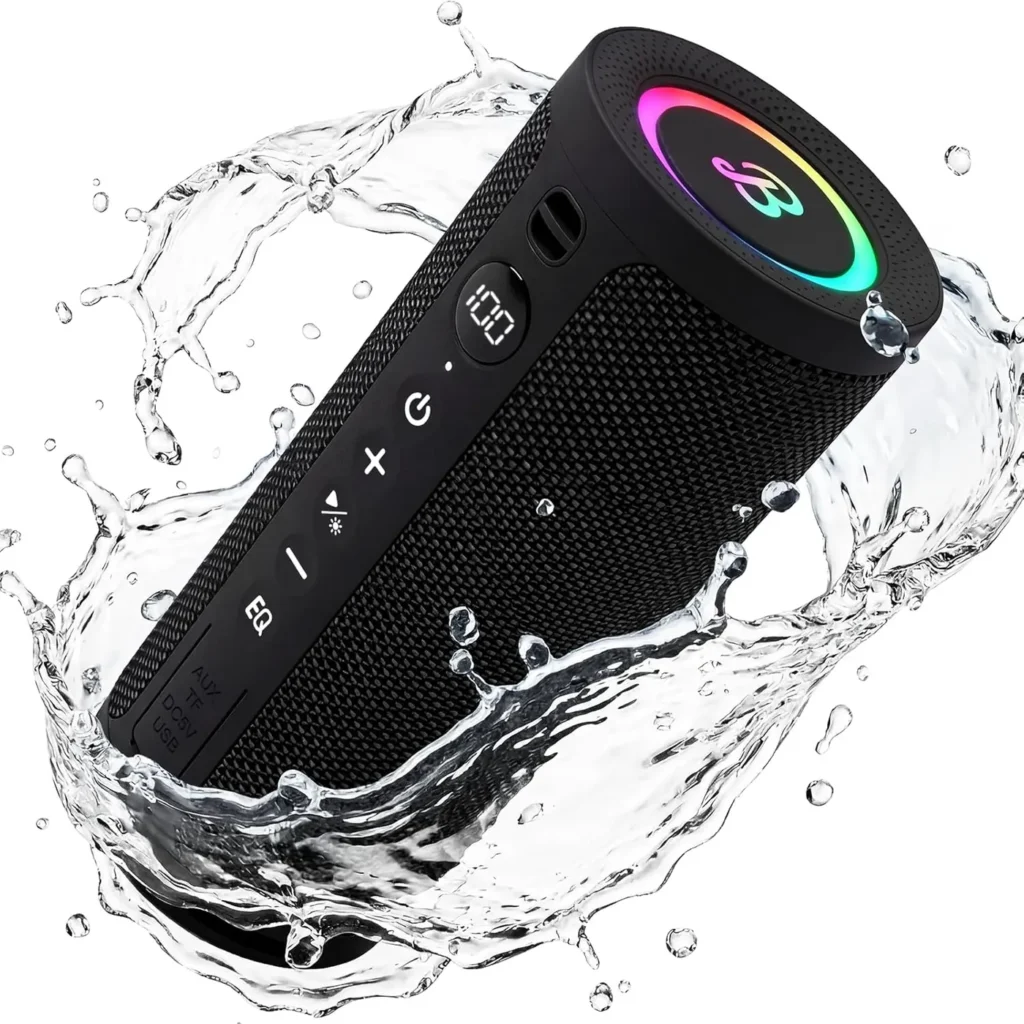
A loud, bass-forward budget speaker with unusually flexible inputs — just don't expect true stereo or a full 24 hours of battery.
Most sub-$30 Bluetooth speakers make the same promises and break them the moment you turn the volume up. The BassBloom Roar 3 gets further than most: it plays genuinely loud, it leans hard on bass, and it packs a set of inputs you rarely see at this price. The catch lives in the marketing. That '20W stereo' is really a single full-range driver, and the 24-hour battery figure comes from lab conditions you won't replicate at a party. Strip away the spec-sheet gloss, though, and what remains is still a capable little speaker — provided you know exactly what you're buying.
Sound quality of the BassBloom Roar 3
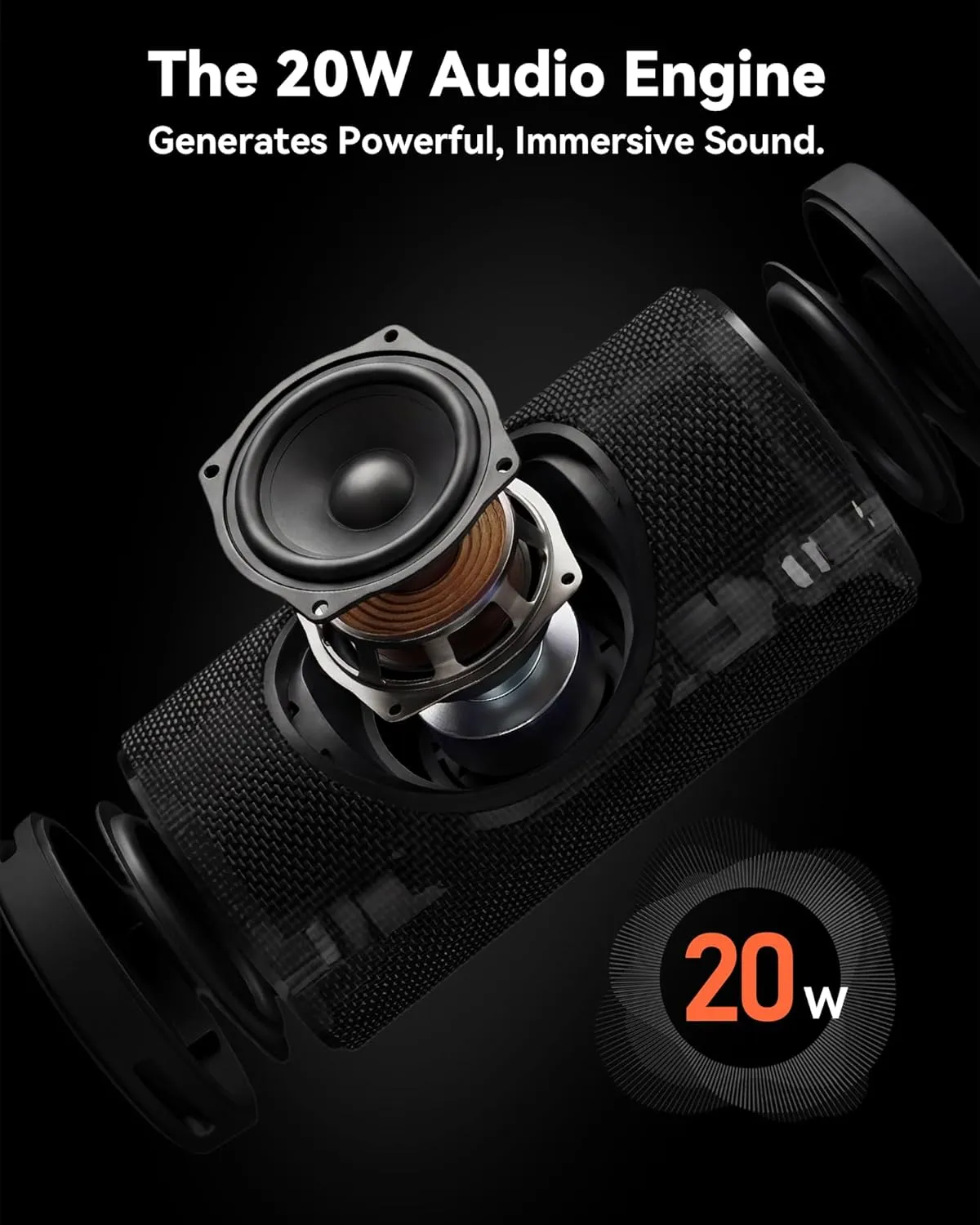
The BassBloom Roar 3 runs a single 52mm full-range driver. Dual passive radiators sit behind it. Together, they explain most of how this speaker sounds. For a compact cylinder, the low end carries real weight. The radiators move plenty of air, so bass lands with actual punch. That's rare at this price. Most budget units manage only a thin buzz. Flip on the JIKE Bass mode, and the effect grows bolder still.
At low to moderate volume, the result is genuinely good. Vocals stay clean. Bass stays full. For podcasts, audiobooks, and casual playlists, it's more than enough. There are also two EQ modes, so you can lean toward crisp vocals or heavier low-end depending on the track.
Push the volume higher, however, and the limits surface. The top end can sound slightly veiled. On busy or treble-heavy tracks, fine detail tends to smear rather than separate. Some of that softness comes from the sealed, water-resistant grille, which trades a little clarity for protection. It's a familiar compromise in rugged speakers.
The bigger caveat is the 'stereo' label, which oversells the reality. This is a mono speaker. As a result, the soundstage stays narrow no matter how loud the Roar 3 goes. For a backyard or a kitchen, that hardly matters. For critical listening, though, it simply isn't the right tool. Know which camp you fall into before you buy.
Design, controls, and lighting
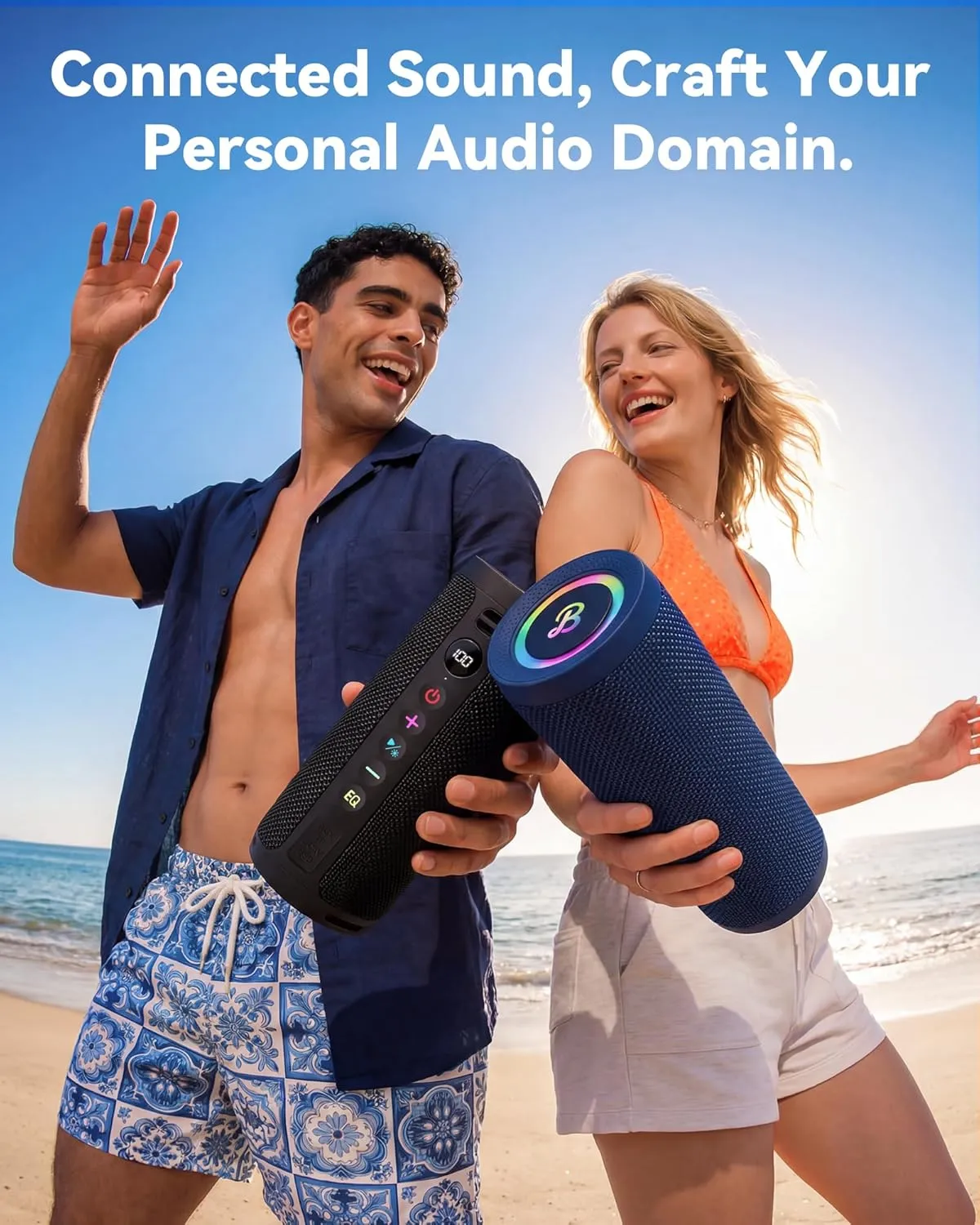
Physically, the Roar 3 feels sturdier than its price suggests. The body is wrapped in fabric. The end caps are rubberized. A braided carry strap loops off one end, so you can clip it to a backpack or hang it at a campsite. At roughly 480 grams, it travels easily.
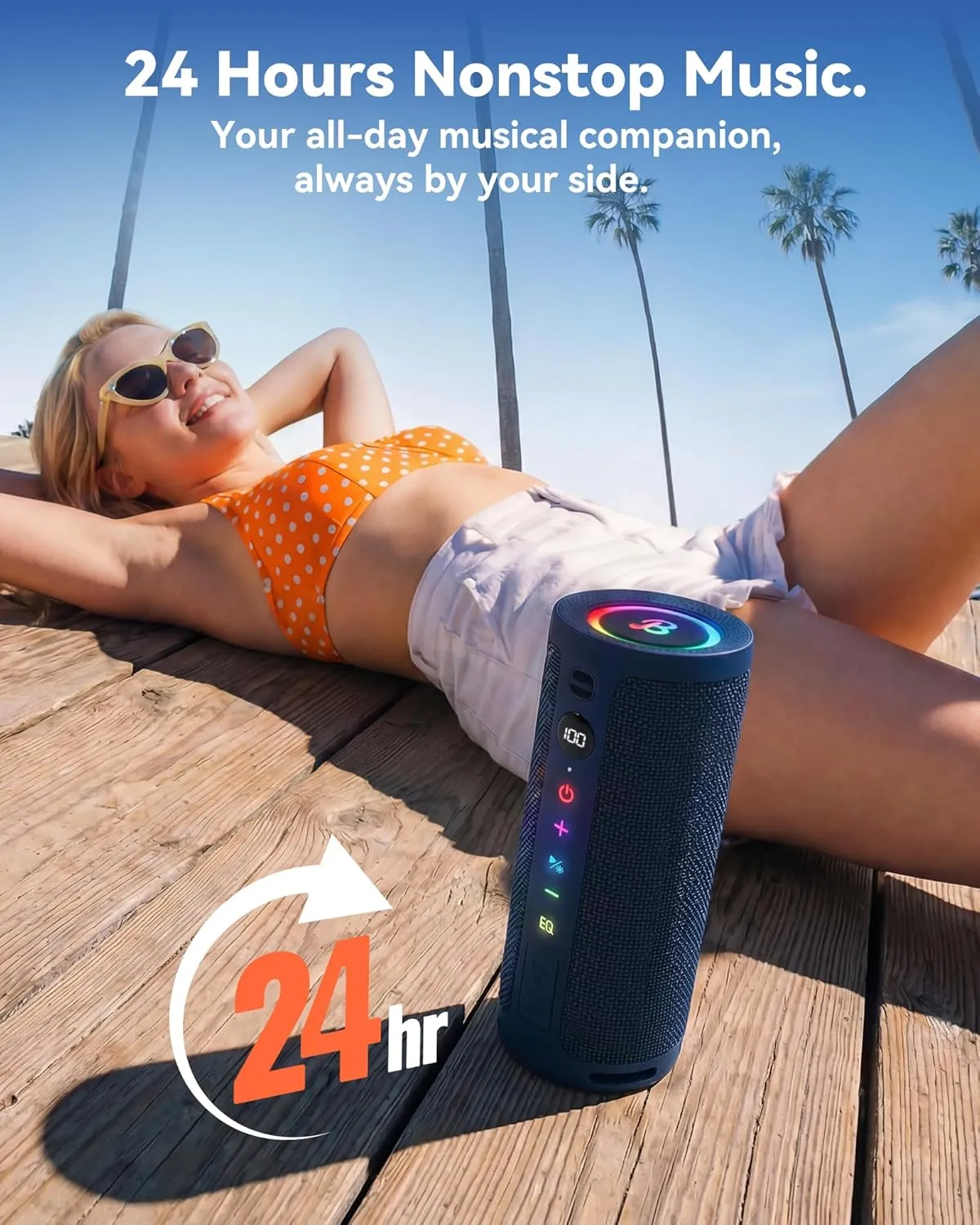
Touch-sensitive controls run along the top. They glow in RGB, and they respond quickly once the gestures become familiar. The layout covers the essentials: power, volume, track skip, play and pause, EQ, and a light-show toggle. Most actions map to a single tap. A few use a long press. It takes a day to learn, then becomes second nature.
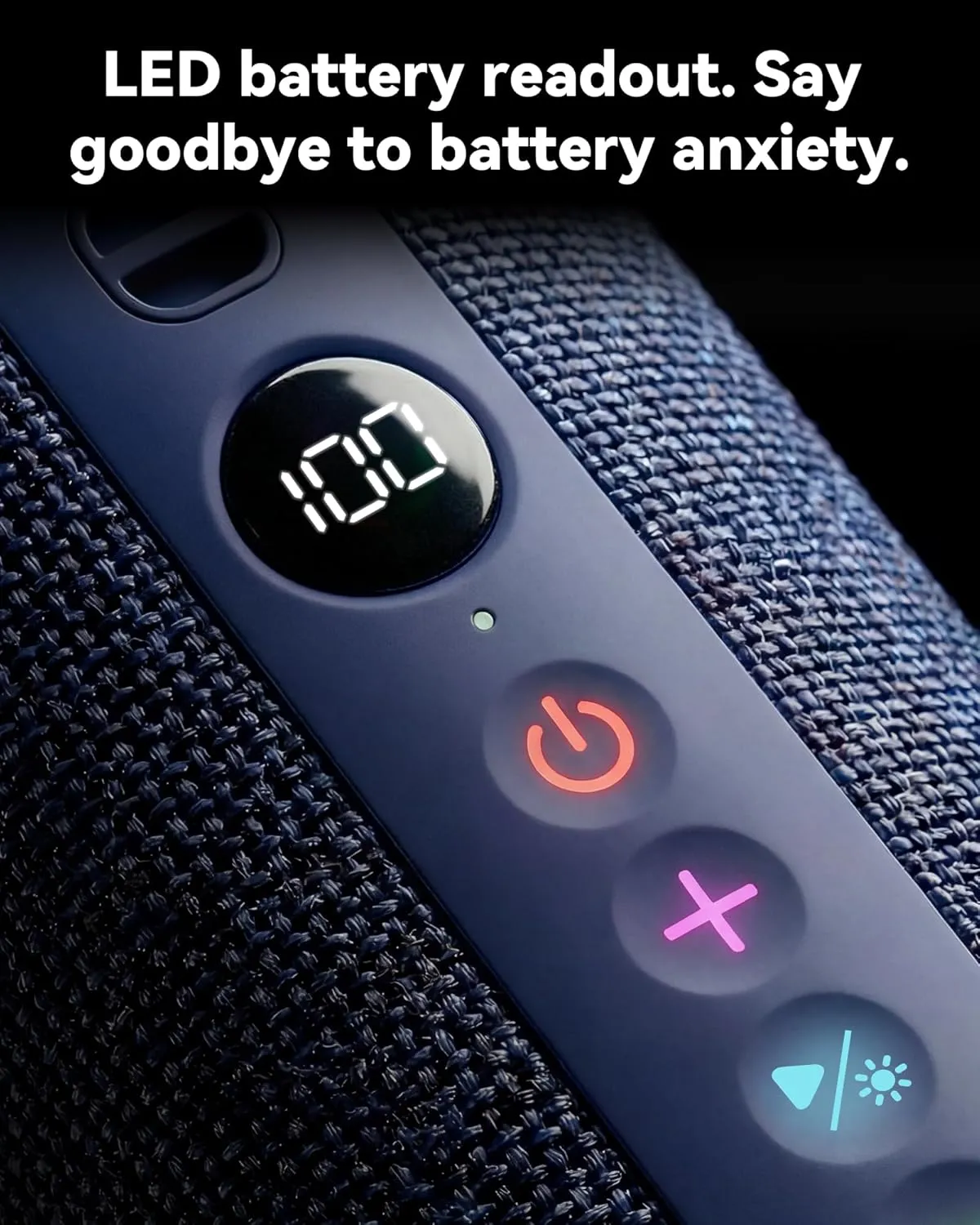
Best of all, a small LED screen shows the exact battery percentage. That's a genuinely useful touch, and most rivals at this price skip it entirely. You always know where the charge stands.
The RGB ring is the headline visual feature. It cycles through five modes — Cycle, Pulse, Blink, Vary, and Circle — that move with the music. Outdoors after dark, it looks great. That said, the lighting adds little to the actual sound. It also steadily drains the battery, so power users will often switch it off.
One design flaw stands out, too. The rubber flap covering the ports sits loosely. It can even pop open on its own. On a desk, that's a minor irritation. Given the speaker's water-resistance pitch, however, it matters more than it should.
Connectivity and input options
Connectivity is where this little speaker quietly outclasses its bracket. Bluetooth 5.4 handles the wireless side. It pairs fast, and it holds a steady signal across a typical room or backyard. Range rarely becomes an issue indoors.
The wired options are the real surprise, though. You get a 3.5mm AUX jack. You get a USB port. You also get a microSD card slot. As a result, the speaker can play music entirely on its own, with no phone in the loop. At this price, that breadth of inputs is genuinely rare. For travel, the beach, or a spotty-signal campsite, it's a practical edge.
The wireless experience isn't flawless, however. A handful of units show intermittent Bluetooth dropouts. Tellingly, those dropouts vanish the moment you switch to a wired source. That pattern points at the radio rather than at interference. If you land on one of those units, the AUX jack makes a dependable fallback.
There's an upside on the wireless side as well. TWS pairing lets you link two BassBloom Roar 3 units into a true left-and-right stereo pair. The improvement is immediate. Suddenly you get real separation, the one thing a single unit can't deliver. In practice, it's the most effective fix for the narrow soundstage. Two units still cost less than one mid-tier speaker, so it's a reasonable path if stereo matters to you.

Battery life and charging
The box headlines 24 hours. That figure, however, assumes 40% volume with the lights switched off. You won't hold those conditions in the real world. Turn the RGB on, push the volume for a gathering, and runtime drops. In practice, it lands closer to 10 to 12 hours.
That's still a comfortable all-evening figure for a speaker this size. It just isn't the all-weekend stamina the marketing implies. So plan around the realistic number, not the headline one.
There's also a quirk worth knowing about. Some units shed several percent in the first few minutes after a full charge. After that, they settle into a normal discharge curve. It looks alarming on the LED readout. Fortunately, it doesn't translate into meaningfully shorter playtime.
Charging happens over USB-C, which is the standard you'd want. A full top-up takes a couple of hours. Because the display shows an exact percentage, you're never left guessing about when to recharge the Roar 3. For a budget speaker, that little screen punches above its weight. It removes the usual end-of-night battery anxiety entirely.

Water resistance and everyday durability
The Roar 3 carries an IPX6 rating. In plain terms, it shrugs off heavy splashes, water jets, and rain. It is not, however, built for full submersion. That makes it a fine companion for the pool deck, the shower shelf, or a picnic caught in a drizzle. Just don't drop it in the water. The IPX6 rating is defined under IEC 60529, the international standard for ingress protection, and the speaker's behavior lines up with typical splash-proof use.
The weak link, again, is that loose port flap. Water resistance depends entirely on the cover staying sealed. So if it drifts open in a bag or near the water, the rating stops meaning much. The fix is simple: press it firmly shut before any wet use. Make that a habit, and you'll avoid trouble.
Elsewhere, the build holds up well. It takes knocks without drama. It handles sand, dust, and outdoor grime without complaint. Nothing about the construction feels likely to give out early under normal handling. For a speaker meant to live outdoors, that durability matters as much as the sound. On balance, it's rugged where it counts, with one small asterisk by the ports.
Value for money
Judged on its own budget terms, the value here is strong. You get loud, bass-forward sound. You get a near-complete set of inputs. You also get a battery display, TWS pairing, and splash resistance. That's a lot of feature for the kind of money that usually buys a forgettable mono brick.
Set it against a Tribit StormBox or an Anker Soundcore model in the same tier. The BassBloom Roar 3 competes hard on loudness and input flexibility. It does give up some clarity to those rivals. For many buyers, however, that's a fair trade at this price.
The honest framing comes down to expectations. If you want a cheap, rugged speaker to flood a backyard or pool deck with sound, it over-delivers. If you're chasing clean, detailed, true-stereo audio, the single driver will wear on you. In that case, spending a bit more makes sense.
One more thing to weigh. The customer feedback skews extremely positive, with the occasional harsh outlier. Read past the five-star glow, and a consistent picture emerges. This is a capable budget speaker with a few honest rough edges. Matched to the right buyer, though, it's a lot of speaker for very little outlay.
Pros: What we liked
- Pro: Loud, bass-forward output that punches well above its size and price
- Pro: Unusually complete inputs: Bluetooth 5.4, 3.5mm AUX, USB, and microSD playback
- Pro: LED screen shows exact battery percentage — no charge-level guesswork
- Pro: TWS pairing of two units delivers genuine left/right stereo
- Pro: IPX6 splash resistance plus a carry strap suit pool, beach, and travel use
Cons: What could be better
- Con: Single driver means the advertised 'stereo' is really mono from one unit
- Con: Top end can sound slightly muffled and loses detail at high volume
- Con: Some units show intermittent Bluetooth dropouts that clear on wired inputs
- Con: Real-world battery falls well short of the 24-hour rating once volume and lights are up
- Con: Loose port flap can drift open, undermining confidence in the IPX6 seal
Best For
- Budget shoppers who want loud, bass-heavy sound for backyards, pools, and BBQs
- Listeners who value wired flexibility — AUX, USB, and microSD, not just Bluetooth
- Anyone planning to add a second unit later for true TWS stereo
- Travelers who want a splash-proof speaker with a built-in carry strap
Not Ideal For
- Critical listeners who want clean, detailed, genuinely stereo sound
- Anyone needing guaranteed all-day battery at high listening volume
- Buyers who intend to submerge it or fully trust the seal around water
| Specification | Details |
|---|---|
| Driver | Single 52mm full-range + dual passive radiators |
| Rated Output | 20W (30W peak) |
| Battery | 2400mAh — up to 24h rated (40% vol, lights off); ~10–12h real-world |
| Bluetooth | 5.4 |
| Wired Inputs | 3.5mm AUX, USB, microSD/TF card |
| Water Resistance | IPX6 (splash/jet resistant, not submersible) |
| Charging | USB-C |
| Weight | ~480g |
| Extras | RGB lighting (5 modes), LED battery display, TWS pairing, dual EQ |
Alternatives Worth Considering
Final Verdict
The BassBloom Roar 3 is an easy speaker to recommend, provided you walk in with budget expectations rather than audiophile ones. It nails the things that matter most at this price — volume, bass, battery that lasts a full evening, and a genuinely useful spread of inputs few rivals match. The compromises are real but predictable: mono sound dressed up as stereo, a top end that loses clarity when pushed, the occasional Bluetooth hiccup, and a port flap that needs a firm push before poolside use. None of that is a dealbreaker for the backyard-and-beach crowd it's built for. If you need clean, detailed, true-stereo sound, look further up the ladder — but for loud, rugged, take-anywhere music on a tight budget, it earns its place.
Frequently Asked Questions
Is the BassBloom Roar 3 a true stereo speaker?
No — it's a single-driver mono speaker. To get real left/right stereo, pair two units together over TWS.
Can it play music without a phone?
Yes. It accepts a microSD card and USB input, plus a 3.5mm AUX jack, so it can play offline with no Bluetooth source.
Can you use it in the shower or by the pool?
Within reason. The IPX6 rating handles splashes and jets but not submersion — and make sure the port flap is sealed before any wet use.
Does the battery really last 24 hours?
Only in lab conditions (low volume, lights off). With the RGB on and realistic volume, expect roughly 10 to 12 hours.
Does it show the battery level?
Yes — a small LED screen displays the exact remaining percentage, so you're not guessing about when to charge.
The Verdict
A loud, bass-forward budget speaker with unusually flexible inputs — just don't expect true stereo or a full 24 hours of battery.