PartyBoost and AuraCast are two protocols for connecting multiple Bluetooth speakers together. They both promise the same outcome — your party music plays in sync across multiple speakers. But they're not the same technology. They don't talk to each other, and choosing between them in 2026 has real consequences. The AuraCast vs PartyBoost decision matters most if you own a JBL Charge 5 and you're eyeing the Charge 6. If you own a Flip 6 and you're wondering whether to keep buying into the JBL ecosystem, this also matters. This guide breaks down the difference, the migration path, and what to do depending on what you already own.
Key Takeaways
- PartyBoost is JBL-only; AuraCast is a Bluetooth SIG open standard from 2022
- PartyBoost and AuraCast speakers cannot pair together — they speak different protocols
- The JBL Xtreme 4 is the only speaker carrying both radios and can bridge between ecosystems
- iPhones don't broadcast AuraCast natively; Samsung S23+ and Pixel 8+ do
- True L/R stereo still requires two of the same model, regardless of which protocol you use
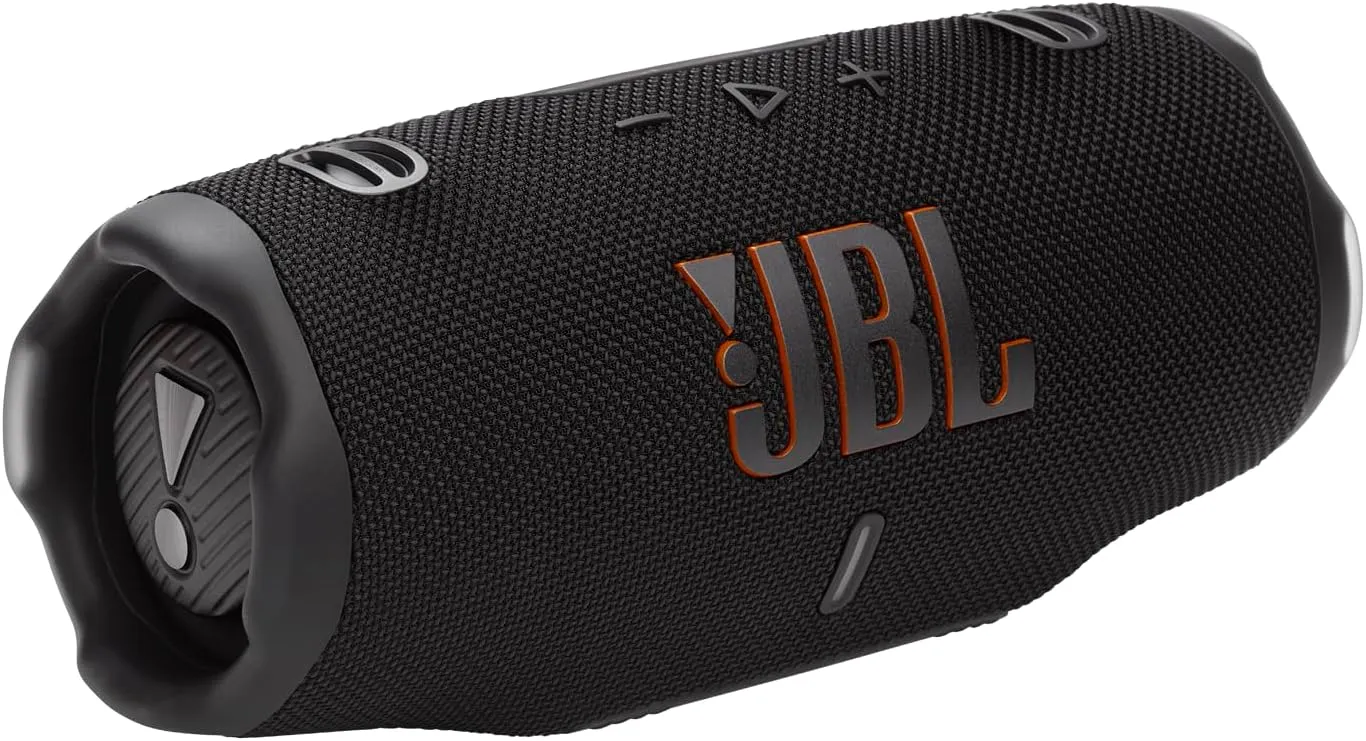
The short answer first
PartyBoost is a JBL-proprietary protocol from 2019 that connects multiple JBL speakers for synchronized play. AuraCast is a Bluetooth SIG standard from 2022 that lets any compatible speaker broadcast or receive audio across brands.
Here's the practical headline. The two protocols do not interoperate. A JBL Charge 5 (PartyBoost) cannot pair with a JBL Charge 6 (AuraCast) in any multi-speaker mode. JBL has not announced any firmware bridge to fix this and is unlikely to ship one.
If you own multiple PartyBoost speakers, upgrading to AuraCast effectively starts a new ecosystem from scratch. If you're buying your first speaker today, AuraCast is the better protocol for the long term. The rest of this guide explains why, and what your options look like if you fall in between.
What PartyBoost is and what it was for
PartyBoost (sometimes written "Party Boost") arrived with the JBL Flip 5 in 2019. JBL needed to replace its older Connect+ protocol, and PartyBoost was the answer. The big functional change: PartyBoost speakers could be daisy-chained with up to 100 compatible JBL speakers in Party Mode. Stereo pairing required two matching models.
Technically, PartyBoost runs over Bluetooth Classic (the older BR/EDR radio) rather than LE Audio. It uses JBL's proprietary signaling on top of the standard Bluetooth pairing layer. Audio is sent independently to each speaker rather than broadcast. The result: higher latency and battery drain than AuraCast.
The core limitation, even at launch, was that PartyBoost only worked with other PartyBoost speakers. A Flip 5 wouldn't pair with a Connect+ Flip 4. A Flip 6 won't pair with a Connect Pulse 3. Each JBL protocol generation broke compatibility with the previous one. Many JBL owners learned this the hard way when their old speaker rosters became incompatible.
JBL's official PartyBoost documentation confirms the same-protocol restriction directly. The PartyBoost-supported lineup is broad. JBL speakers in this group include the Flip 5, Flip 6, Charge 5, and Pulse 4. The Pulse 5, Xtreme 3, Boombox 2, Boombox 3, and Clip 4 round out the list.
What AuraCast is (the new open standard)
AuraCast is a Bluetooth SIG broadcast audio standard that arrived in 2022. The Public Broadcast Profile defines how an AuraCast transmitter advertises its audio streams and how receivers tune in. Unlike PartyBoost, AuraCast isn't owned by any single manufacturer. Any company that builds AuraCast into its products can interoperate with any other AuraCast device.
AuraCast runs on Bluetooth Low Energy with LE Audio profiles. It uses the LC3 codec, which is more efficient and lower-latency than the SBC codec used by Bluetooth Classic. Practical latency drops to roughly 20-30 milliseconds, compared to 100-200 milliseconds for typical Classic Bluetooth.
The headline feature is true one-to-many broadcasting. A single AuraCast source can broadcast to unlimited receivers within range. This is how Frankfurt Airport now sends gate announcements directly to passengers' hearing aids. It's also how a JBL Charge 6 can sync with a Soundcore Rave 3S despite the brand mismatch.
For a deeper technical look, read our explainer on what AuraCast is. The piece covers the hardware requirements, the assistant/broadcaster/receiver roles, and where AuraCast is deployed in 2026. The rest of this guide focuses specifically on the JBL upgrade question and what your options look like.
AuraCast vs PartyBoost: head-to-head specs
The protocols differ on almost every meaningful dimension. The table below summarizes the head-to-head spec comparison.
| Feature | PartyBoost | AuraCast |
|---|---|---|
| Standard type | JBL proprietary | Bluetooth SIG open standard |
| Bluetooth radio | Classic (BR/EDR) | LE Audio (BT 5.2+) |
| Codec | SBC | LC3 (royalty-free) |
| Audio latency | ~100-200 ms | 20-40 ms |
| Max receivers | Up to 100 speakers | Unlimited |
| Cross-brand support | No | Yes (broadcast/party mode) |
| Same-model stereo | Yes | Yes |
| Cross-brand stereo | N/A | Not yet shipping |
| Phone source requirement | Any Bluetooth phone | Samsung S23+ / Pixel 8+ / similar |
| iPhone support | Yes (any iPhone) | No (iOS 26 as of mid-2026) |
| Hearing aid support | No | Yes |
| Public venue broadcast | No | Yes (growing) |
A few items deserve commentary. The cross-brand support row is the most important practical difference. PartyBoost was a closed ecosystem; AuraCast lets any compliant device pair across brands. The iPhone row is the most frustrating practical limit on AuraCast in 2026. PartyBoost works on any iPhone because it's just Bluetooth Classic. AuraCast doesn't yet, because Apple has not enabled it natively.
JBL's family tree: from Connect to AuraCast
JBL has broken multi-speaker pairing compatibility four times since 2016. Knowing this history is useful when weighing whether to invest in any current generation.
JBL Connect was the original. It allowed up to three JBL speakers to play synchronized audio. The first widely shipped models with Connect were the Flip 3, Charge 3, and Xtreme 1. Connect was retired in 2017.
JBL Connect+ replaced Connect. It expanded the supported speaker count to 100+ and introduced firmware updates over the JBL Portable app. The Pulse 3, Flip 4, Charge 4, Xtreme 2, and Boombox 1 ran Connect+. Crucially, Connect+ did not work with Connect speakers. Owners of a Connect Flip 3 couldn't pair it with a Connect+ Flip 4.
PartyBoost replaced Connect+ in 2019. The Flip 5, Charge 5, Pulse 4, and Pulse 5 all run PartyBoost. The Xtreme 3, Boombox 2, Boombox 3, Clip 4, and Flip 6 round out the lineup. As noted, PartyBoost doesn't work with Connect+. Same pattern as before.
AuraCast replaced PartyBoost starting in 2024. The Xtreme 4, Clip 5, Go 4, Charge 6, and Flip 7 all use AuraCast. JBL's new PartyBox Club 120 and Stage 320 also use AuraCast. None of these speakers pair with PartyBoost models. The same pattern as Connect → Connect+ → PartyBoost.
Four generations, four hard compatibility breaks. JBL's reasoning each time has been technical — each new protocol enables features the previous one couldn't support. The customer reality is simpler. Any PartyBoost speaker you buy today becomes a generation-locked island. The moment you upgrade to AuraCast, it can't pair with the new speakers.
The Xtreme 4 escape hatch
There's one JBL speaker that bridges the PartyBoost-to-AuraCast gap: the Xtreme 4, launched in late 2024. It carries both radios. The Xtreme 4 can pair with PartyBoost speakers in PartyBoost mode and with AuraCast speakers in AuraCast mode. It's the only JBL speaker that does this.
The practical use case is simple. If you already own PartyBoost speakers, the Xtreme 4 lets you bridge into AuraCast. Examples include the Charge 5, Pulse 5, or Flip 6. You don't have to abandon your existing setup. You use the Xtreme 4 in PartyBoost mode to pair it with your older speakers. AuraCast mode pairs it with the newer ones.
The limitation: the Xtreme 4 cannot pair PartyBoost speakers with AuraCast speakers simultaneously. It picks a mode at a time. So you don't get unified playback across both ecosystems. The Xtreme 4 instead joins either ecosystem on demand.
For PartyBoost loyalists, the Xtreme 4 is the best transitional buy in JBL's current lineup. It costs more than the Charge 6 and is larger and louder. But it's also the only AuraCast speaker that respects your existing PartyBoost investment. JBL has not announced a second dual-radio speaker. The Xtreme 4 appears to be a deliberate, one-off bridge product.
Cross-brand reality check: where AuraCast actually works
The promise of AuraCast is brand-agnostic pairing. Any AuraCast speaker should be able to sync with any other AuraCast speaker, regardless of manufacturer. The reality, in mid-2026, is more nuanced.
The table below summarizes the current state across major portable speaker brands. The PartyCast column refers to Soundcore's proprietary multi-speaker protocol; Bose Party Mode is brand-specific too.
| Brand / Model line | AuraCast | Brand-specific protocol | Notes |
|---|---|---|---|
| JBL Charge 6 / Flip 7 / Go 4 / Clip 5 | Yes | None | AuraCast only |
| JBL Xtreme 4 | Yes | PartyBoost | Dual radio (bridge) |
| JBL Charge 5 / Flip 6 / Pulse 5 / Boombox 3 | No | PartyBoost | PartyBoost only |
| Bose SoundLink Plus / Max / Flex 2nd Gen | No | Bose Party Mode | Proprietary, Bose-only |
| Bose Lifestyle Ultra Speaker | Pending | None | AuraCast promised via firmware |
| Sony ULT Field 3 / ULT Tower | No | Sony Wireless Party Chain | Sony-only |
| Soundcore Rave 3S | Yes | None | AuraCast (same-model stereo only) |
| Soundcore Boom 2 / Boom 2 Plus | No | PartyCast 2.0 | PartyCast-only |
A few observations. First, broadcast/party mode works cross-brand on AuraCast where both speakers support the standard. A JBL Charge 6 and a Soundcore Rave 3S can both join the same broadcast from a Samsung phone. The two speakers play in sync.
Second, true left/right stereo pairing remains a same-model restriction across all current AuraCast speakers. JBL's own documentation confirms that stereo pairing on the Charge 6 requires a second Charge 6. A Flip 7 or Soundcore won't work as the stereo partner. The Bluetooth SIG specification technically allows independent L/R streams. No manufacturer, however, has shipped a true cross-brand stereo implementation yet.
Third, Bose has been notably absent. Most Bose portables in 2026 still use the brand's proprietary Party Mode rather than AuraCast. The Lifestyle Ultra Speaker is the first Bose product with AuraCast promised, but the feature wasn't active at launch. Bose's protocol stance has been a meaningful gap in the cross-brand promise.
Fourth, source-device support is the other practical limit. Even if every speaker in the room supports AuraCast, you still need a broadcasting source. The phone or device has to support AuraCast broadcast. Samsung Galaxy S23+, Pixel 8+, Windows 11 PCs, and Samsung Neo QLED TVs broadcast natively. iPhones, MacBooks, and older Androids do not.
Should you upgrade? A decision matrix by what you own
The right decision depends on what you already own and what you're trying to do. Here's the practical breakdown.
If you own a JBL Charge 4 or older PartyBoost speaker, the upgrade to a Charge 6 is straightforward. Older PartyBoost models include the Flip 4, Pulse 3, Xtreme 2, Boombox 1, and Clip 3. Your old speaker was already isolated from the current PartyBoost generation. AuraCast brings tangible improvements in sound quality, battery, and the option to expand into the cross-brand ecosystem.
If you own one or two current-generation PartyBoost speakers, the upgrade case is mixed. These include the Flip 5, Flip 6, Charge 5, Pulse 5, Xtreme 3, and Boombox 3 among others. You'll lose the ability to pair your old speakers with your new one. Single-speaker users won't feel the loss. If multi-speaker playback is a regular use case, weigh how much you actually use it before committing.
If you own three or more PartyBoost speakers, the upgrade case shifts. Rebuilding the ecosystem in AuraCast means selling or sidelining a meaningful collection. Unless you're a power user who needs the AuraCast cross-brand or 45W output upgrades, holding the PartyBoost lineup is reasonable. PartyBoost speakers don't degrade just because AuraCast exists. They just become a closed island.
If you want a single bridge product that pairs with both ecosystems, the Xtreme 4 is the clear answer. It's the only JBL speaker with both radios. You'll spend more than the Charge 6, but you keep your PartyBoost lineup useful.
If you're a new buyer with no JBL speakers yet, go AuraCast. The Charge 6, Flip 7, Clip 5, and Go 4 are all reasonable starting points depending on size and budget. Your future-proofing matters more than backwards compatibility you don't need.
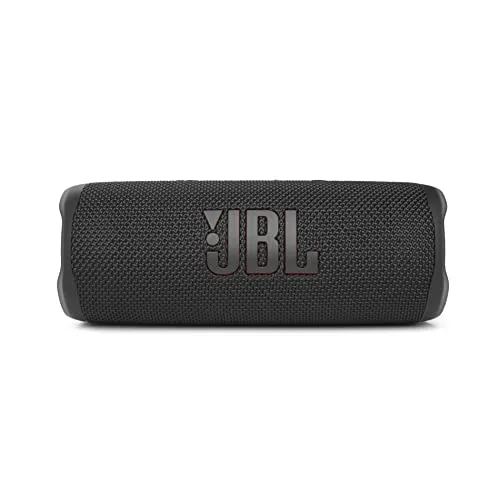
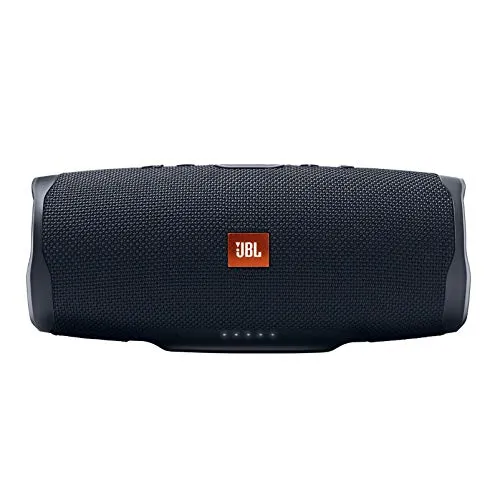
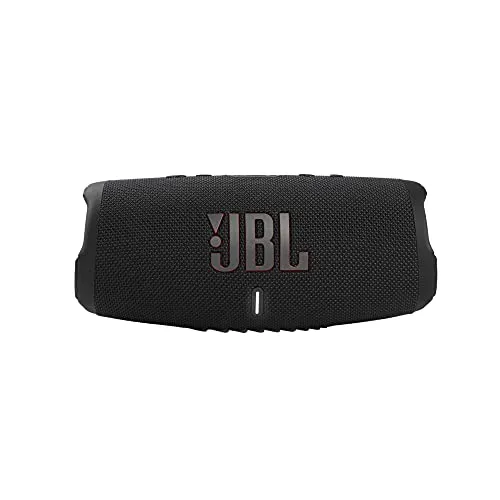
JBL Charge 5 Portable Wireless Bluetooth Speaker with IP67 Waterproof and USB Charge Out – Black
Conclusion
PartyBoost and AuraCast both do roughly the same job: connect multiple speakers for synchronized playback. The execution gap, however, is meaningful. PartyBoost was a closed, JBL-only ecosystem. AuraCast is an open, cross-brand standard with measurably better latency, range, and battery efficiency. JBL is committed to AuraCast and will not be backporting it to PartyBoost speakers.
The upgrade decision depends on what you own. New buyers should go AuraCast without hesitation. Owners of one or two PartyBoost speakers can wait for sales and upgrade tactically. Owners of three or more PartyBoost speakers can reasonably hold, knowing the speakers themselves still work fine. The JBL Xtreme 4 is the one product that bridges both ecosystems. It's worth specific consideration for PartyBoost loyalists who want to start adopting AuraCast.
For a fuller technical explainer on AuraCast, read our companion guide. For our hands-on take on the current AuraCast flagship in JBL's portable line, see the JBL Charge 6 review.
Frequently Asked Questions
Can I pair my JBL Charge 5 with the new Charge 6?
No. The Charge 5 uses PartyBoost; the Charge 6 uses AuraCast. The two protocols are not cross-compatible. You can use both speakers separately with your phone but cannot pair them in stereo, multi-speaker, or any synced playback mode.
Will JBL update PartyBoost speakers to support AuraCast?
No firmware update has been announced or is expected. Most PartyBoost speakers ship with Bluetooth 5.1 silicon that lacks LE Audio support, which is a prerequisite for AuraCast. The newer Pulse 5 and Boombox 3 have Bluetooth 5.3 silicon but JBL has chosen not to enable AuraCast in firmware.
Is AuraCast better than PartyBoost?
For most use cases yes — lower latency, longer range, better battery efficiency, cross-brand support, and growing public venue infrastructure. PartyBoost's one remaining advantage is that it works with any iPhone (because it uses standard Bluetooth Classic), while AuraCast doesn't yet support iPhones natively.
Which JBL speakers have both PartyBoost and AuraCast?
Only the JBL Xtreme 4, launched in late 2024. It is the single dual-radio speaker in JBL's lineup. The Xtreme 4 picks one mode at a time but can join either a PartyBoost group or an AuraCast group on demand.
Can I pair a JBL Charge 6 with a Bose AuraCast speaker?
In broadcast/party mode, yes — when Bose ships AuraCast-active products. The Bose Lifestyle Ultra Speaker is the first Bose model with AuraCast, though the feature was promised via firmware update rather than active at launch. Most current Bose portables (SoundLink Plus, Max, Flex 2nd Gen) don't support AuraCast at all.
Does my iPhone work with AuraCast on the Charge 6?
As a regular Bluetooth speaker, yes. As an AuraCast broadcaster or for joining an AuraCast group, no. Apple has not enabled native AuraCast on iPhone as of iOS 26. If iPhone support is critical, the AuraCast feature is currently dormant for you.
Is the JBL Charge 5 still worth buying in 2026?
Yes, if you don't need AuraCast and the lower retail price matters. The Charge 5 is widely available at significant discount from its launch price, the sound quality is excellent, and PartyBoost still works among existing speakers. The trade-off is that you're buying into a protocol JBL is winding down.
When will JBL discontinue PartyBoost?
JBL has not announced a discontinuation date. The current pattern is gradual replacement: each new product generation uses AuraCast, and existing PartyBoost models remain on shelves until inventory clears. Best estimate is that PartyBoost will quietly disappear from JBL's new-product lineup by late 2026 or early 2027.