AuraCast™ is the most important Bluetooth audio upgrade in a decade. Walk into Frankfurt Airport today and you can stream gate announcements directly to your hearing aids. Buy a JBL Charge 6 and you can pair it with a friend's Soundcore speaker for synchronized outdoor sound. Sit on a treadmill at the gym and you can tune into the wall-mounted TV through your own earbuds. AuraCast makes all of this possible — but only on devices designed for it. Older Bluetooth speakers and most iPhones still can't use it. This guide explains what AuraCast is, what hardware you need, and where you'll actually find it in 2026.
Key Takeaways
- AuraCast is a Bluetooth SIG standard for broadcasting audio from one source to unlimited listeners simultaneously
- It requires Bluetooth 5.2+ with LE Audio firmware — most pre-2023 devices can't run it
- Major Android phones, Samsung TVs, JBL speakers, Bose hearing aids, and a growing list of public venues support it
- iPhones still don't support AuraCast natively as of iOS 26
The plain-English answer: what AuraCast actually does
AuraCast lets one Bluetooth source broadcast audio to any number of listeners at once. Think of it like a private radio station that your phone, a TV, or a public PA system can run. Anyone within range with a compatible device can tune in. The audio is synchronized across all listeners with no perceptible delay.
Two use cases make this concrete. First, audio sharing: you start playing a video on your phone, hit AuraCast, and your friend's earbuds join the stream. No more swapping a single earbud back and forth. Second, public broadcasting: an airport, gym, theater, or church can broadcast announcements or content directly to listeners' devices. Hearing-aid users hear cleaner audio than ambient PA speakers can deliver.
AuraCast was specified by the Bluetooth SIG in 2022 and officially launched the same year. The Public Broadcast Profile defines the technical contract. Real-world device support took two more years to ramp up. By 2026, AuraCast is shipping in millions of consumer devices and is being installed in public venues across 17 countries.
How AuraCast works: broadcaster, assistant, receiver
AuraCast uses a three-role architecture that's worth understanding before you try it.
The broadcaster sends the audio. This is your phone, a TV, a microphone, or a venue's PA system. The broadcaster can run multiple streams simultaneously, which is how airports broadcast announcements in several languages at once.
The receiver picks up the audio. Receivers include earbuds, headphones, hearing aids, speakers, and soundbars. Multiple receivers can tune into the same broadcast with no impact on each other. The broadcaster doesn't know or care how many receivers are listening.
The assistant helps you find broadcasts. Modern Android phones and smartwatches act as assistants. You open the AuraCast picker on your phone, scan for nearby broadcasts, then pick one. Your earbuds tune into the selected stream. Some broadcasts are public and open. Others are private and require a passcode, just like a Wi-Fi network.
This architecture is what makes AuraCast different from a normal Bluetooth pairing. Regular Bluetooth needs a one-to-one handshake between source and sink. AuraCast just announces what it's broadcasting and lets any receiver listen in.
What you need to use AuraCast
AuraCast doesn't work on every Bluetooth device. It needs specific hardware and firmware support that older devices simply don't have.
Here's the practical checklist. Your source device needs Bluetooth 5.2 or later with LE Audio enabled in firmware. Your receiver needs the same. Both endpoints need to support the LC3 codec. This newer, more efficient compression standard replaces the SBC codec used by classic Bluetooth.
Most devices shipped before 2023 don't meet these requirements. Even some devices labeled as Bluetooth 5.2 lack LE Audio firmware because the manufacturer chose not to enable it. The result: simply owning a recent Bluetooth phone or speaker doesn't guarantee AuraCast support.
On the source side, AuraCast broadcasting is available on Samsung Galaxy S23 and later models. Pixel 8 and later (non-A models), Samsung Neo QLED TVs, and a growing list of Android tablets also qualify. Windows 11 PCs with compatible chipsets also broadcast. Notably absent: iPhones, MacBooks, and most older Android phones.
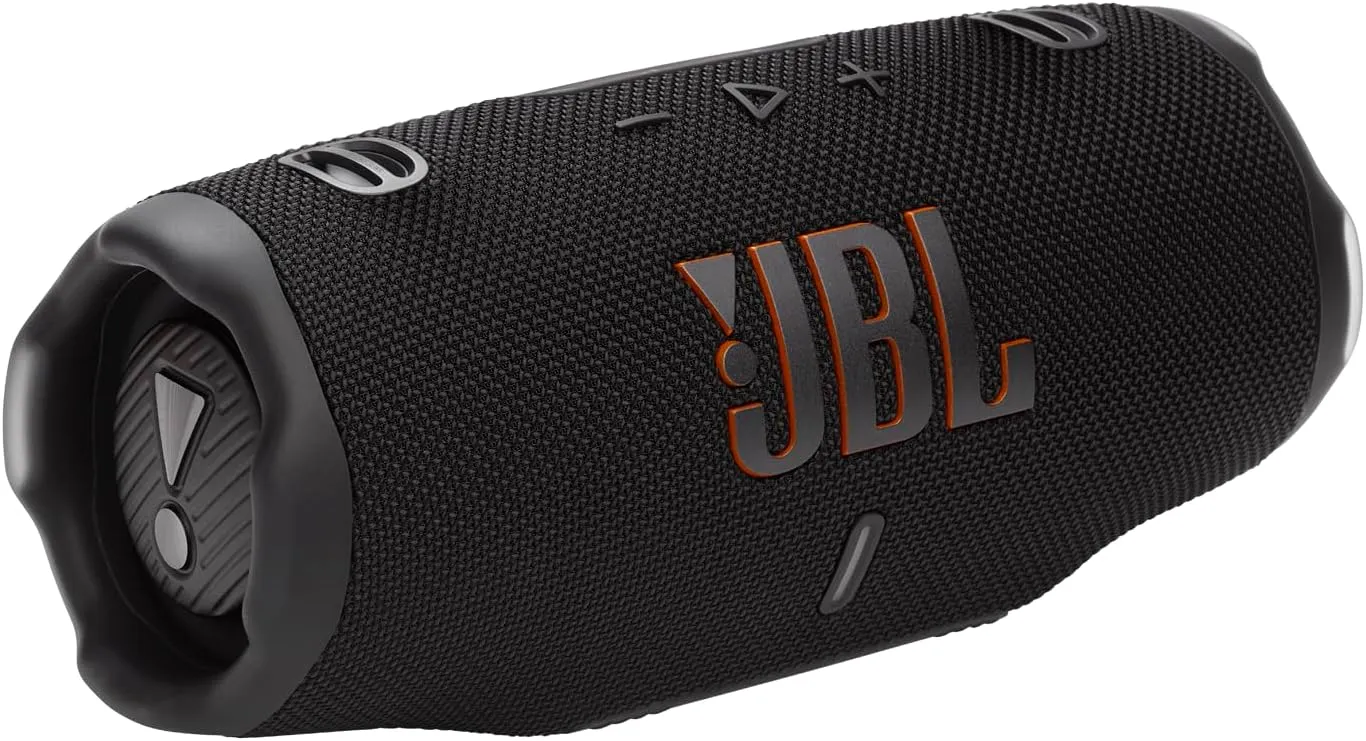
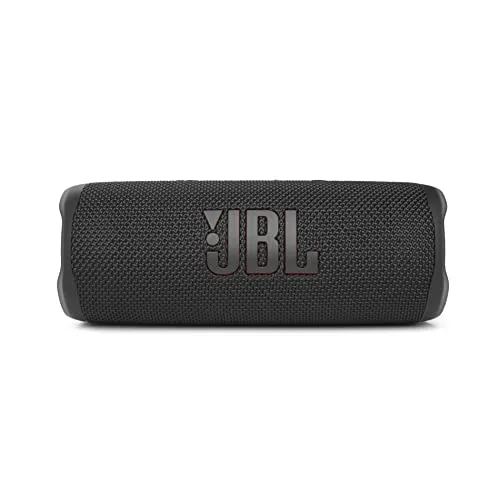
On the receiver side, you need an AuraCast-compatible speaker, earbud, or hearing aid. JBL's 2024–2026 lineup includes AuraCast across the Charge 6, Flip 7, Clip 5, Go 4, and Xtreme 4. Samsung Galaxy Buds, Pixel Buds Pro 2, ReSound hearing aids, and the Soundcore Rave 3S all qualify. Most Bose, Sony, and older portable speakers do not.
Range, latency, and what AuraCast feels like in real use
AuraCast's range is generous for a Bluetooth standard. Indoor range is around 30 meters in typical conditions. Outdoor line-of-sight range can exceed 100 meters with a strong broadcaster. This is meaningfully longer than classic Bluetooth's reliable range, which falls off sharply past 10 meters indoors.
Latency is the real surprise. The LC3 codec achieves audio latency of roughly 20 to 30 milliseconds. Classic Bluetooth typically lands closer to 100 to 200 milliseconds, depending on the codec. The practical effect: AuraCast works for synced video viewing without lip-sync drift. SBC and older Bluetooth streams routinely suffer from this issue.
Battery life on AuraCast receivers is comparable to standard Bluetooth, sometimes slightly better. LE Audio was designed with power efficiency as a core goal. The radio sleeps more aggressively between audio frames than classic Bluetooth does.
The one practical limitation is decoder warm-up time. Joining an AuraCast broadcast takes a second or two. Your receiver decodes the stream identifier and syncs to the audio. This is comparable to switching Wi-Fi networks. Once joined, you'll forget it's any different from a normal Bluetooth connection.
Where you'll find AuraCast in 2026
AuraCast is no longer theoretical. Consumer devices and public venues are both ramping up in 2026.
On the consumer side, JBL has been the most aggressive in portable audio. The JBL Charge 6, launched in March 2025, is the brand's flagship AuraCast portable. The smaller Flip 7, Clip 5, and Go 4 carry it too. Across other brands, Soundcore's Rave 3S is the most prominent AuraCast party speaker. Bose has promised AuraCast on the Lifestyle Ultra Speaker via firmware update. Most Bose and Sony portables still don't support it.
On the source side, Samsung Galaxy S23 and later phones broadcast AuraCast natively. Google Pixel 8 and later (non-A models) added full support in Android 15 and 16. Samsung's Neo QLED 4K and 8K TVs broadcast AuraCast to compatible soundbars and earbuds.
Public venues are the bigger story. Frankfurt Airport became the world's first airport to broadcast gate announcements via AuraCast in January 2026. Sydney Opera House installed AuraCast for assisted listening in 2025. Bristol Temple Meads train station in the UK is among them. Multiple theaters in London and Manchester, St. Paul's Cathedral, and the Disney Adventure cruise ship are all early adopters. Bluetooth SIG projects 1.5 million AuraCast-enabled venues by 2029.
Hearing aids deserve a special mention. ReSound, Starkey, GN Hearing, Signia, and Oticon all ship AuraCast-compatible hearing aids in 2026. For users who depend on assistive listening, AuraCast is the most significant accessibility improvement in Bluetooth's history.
The iPhone problem
This section will disappoint some readers. AuraCast does not work natively on iPhone as of iOS 26.
Apple has shipped LE Audio support and the LC3 codec in iOS 18. The system Bluetooth UI, however, doesn't expose AuraCast broadcasting or receiving. AirPods Pro 2 and AirPods Max can decode LC3 in some firmware modes. There's no AuraCast picker, no broadcast option, and no way to join a public stream natively.
Third-party workarounds exist. Hardware dongles like the Listen Technologies Auri or MoerLab transmitters can broadcast AuraCast from an iPhone via a wired connection. Hearing-aid manufacturers offer companion apps that bridge AuraCast through their proprietary protocols. None of these is as clean as native support.
Apple's reasoning isn't public. Industry consensus is that Apple is waiting to integrate AuraCast into a broader audio strategy. The likely trigger is a future AirPods refresh or an iOS UI overhaul. Whenever it lands, the unlock will be meaningful. More than half of premium portable speaker buyers carry an iPhone.
Until then, treat AuraCast as a future capability if you carry an iPhone. The speaker still works fine as a regular Bluetooth device. You just won't be able to use the headline new feature.
AuraCast and accessibility: why hearing-aid users matter
The headline use case for AuraCast isn't audio sharing between friends. It's accessibility for hearing-aid users.
Traditional hearing-aid users have had two bad options for listening to public announcements or live performances. Option one: rely on the ambient PA speakers, which often produce muddy, reverberant audio at hard-to-hear volumes. Option two: use legacy assistive listening systems like induction loops or FM transmitters. These require specialized neck loops or in-ear receivers, and most venues don't install them.
AuraCast fixes both problems simultaneously. A venue installs a single AuraCast broadcaster, and any hearing aid with AuraCast support can tune in directly. The audio bypasses the PA system entirely and goes straight to the user's ears at their preferred volume.
This is why Bluetooth SIG's projections matter. The Frankfurt Airport pilot, the Sydney Opera House installation, and the UK theater rollouts aren't consumer-tech gimmicks. They're accessibility infrastructure. Bluetooth SIG estimates 1.5 million AuraCast-enabled venues by 2029. Most of that growth is driven by hearing-aid integration requirements, not consumer demand.
The consumer use cases are real but secondary. Examples include sharing music with a friend, switching between earbuds and speaker, or joining a gym TV broadcast. The accessibility unlock is what's driving institutional adoption.
Conclusion
AuraCast is the most consequential Bluetooth audio change since the original A2DP profile a decade and a half ago. The standard works. Real products ship today, in real venues you'll encounter when traveling. And it solves real problems for users who've been underserved by Bluetooth for years.
The rollout, however, is messy. Many existing devices don't and won't support AuraCast. iPhone owners face a multi-year wait for native support. Older Bluetooth speakers cannot be retrofitted. The cross-brand promise of any speaker pairing with any other still has practical limits. True stereo pairing remains a same-model restriction in 2026.
For new portable speaker buyers, an AuraCast-capable model is the right future-proof choice. If you wear hearing aids, the AuraCast generation of devices is genuinely worth the upgrade conversation with your audiologist. JBL PartyBoost speaker owners wondering whether to upgrade should read our comparison guide. It covers the speaker-by-speaker breakdown.
Frequently Asked Questions
Does iPhone support AuraCast?
No. Apple has not enabled native AuraCast support on iPhone or iPad as of iOS 26 in 2026. AirPods Pro 2 and AirPods Max can decode the underlying LC3 codec in some firmware modes, but there's no system-level AuraCast picker. Third-party hardware dongles can bridge the gap if you need AuraCast on iPhone today.
Is AuraCast better than regular Bluetooth?
For most listening scenarios AuraCast is meaningfully better — lower latency, longer range, better battery efficiency, and the ability to broadcast to unlimited receivers. For one-to-one earbud or speaker connections, classic Bluetooth still works fine and is what most existing devices use.
Which JBL speakers have AuraCast?
As of mid-2026, AuraCast is in the JBL Charge 6, Flip 7, Clip 5, Go 4, Xtreme 4, and the new PartyBox Club 120 and Stage 320. The Xtreme 4 is unique because it carries both AuraCast and the older PartyBoost protocol.
Do AirPods support AuraCast?
Not natively. AirPods Pro 2 and AirPods Max have LC3 codec support at the firmware level but cannot join AuraCast broadcasts through the iPhone's Bluetooth menu. Apple may add AuraCast support in a future iOS or AirPods generation.
What's the range of AuraCast?
AuraCast range depends on the broadcaster's transmit power and the environment. Indoor range is typically 30 meters; outdoor line-of-sight range can exceed 100 meters. Public venue installations often use higher-power broadcasters that cover entire halls or terminals.
Do I need a new phone for AuraCast?
To broadcast AuraCast from your phone, yes — you need a Samsung Galaxy S23 or later, a Pixel 8 or later (non-A models), or another Android phone with explicit AuraCast support. Older phones can still pair with AuraCast speakers as standard Bluetooth devices, just without the broadcast feature.
Is AuraCast free to use?
Yes, AuraCast itself has no usage fees or subscriptions. The Bluetooth SIG manages the specification, and device manufacturers pay licensing fees as part of Bluetooth qualification. End users pay nothing.