Turtlebox Ranger Review: Rugged, Loud, Premium Price
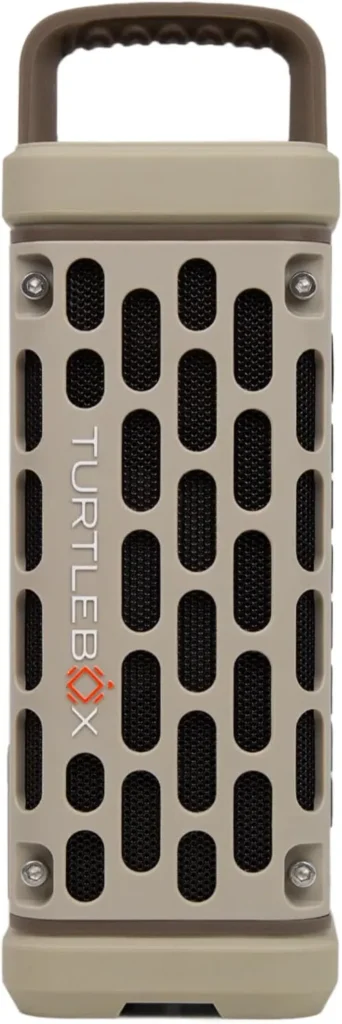
A genuinely rugged outdoor speaker that punches above its size on volume and durability — but the premium price doesn't fully insulate it from real sound and reliability trade-offs.
The premium outdoor speaker market keeps getting more crowded. However, few products commit to the rugged-and-loud thesis as completely as the Turtlebox Ranger. The Texas-based brand built its reputation on speakers you can drop, soak, and tie to a kayak. The Ranger is the smaller, more travel-friendly version of that formula. In the premium outdoor bracket, it lines up against the JBL Xtreme 4 and the Bose SoundLink Max. The JBL Charge 6 is also a step-down option worth considering. Still, the question isn't whether the Turtlebox Ranger is loud. It is. The real question is whether the build, the sound, and long-term durability earn the premium price.
Sound quality of the Turtlebox Ranger
The Turtlebox Ranger uses a dual 2-inch woofer setup with a Class D digital amplifier and DSP tuning. The rated peak output is 105 dB. At moderate volume, the sound profile leans warm and bass-forward. Low-end clarity is surprisingly clean for a speaker this size. Vocals carry well in the mids. The highs are present without being harsh. For typical outdoor listening, the tuning hits the right balance. Backyard gatherings, pool sessions, and pickleball courts all work well.
However, push past about 75% volume and the picture changes. The bass starts to overwhelm the mids. Vocals compress noticeably, and the high-end smears. This isn't unique to the Ranger. Most portable speakers with aggressive DSP tuning behave this way at peak. Still, it's notable here because Turtlebox markets the Ranger heavily on loudness. The 105 dB peak is real. The audio quality at that peak is not what you'd call audiophile. For anyone using the speaker mostly at conversational volume, this caveat doesn't matter much. For anyone planning to push it hard, it does.
Multi-speaker pairing changes the math meaningfully. For example, two Turtlebox Ranger units in stereo deliver a noticeably wider soundstage. Pairing with the larger Gen 3 or Grande in party mode fills outdoor space convincingly. As a result, the Ranger earns its keep most clearly as part of the Turtlebox ecosystem. As a solo speaker it's good. As part of a fleet, it's genuinely impressive.
Build, magnets, and weatherproofing
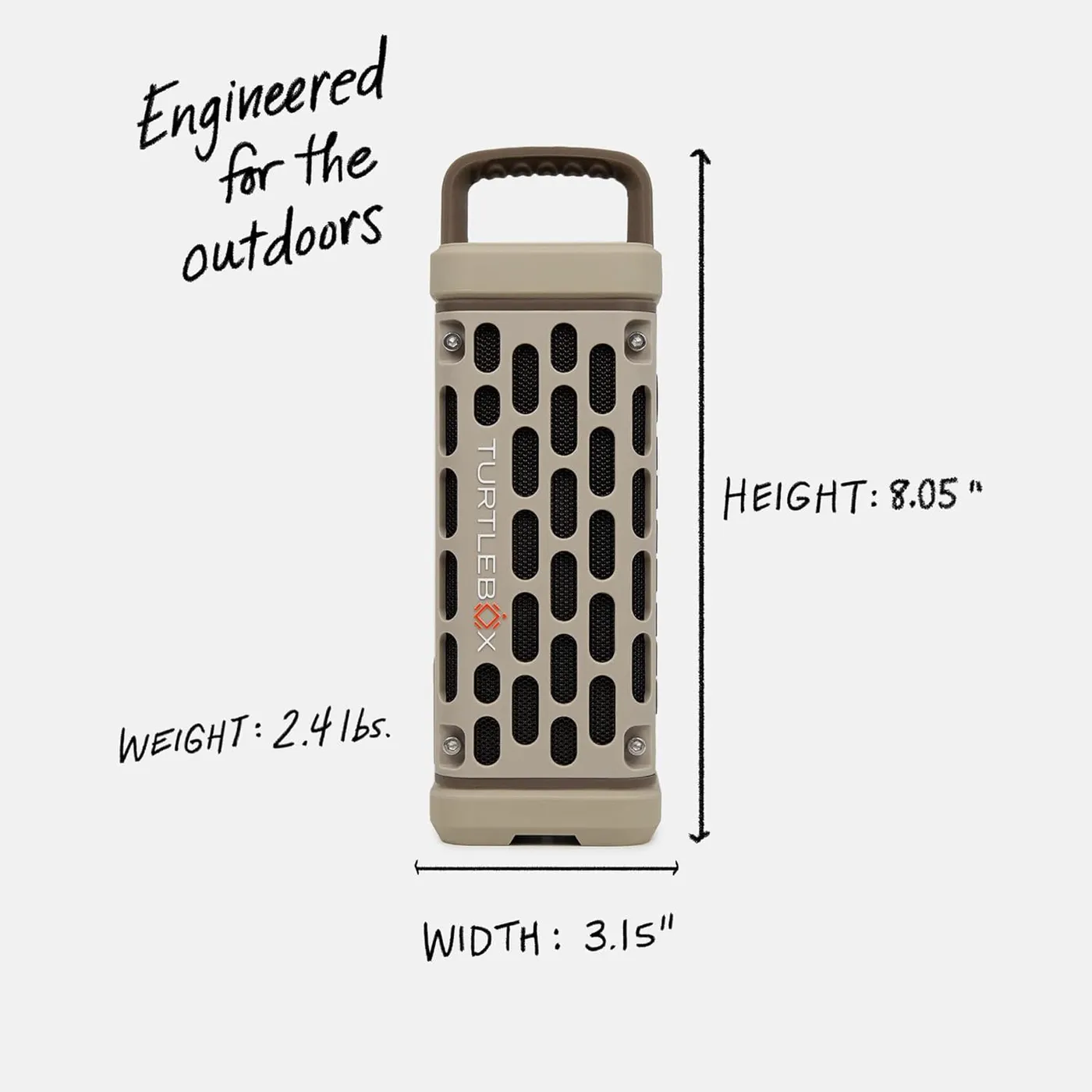
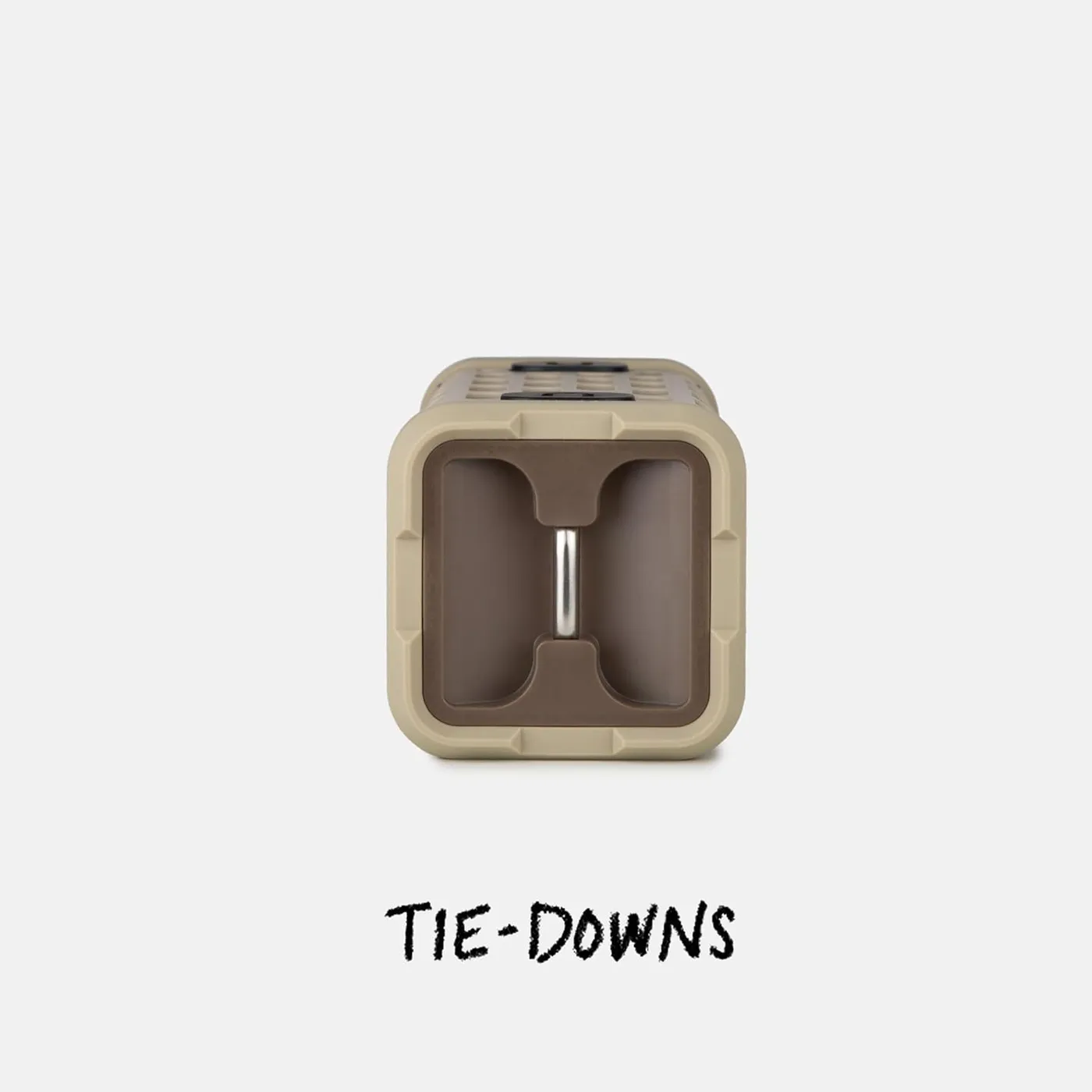
Build quality is where the Ranger most obviously justifies its premium positioning. The chassis uses a dense plastic-and-metal mix. Grilled vents sit on both sides. An integrated rubberized carry handle runs along the top. Tie-down points on the base let you secure it to gear. At 2.4 pounds, it's heavier than most speakers in its size class. However, the weight reads as confidence. There's no plastic creak, no flex, nothing that feels like a compromise. As a piece of industrial design, the Turtlebox Ranger has the heft of something engineered to survive a job site.
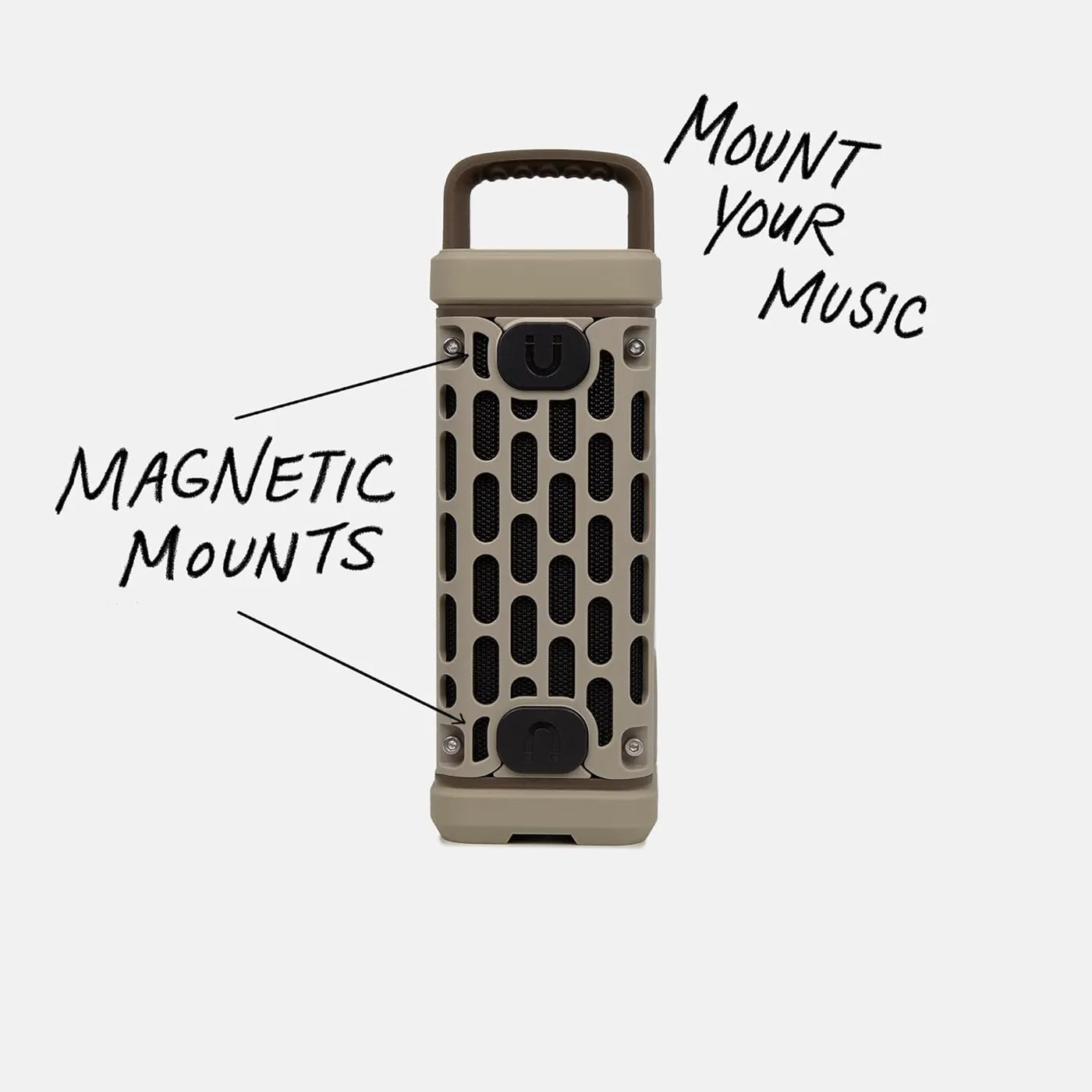
The magnetic mount system is the standout feature. The neodymium magnets are strong. They hold the speaker to vehicle panels, refrigerators, golf carts, UTV roll bars, and metal SmartCap covers. In practice, the grip is firm enough that the speaker doesn't fall off in normal use. For example, it carries through attaching to a Polaris Ranger UTV or a Costco pallet jack. Most competing speakers can't handle those use cases without an aftermarket bracket. Color options run from neutrals like Tan, Ivory, and Gray through to more visible River Rock and Orange. The brighter colors are useful if you'd rather not lose track of the speaker outdoors.
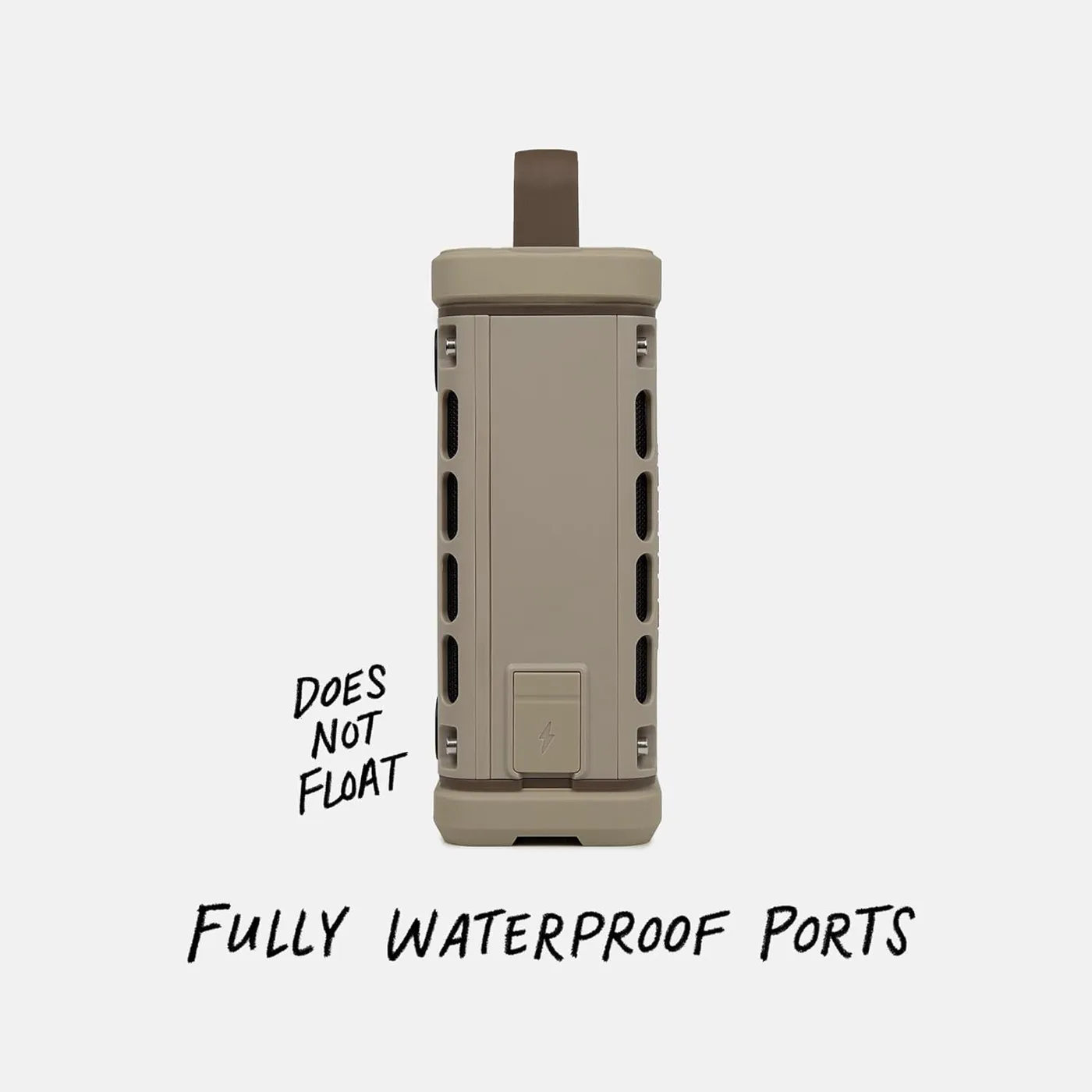
Waterproofing follows IP-rated water ingress protection standards for outdoor use. Notably, the unit doesn't float. Turtlebox calls this trade-off out directly on the chassis itself. As a result, retrieving it from a pool means a dive. For lake, river, splash, and rain exposure, however, the rating holds up consistently.
Connectivity, pairing, and battery life
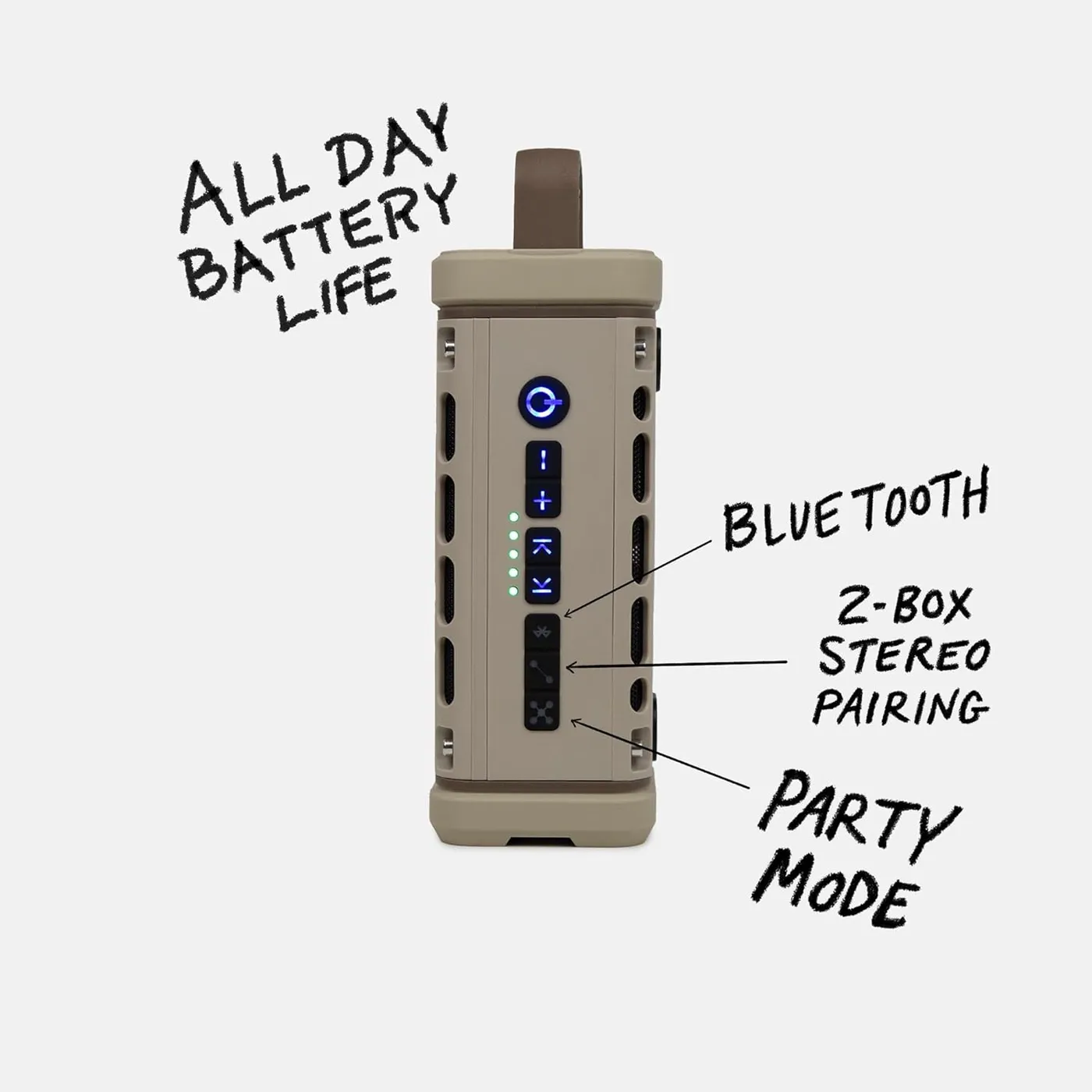
Bluetooth 5.4 pairs quickly with iPhone and Android devices. The connection stays stable at typical distances of 10 to 15 meters. There's no Wi-Fi, no companion app, and no firmware updates. Turtlebox keeps the feature set deliberately minimal. As a result, there's less to break — but also no way to adjust EQ. For listeners who want to tame the bass-forward tuning, this lack of an equalizer is a real limitation. No firmware update can fix it.
Multi-speaker pairing works through Turtlebox's proprietary TurtleSync. Two Ranger units can run in true stereo. Alternatively, a Ranger can combine with a Gen 3 or Grande in party mode for synchronized playback. In practice, pairing is straightforward and sync holds reliably over distance. For anyone running a Turtlebox Ranger pair in stereo, this is the workflow that justifies buying the second one.
Battery life is rated at 25 hours. In practice, runtime lands somewhere between 10 and 22 hours depending on volume. At conversational outdoor volumes, all-day playback is achievable. However, push it hard at max volume and the duration drops to roughly 4 to 5 hours. The high power draw is the obvious explanation for what looks like underspec battery performance.
The charging situation deserves a flag. The speaker ships with a USB-C-to-USB-C cable only. There's no wall adapter in the box. At this price point, that's an annoying omission. You'll need a USB-C power adapter capable of at least 18W output. Most modern phone chargers handle that easily. Still, anyone still relying on older USB-A wall warts should factor in a new adapter as a hidden cost.
Reliability concerns to weigh
Where the speaker earns caution is in long-term durability. A non-trivial cluster of owners have reported driver failures. The failures show up within two weeks to six months of purchase. In practice, the speakers begin to sound blown at moderate volume. This happens even when the units are used within normal parameters. Turtlebox's warranty support runs in two directions. Straightforward exchange requests get fast service. However, denials follow when the unit shows physical damage. For example, units that fell off a golf cart have been denied warranty service.
This isn't a universal experience. Most Turtlebox Ranger units do hold up well. However, the failure pattern is consistent enough to warrant flagging. For a premium-tier speaker with a 1-year limited warranty, the question of unit luck matters. It would matter less at sub-$100 pricing.
A few practical hedges help. First, register the warranty immediately. Second, keep the box and packaging for at least the first few months. Third, treat the magnetic mount as one attachment method rather than the only one. The tie-down points exist for exactly that reason. Using them in high-vibration environments hedges against the warranty denials that follow a mount-failure incident.
These are real concerns, not deal-breakers. Still, they distinguish the Ranger from premium competitors like the JBL Xtreme 4 and Bose SoundLink Max. That particular failure mode is rarer in those products. The build feels indestructible; meanwhile, the drivers behind that build are evidently the weak link for some units.
Is it worth the premium?
Competition matters here. In the rugged outdoor-speaker bracket, the Turtlebox Ranger faces several real options. The main competitors are the JBL Xtreme 4 and the JBL Charge 6 from a step down in size. The Bose SoundLink Max sits outside the rugged-first category. Against the JBL Xtreme 4, the Ranger trades better magnetic mounting and waterproofing for a less refined sound signature. The durability question also tips the balance. Against the Bose, the Ranger wins decisively on ruggedness and volume. However, it loses on tonal balance and brand polish.
What you're paying for, specifically, is the magnetic mounting system and the rugged form factor. If your main use case is attaching the speaker to a UTV, golf cart, or kayak frame, the built-in mount saves real money. Most competitors require an aftermarket bracket. The bracket adds cost. Worse, it adds installation hassle. As a result, the Turtlebox Ranger has no real peer in its price bracket for mount-first use cases.
If you're using the speaker primarily for backyard, beach, or pool listening where mounting doesn't matter, the value calculus shifts. For example, a JBL Xtreme 4 delivers cleaner sound across the volume range at a lower price. You give up almost nothing meaningful for that context. The Ranger is specifically priced for buyers who need its differentiators. As a result, it's genuinely overpriced for buyers who don't. On the other hand, if mounting is the whole point of the purchase, no competing premium speaker delivers it without ugly aftermarket bracketry. That's the niche the Ranger owns outright.
Pros: What we liked
- Pro: 105 dB peak output that genuinely fills outdoor space without external amplification
- Pro: Neodymium magnetic mount holds securely to vehicles, equipment, and metal surfaces
- Pro: IP-rated waterproofing handles pool, lake, river, and heavy rain exposure
- Pro: Reliable multi-speaker pairing for stereo separation and party mode with other Turtlebox units
- Pro: All-day battery life at conversational outdoor volumes, all-metal-and-plastic build with no creak or flex
Cons: What could be better
- Con: Sound quality degrades meaningfully past 75% volume — bass overwhelms mids, highs smear
- Con: No companion app or EQ adjustment, so the bass-heavy tuning cannot be tamed
- Con: Notable cluster of driver-failure reports within weeks to months for some units
- Con: Ships with USB-C cable only — no wall adapter included at this premium price point
Best For
- Owners of UTVs, golf carts, kayaks, or job-site equipment who need built-in mounting
- Outdoor adventurers who prioritize ruggedness and water resistance over audio refinement
- Existing Turtlebox owners building out a multi-speaker stereo or party-mode setup
- Buyers who listen at moderate-to-loud outdoor volumes rather than at the top of the dial
Not Ideal For
- Audiophiles who prioritize tonal balance and clarity at maximum volume
- Budget-conscious buyers who don't need the magnetic mounting differentiator
- Anyone wanting EQ customization through a companion app or firmware updates
| Specification | Details |
|---|---|
| Driver | Dual 2-inch woofers, Class D amplifier with DSP tuning |
| Max Output | 105 dB |
| Battery | 25.2 Wh lithium-ion, rated 25 hours |
| Bluetooth | 5.4 |
| Waterproofing | Fully waterproof ports (does not float) |
| Dimensions | 3.15" x 3.15" x 8.05" |
| Weight | 2.4 lb |
| Charging | USB-C cable (no adapter included) |
| Pairing | TurtleSync — stereo and party mode |
| Warranty | 1-year limited |
Alternatives Worth Considering
Final Verdict
The Turtlebox Ranger is the right speaker for a specific buyer. That buyer needs rugged construction and powerful magnetic mounting more than they need refined audio at maximum volume. Within that frame, it delivers. Build quality is exceptional, magnets are best-in-class, and the loudness lives up to the marketing. However, the premium price is harder to defend if you're outside that frame. Meanwhile, the durability outliers are worth taking seriously before committing. For everyone else in the outdoor-speaker market, a JBL Xtreme 4 or comparable competitor will likely serve better. In other words, this is a tool for a job, not a generalist speaker. As a tool, it's excellent. As a generalist, it falls short of what the price tag implies. Therefore, the buying decision becomes about clarity. Buy this speaker for what makes it unique. Otherwise, pass and look elsewhere for value.
Frequently Asked Questions
How does the Turtlebox Ranger compare to the JBL Xtreme 4?
The Ranger wins on magnetic mounting and waterproofing; the JBL Xtreme 4 wins on sound clarity at higher volumes and overall value if built-in mounting isn't important to you.
Can the Ranger pair with the larger Turtlebox Gen 3 or Grande?
Yes — TurtleSync party mode synchronizes the Ranger with Gen 3 and Grande units for multi-speaker outdoor playback.
Does the Ranger float?
No. Turtlebox calls this out directly on the chassis. It's waterproof but sinks, so retrieve quickly if dropped in deep water.
Is a wall charger included in the box?
No — the box contains a USB-C-to-USB-C cable only. You'll need a separate USB-C wall adapter capable of at least 18W output.
How loud does it actually get in real-world use?
The 105 dB peak rating is accurate, but audio quality degrades noticeably above 75% volume. Most use cases stay comfortably below maximum.
What colors are available?
Tan, Orange, Gray, Ivory, and River Rock are the standard color options sold through Amazon.
The Verdict
A genuinely rugged outdoor speaker that punches above its size on volume and durability — but the premium price doesn't fully insulate it from real sound and reliability trade-offs.