JBL Xtreme 4 Review: Big Sound, Bigger Battery
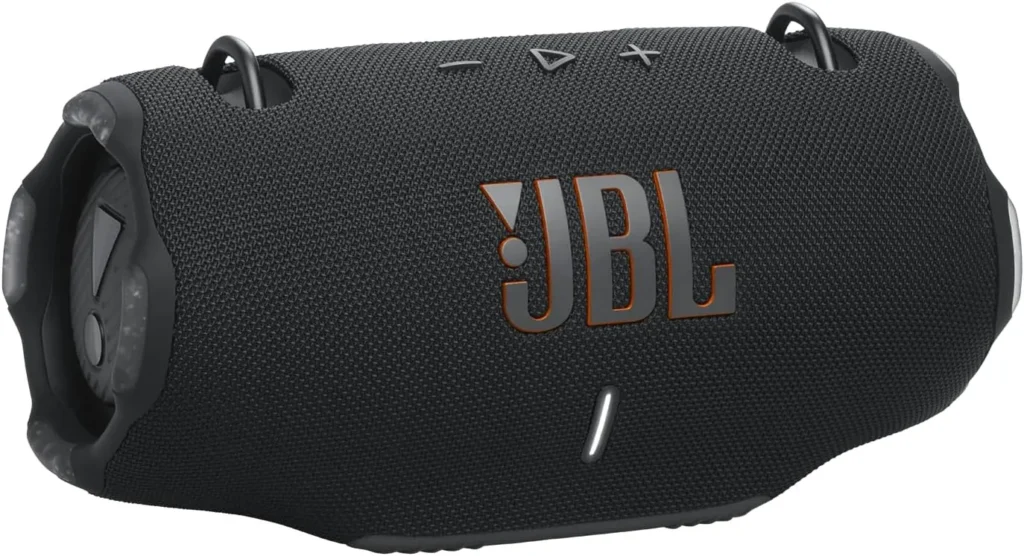
A loud, IP67-tough portable speaker with industry-leading battery life and Auracast multi-pairing — held back only by app-dependent EQ tuning and a deliberate break with older JBL speakers.
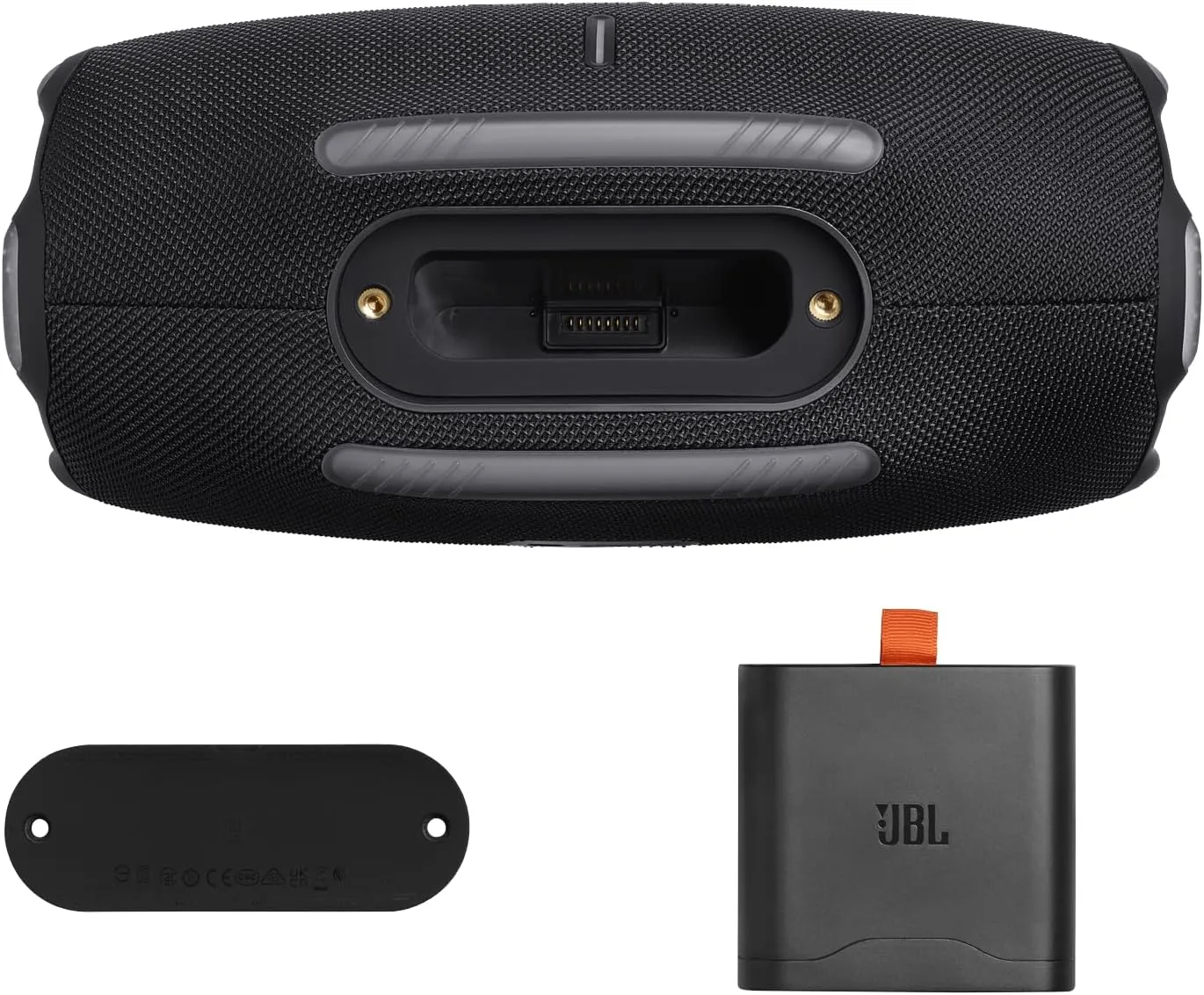
JBL has owned the rugged-portable-speaker category for nearly a decade. The JBL Xtreme 4 is the latest entry defending the territory. The headline numbers are the kind that close arguments: 180 watts of output, 24 hours of playtime with another six on Playtime Boost, an IP67 dust-and-water rating, and Auracast for multi-speaker chaining. JBL also brought back something the category had largely abandoned. A user-replaceable battery sits behind a couple of screws on the back. The cell can be swapped by hand, extending product life past most rivals.
The catch is in the tuning. Out of the box, the Xtreme 4 sounds bass-heavy and a bit veiled in the highs. The fix is the JBL Portable app — practically speaking, not optional.
Sound quality on the JBL Xtreme 4
Two woofers, two tweeters, and two side-mounted bass radiators produce the sound. The driver array generates a profile that's heavy on low-end punch and clear in the midrange. Vocals cut through ambient noise cleanly. Highs are present but not aggressive. At high volume, the highs feel slightly rolled-off — present, but not the sparkle a critical listener would want.
The 180W rating delivers in practice. Indoors, the Xtreme 4 fills a large room without distortion. Outdoors, it carries clearly across a backyard or pool deck. AI Sound Boost runs in the background. The algorithm analyzes the signal in real time and adjusts driver output to push the dynamic range. The effect is subtle but real, especially on bass-heavy tracks where the radiators get pushed.
Stereo imaging is the area where the speaker shows its compromises. The drivers all fire forward, with side-mounted radiators handling low-end pressure. As a result, the stereo spread is narrow. The Xtreme 4 projects sound forward more than it images music in space. For party use, that's the right trade-off. For attentive listening, a Charge 5 or Boombox 4 sounds more refined.
The bass character is the most divisive aspect of the speaker. The deep, punchy low end is what the Xtreme 4 does best. Compared to the Charge 5 or Boombox 3 alongside it, though, the Xtreme 4's bass lacks the texture of its siblings, even after EQ adjustment. The low end is loud and present. It just isn't quite as articulate.

24-hour battery and the replaceable cell
Battery life is the standout feature, and it's a category-leading number. At normal listening volumes with no power bank draw, the Xtreme 4 hits or exceeds the 24-hour rating. Heavier use brings the runtime down but rarely below 10-12 hours. That's still well past competitive units. At party volume or across a work shift, it doesn't die mid-session.
Playtime Boost adds another six hours by reducing peak volume slightly and optimizing power draw. The feature engages from the app or the speaker itself. For a longer outdoor event where charging access is limited, that's an extra evening of music.
The real news is the replaceable battery. The cell sits behind a couple of screws on the back of the cabinet and can be swapped by hand. Carry a spare or replace a worn cell three years in. The category has trained everyone to expect a planned-obsolescence purchase. This isn't one. For a purchase at this tier, that's meaningful product longevity.
USB-C handles charging at up to 30W via the bundled PD adaptor. The same port also feeds the built-in power bank function. Plug in a phone or a small device, and the Xtreme 4 charges it from its own cell. The power bank function turns out to be more useful than it sounds on paper — a phone top-up at the park or the pool keeps the music going without a separate brick.

IP67 durability and outdoor build
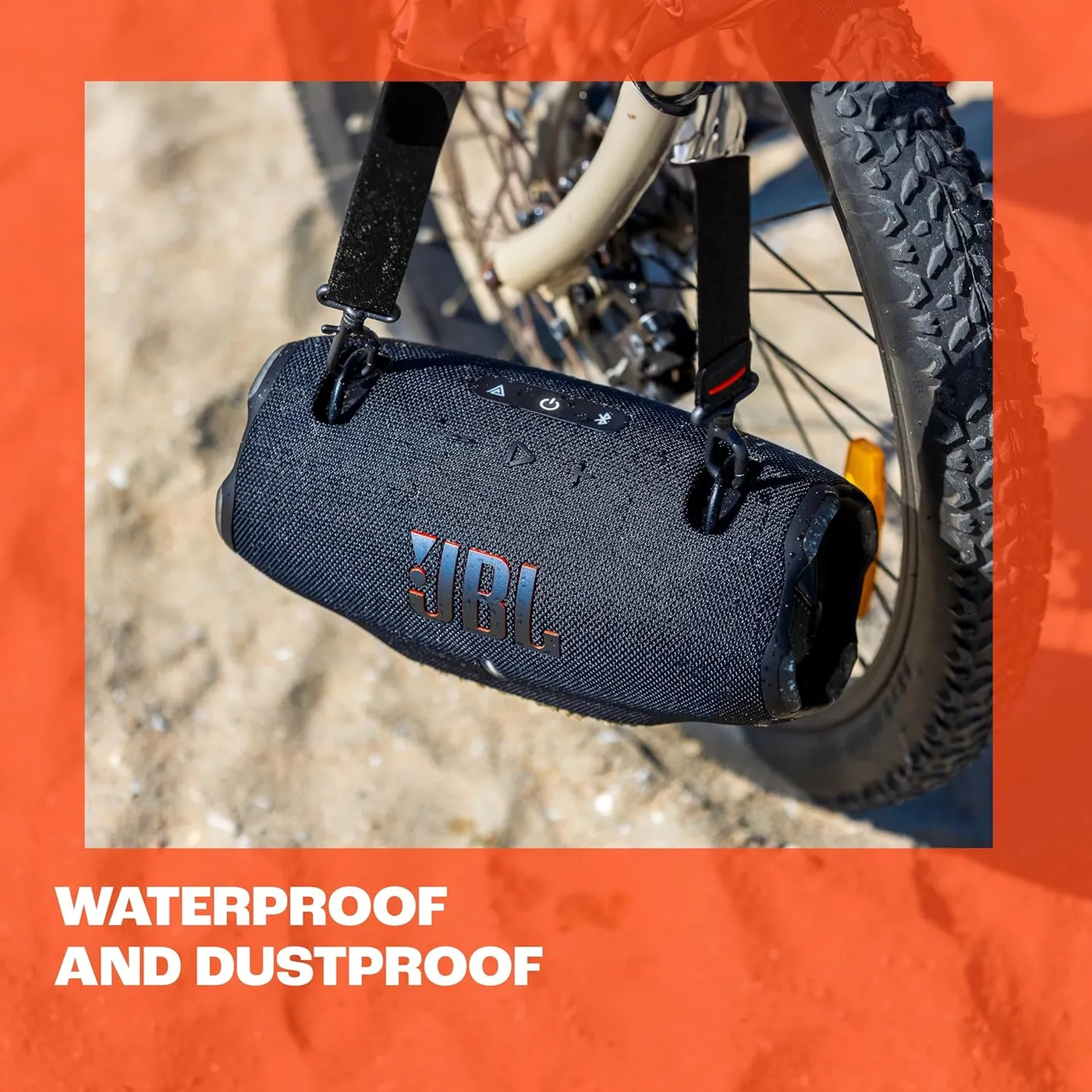
IP67 rating means full protection against dust and submersion in up to a meter of water for thirty minutes. In practice, the Xtreme 4 handles pool splashes, rain, sand, and beach use without issue. The cabinet wraps in rubberized fabric over a rigid internal frame. Rubber bumpers at the ends take the worst of any drops. The build feels rugged without being awkward to carry.
One specific complaint worth flagging. The USB-C port sits in a recessed area on the back of the cabinet. The recess isn't sealed when the port is in use. The exposed USB-C connector can corrode or oxidize after repeated sand or saltwater exposure when the cable's plugged in. The IP67 rating covers the speaker proper. It does not extend to the charging interface when the cable is plugged in.
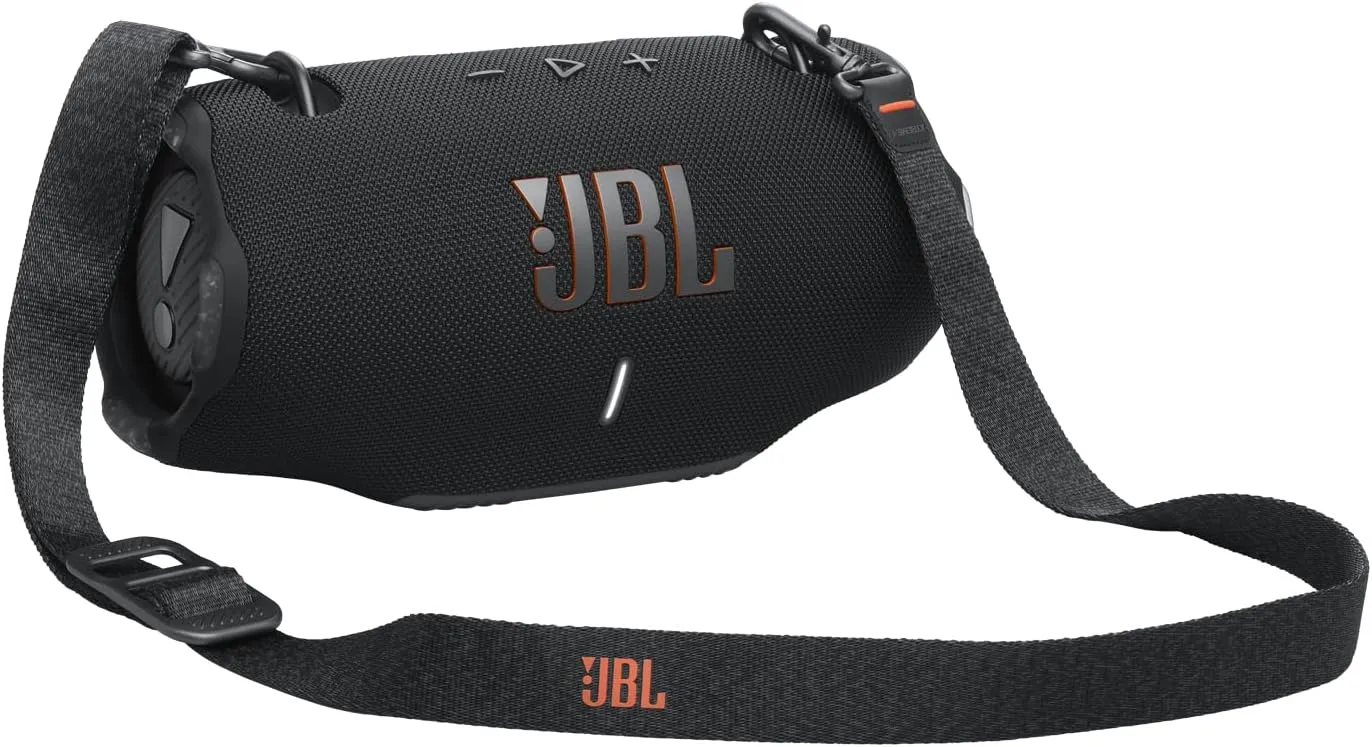
The carrying strap is a love-it-or-find-it-too-long affair. The strap includes a metal-hook attachment and a built-in bottle opener — a genuinely useful detail on a strap that otherwise just hangs there. However, the strap itself is sized for crossbody carry on tall adults. Smaller users may want to swap it for a shorter aftermarket alternative.
Weight comes in around 2.1 kg with the battery installed. That's heavy enough to feel substantial but light enough to carry for an extended walk. The cabinet has a flat bottom that resists rolling. As a result, the Xtreme 4 improves on the rounded base of the Xtreme 3.

Auracast and the multi-speaker ecosystem
Auracast is the new Bluetooth-LE-based audio broadcast standard. The Xtreme 4 is one of JBL's first speakers to ship with full support. The protocol allows multiple Auracast-equipped speakers to receive the same audio stream simultaneously. Latency is low, and the cross-pairing complexity of older multi-speaker systems goes away. For a yard party with two or three speakers spread across the space, the technology genuinely works.
The catch is backward compatibility, and it's a significant one. Auracast doesn't pair with JBL's older PartyBoost ecosystem. That means existing owners of older JBL portables are out of luck. The Pulse 3, Boombox 3, Xtreme 3, and other pre-2024 units can't chain with a new Xtreme 4. The discovery often happens mid-purchase. The choices are to return the speaker or accept that the older gear stays legacy.
JBL has signaled that Auracast is the forward direction. That's the right technical call, but it represents a real cost for existing brand loyalists. The Xtreme 4 chains beautifully with the Charge 6, the Clip 5, and other new-generation JBL units. It doesn't chain with anything older.
For buyers entering the JBL ecosystem fresh, this is a non-issue. Existing PartyBoost owners looking to expand coverage face a real choice. The Xtreme 4 might be the wrong purchase for them. A used Xtreme 3 to expand the legacy PartyBoost group could be the smarter move.
The JBL Portable app and tuning
The stock tuning is bass-heavy and feels flat in the upper midrange and treble. The JBL Portable app is the fix. The app exposes a five-band EQ, individual driver-level controls, and firmware updates. The Xtreme 4 also gets a more subtle light treatment than the Pulse line, controlled from the app.
After ten minutes of EQ adjustment, the sound is genuinely good — significantly better than the out-of-box default. The compromise is that the EQ isn't really optional. Out of the box, the Xtreme 4 underperforms its capabilities. The app is the unlock.
For users running a stereo pair, there's a related catch. When two units pair as a true-stereo set, the in-app EQ disables. JBL's documentation doesn't explain why. The practical result is that anyone running a stereo pair loses the very tuning tool the single-speaker experience relies on. Workarounds exist. A third-party Mac EQ or Spotify's built-in equalizer can do the job. The limitation is still real.
The five-band EQ is fewer bands than competing apps offer. Soundcore's app, for instance, ships a more granular parametric EQ. JBL's five bands are enough to address the stock-tuning gap. They won't satisfy anyone who wants surgical control over a specific frequency range.
Value against the Charge series and the Boombox 4
The Xtreme 4 sits between the Charge 5 / Charge 6 below and the Boombox 4 above. The smaller siblings are lighter and more portable. The Boombox is significantly larger, louder, and more expensive. The competitive question is whether the Xtreme 4 occupies a meaningful middle position. Or whether it's a less-good version of both siblings.
For most buyers, the answer leans positive. The Xtreme 4 is louder and bassier than the Charge series. It's also far more transportable than the Boombox 4. Its 24-hour battery exceeds both. The replaceable cell is unique in JBL's current lineup. For someone who wants party-grade output in a unit they can actually carry, the Xtreme 4 hits the right size and weight envelope.
There's a more nuanced read for listeners who actually own the Charge 5 and the Boombox 3 already. Against those two siblings, the Xtreme 4 is the weakest on pure sound character. The Charge 5 has tighter, more articulate bass. The Boombox 3 has fuller dynamics. The Xtreme 4 wins on convenience metrics. It loses on tonal refinement.
Against external competitors, the Sony Ult Field 5 and UE Megaboom 4 are the most common cross-shops. Against those, the Xtreme 4 typically wins. The wins come on loudness, controlled bass, longer battery, and better waterproofing. The Soundcore Boom 2 Plus is the dark-horse alternative. At a lower price, it edges the Xtreme 4 on raw bass output. The trade-off is that it doesn't match the IP67 rating or the brand's serviceability.
Pros: What we liked
- Pro: 24-hour rated battery genuinely delivers in real-world use, with 10-12 hours of heavy use the norm at party volumes
- Pro: Replaceable battery cell extends the product's practical lifespan well past category norms
- Pro: 180W output fills backyards, pool decks, and large rooms without distortion
- Pro: IP67 waterproof and dustproof rating holds up to actual outdoor abuse — pool, sand, rain
- Pro: Auracast supports low-latency multi-speaker chaining with the rest of the new JBL line
- Pro: Built-in power bank charges phones and small devices off the speaker's own cell
- Pro: Bundled shoulder strap includes a built-in bottle opener — a small but genuinely useful detail
Cons: What could be better
- Con: Stock EQ tuning is bass-heavy and benefits significantly from the JBL Portable app — using the app is not optional for best sound
- Con: Auracast doesn't pair with older PartyBoost-era JBL speakers, breaking the upgrade path for existing Pulse, Boombox, or Xtreme owners
- Con: In-app EQ is disabled when two Xtreme 4 units are paired as a true-stereo set
Best For
- Outdoor party hosts who need party-volume sound that survives weather, pool splashes, and sand
- Buyers entering the JBL ecosystem fresh, with no legacy PartyBoost speakers to chain
- Users who run a speaker hard and want the longest practical battery life on the market
- Owners willing to spend ten minutes in the JBL app to dial in the tuning they actually want
Not Ideal For
- Existing JBL PartyBoost owners who want to chain new speakers with their older Pulse 3, Boombox 3, or Xtreme 3 units
- Critical listeners cross-shopping against the JBL Charge 5 or Boombox 3, both of which sound more refined for pure-music use
- Buyers who'd rather not tweak EQ in an app to get the most out of a portable speaker
| Specification | Details |
|---|---|
| Total Output Power | 180W |
| Battery Life (rated) | 24 hours + 6 hours Playtime Boost; 10-12 hours under heavy use |
| Battery | User-replaceable (couple of screws on the back) |
| Waterproof/Dustproof | IP67 rating |
| Bluetooth | Auracast (Bluetooth LE Audio) for multi-speaker pairing |
| Charging | USB-C, bundled PD adaptor; doubles as a power bank for external devices |
| Drivers | Two woofers, two tweeters, two side-mounted bass radiators |
| Weight | ~2.1 kg (4.6 lb) with battery installed |
| Dimensions | 11.69 in L × 5.55 in D × 5.87 in H |
| Carrying | Bundled shoulder strap with built-in bottle opener |
Alternatives Worth Considering
Final Verdict
The JBL Xtreme 4 delivers on what the category has always asked of a rugged portable speaker. The 24-hour battery is class-leading. The IP67 build genuinely shrugs off the kind of treatment buyers subject these speakers to. The 180W output is loud enough for a backyard party. Best of all, the replaceable cell adds meaningful product lifespan.
The compromises are real but manageable. The stock EQ requires the app to sound its best. Auracast doesn't pair with older JBL speakers. The in-app EQ also disables in stereo pair mode. For most buyers, these are paper cuts in a strong product. For ecosystem owners or audiophile-leaning listeners, the trade-offs deserve more weight.
The buyers most likely to be happy are those entering JBL fresh, looking for an outdoor party speaker with industry-leading battery life. The buyers most likely to be disappointed are existing PartyBoost owners hoping to chain new with old, or critical listeners cross-shopping the Charge 5 and Boombox 3.
Frequently Asked Questions
Does the JBL Xtreme 4 pair with my older JBL speakers?
Not the PartyBoost generation. The Xtreme 4 uses Auracast, which is incompatible with the Pulse 3, Boombox 3, older Xtreme models, and other pre-2024 JBL portables. It chains with the Charge 6, Clip 5, and other current-line speakers cleanly.
What's the real-world battery life vs the rated 24 hours?
The 24-hour rating reflects ideal conditions — low volume, lights off, no power bank use. At party volume the real-world runtime is closer to 10-12 hours, which is still longer than most competing units. Playtime Boost adds another 6 hours by reducing peak output slightly.
Does the JBL Xtreme 4 really need the JBL app to sound good?
The stock tuning is bass-forward and a bit veiled in the highs. The JBL Portable app's five-band EQ corrects most of this in a few minutes. The speaker plays fine without the app, but app-tuned sound is significantly better — ten minutes of EQ adjustment is the difference between average and good on this speaker.
Can two Xtreme 4 speakers be paired in true stereo?
Yes — the Portable app supports a stereo-pair mode where two units handle left and right channels separately. The catch is that JBL disables the in-app EQ when stereo mode is active. Spotify's built-in EQ or third-party tools provide a workaround.
How does the bass compare to the Soundcore Boom 2 Plus?
The Boom 2 Plus has noticeably deeper bass output, particularly at higher volumes. The Xtreme 4 wins on IP67 rating, JBL's serviceability, and Auracast support. Bass-first buyers may prefer the Soundcore.
The Verdict
A loud, IP67-tough portable speaker with industry-leading battery life and Auracast multi-pairing — held back only by app-dependent EQ tuning and a deliberate break with older JBL speakers.