JBL Flip 7 Review: Loud, Light, and Light on Extras
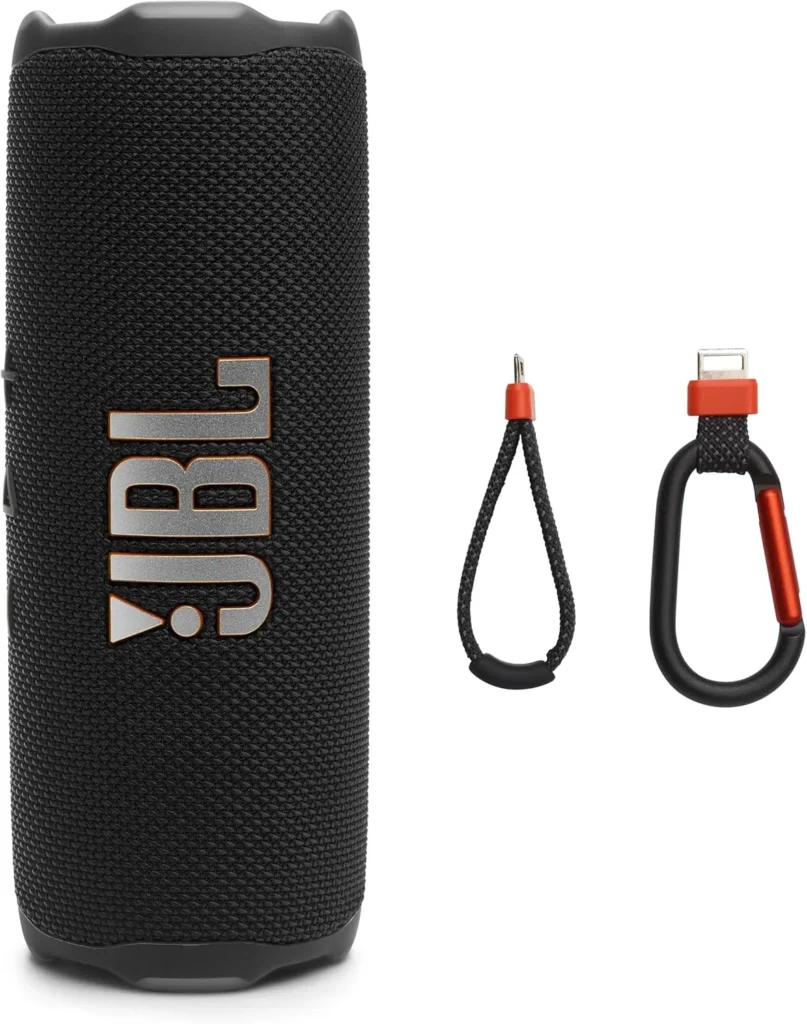
A genuinely portable IP68 speaker with PushLock accessories and Auracast — held back by a sparse in-box experience, a confusing battery story, and a deliberate break with older JBL Flip speakers.
The JBL Flip 7 is the seventh generation of the line that built JBL's portable speaker reputation. The headline upgrades over the Flip 6 are real. AI Sound Boost for distortion-free dynamic range. Auracast for multi-speaker chaining. IP68 protection, up from IP67. And the new PushLock interchangeable accessory system. The cylindrical form factor is the same — pocket-sized, bike-mountable, beach-ready.
The catch hits before you even pair the speaker. Open the box and there's no charging cable or power adapter. Just the speaker, the bundled PushLock loop and carabiner, and a quick-start card. That's a deliberate JBL packaging decision. The consequences for the unboxing experience are real.
Sound quality on the JBL Flip 7
The 25W output is what you'd expect from a speaker this size. Indoors, the Flip 7 fills a small or medium room cleanly. Outdoors in a quiet space, it carries well. At a party, in a yard with traffic noise, or for podcast listening over engine sound, the 25W ceiling shows.
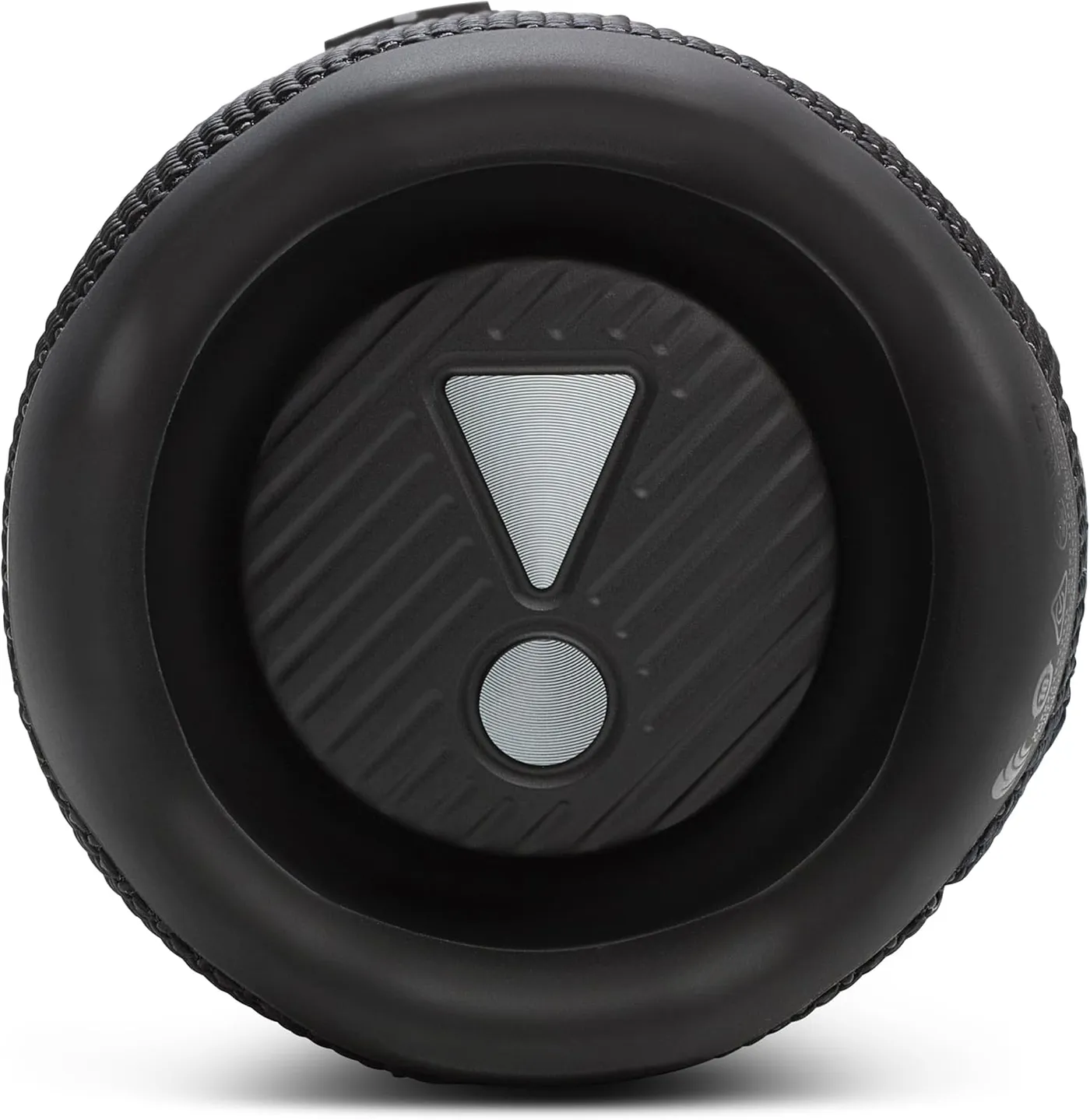
The driver array is a 3-inch woofer paired with a 0.6-inch tweeter. Passive radiators at each end extend the low frequency response. The tweeter is the visible upgrade from earlier Flip generations. It pushes the upper midrange and treble forward in a clean way. Anyone switching from the Flip 5 or earlier will notice the difference immediately. The bass extension comes from the passive radiators. They deliver a punchy low end but lose some definition at extreme volume.
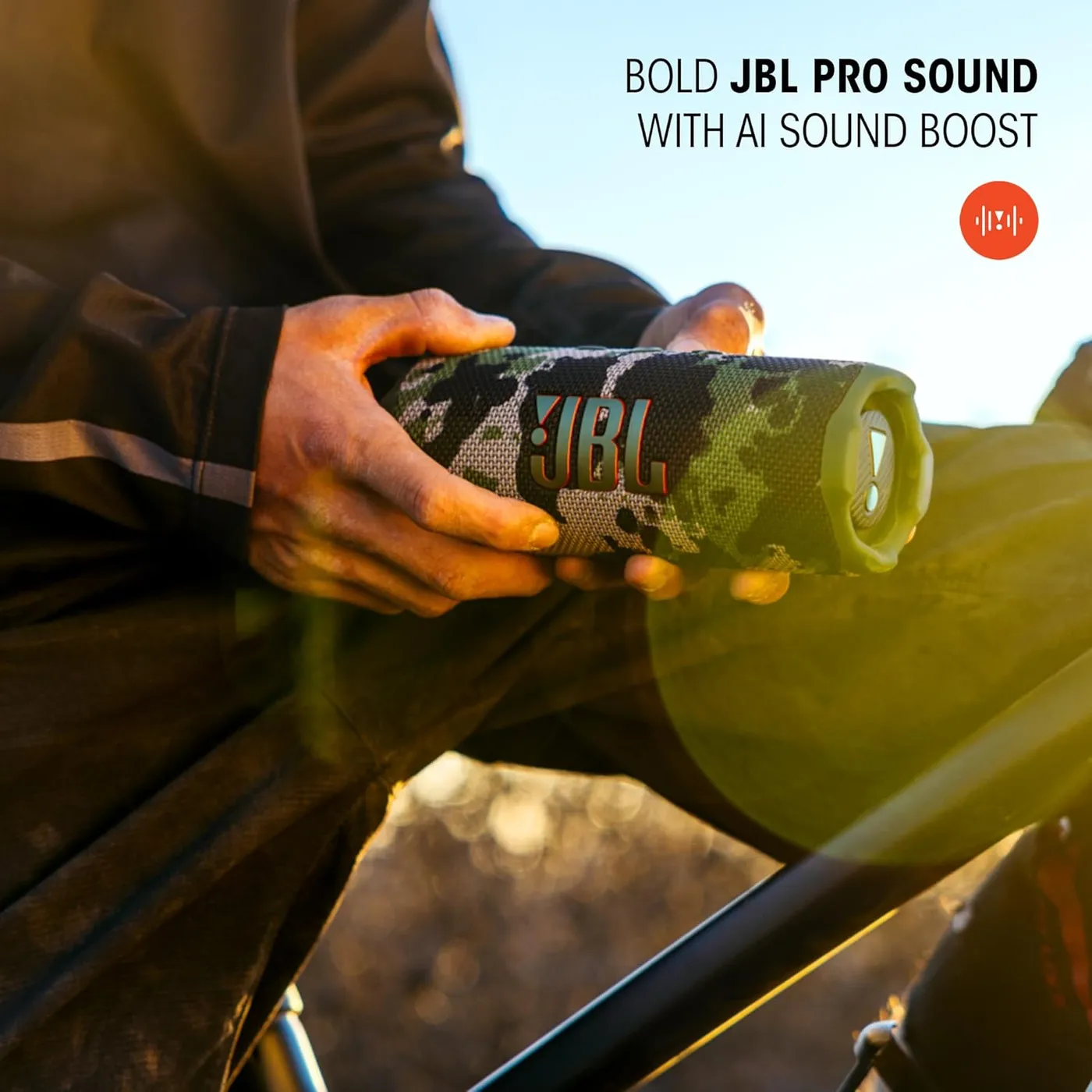
AI Sound Boost is the algorithm that adjusts driver output in real time. The effect is genuine on bass-heavy tracks where the radiators would otherwise compress. Enabled, the sound is noticeably tighter and louder than the default profile.
The JBL Portable app adds a 7-band EQ that further tightens the sound. The five-band EQ on the Xtreme 4 felt sparse. The Flip 7's seven bands offer real surgical control. Ten minutes of EQ adjustment is the difference between average and good on this speaker.
There's a sensible compromise worth flagging. Cross-shopped against the Bose SoundLink Flex, the Flip 7 is slightly behind on punch but a little finer on detail. That's an honest tonal characterization.
Battery life and the AI Sound Boost question
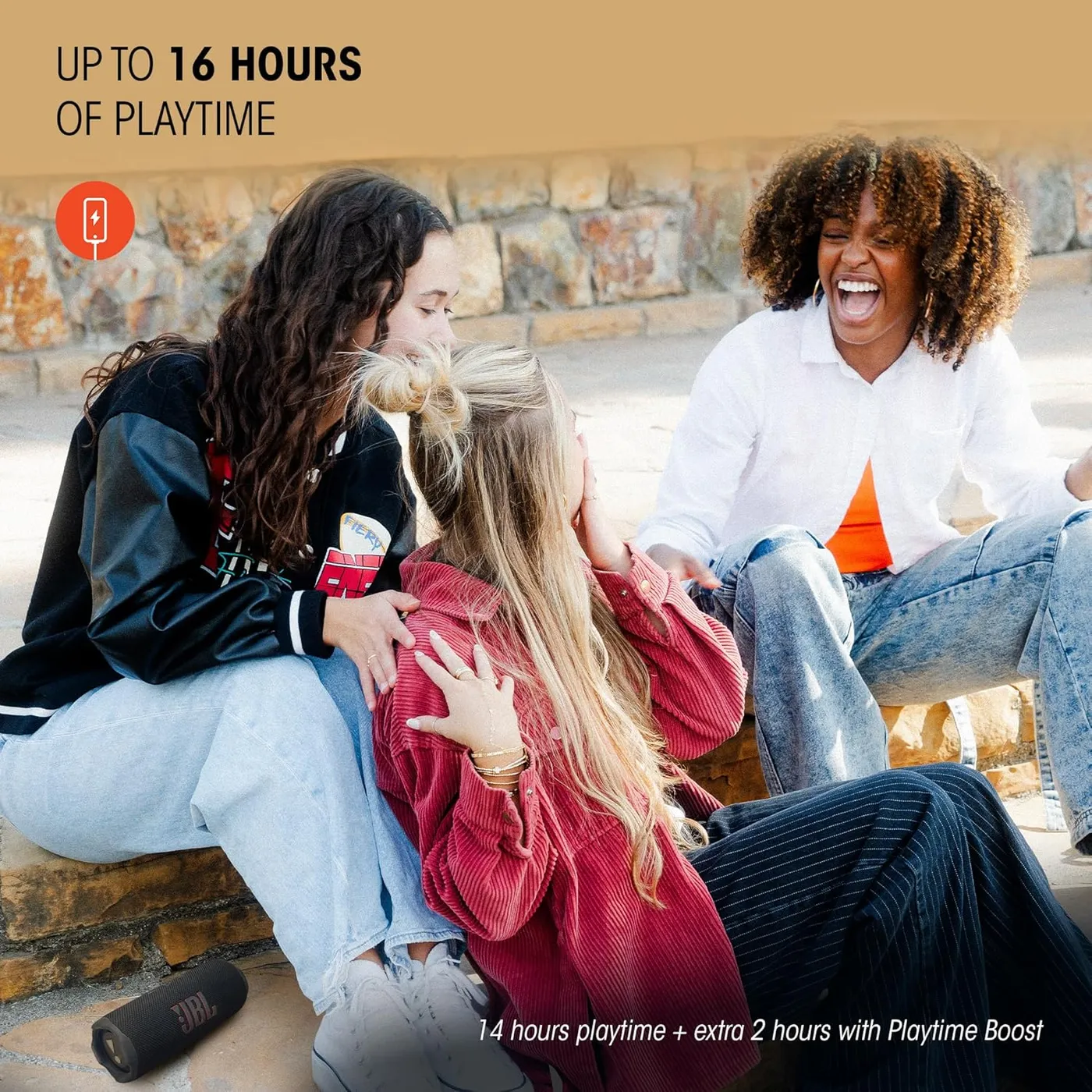
Battery life is where the Flip 7's claims need a closer look. JBL rates the speaker at 14 hours of playtime, with an additional 2 hours available via Playtime Boost. On paper, 16 hours total.
In practice, results vary widely. At moderate volume with AI Sound Boost enabled, the rated 14-hour figure is achievable. With AI Sound Boost disabled, the picture changes dramatically. Runtime can drop to 2-3 hours — a tenth of what the rated number suggests.
JBL's documentation doesn't make this dependency obvious. The rated figure appears to assume AI Sound Boost is on. That's essentially the inverse of how 'boost' features usually work in this category, where the headline number reflects the baseline and the boost adds to it.
The practical advice for buyers is straightforward. Enable AI Sound Boost from day one and confirm the rated battery life materializes. If it does, the Flip 7's battery is competitive. If a 2-hour runtime turns up instead, either the unit has a defective cell or AI Sound Boost wasn't on — both are worth diagnosing before the return window closes.
Playtime Boost is a separate feature. It adds another 2 hours by reducing peak output slightly and engages from the app or the speaker itself. The combined 14+2 number is realistic when both features are active and volume stays moderate.
PushLock and the new accessory system
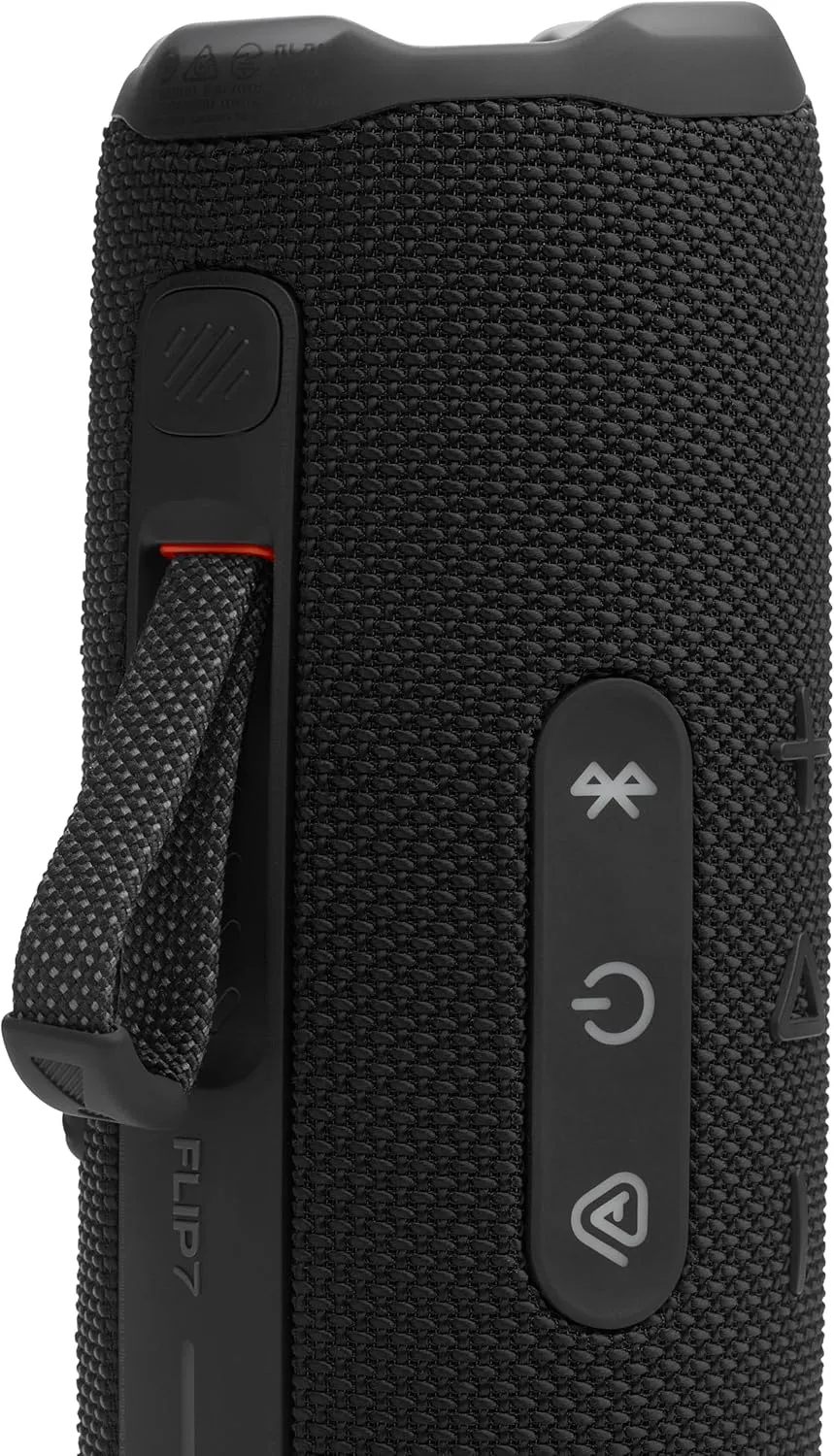
PushLock is the genuine product innovation on the Flip 7. The cylindrical body has a sliding attachment point that accepts interchangeable accessories. Two ship in the box. A fabric loop strap and a metal carabiner. Both click on and off one-handed, with a positive snap that feels secure.
The carabiner is the breakout accessory. It clips directly to a bike's handlebars, a beach umbrella, a daypack ring, or any standard hook. For cyclists especially, this is the feature that closes the purchase. Earlier Flip generations needed a third-party clip. This is the first generation where JBL ships one in the box.
The loop strap is for wrist or daypack carry. Light, fabric, durable.
Third-party accessories will follow. JBL hasn't published the PushLock interface spec publicly. But the mechanism is mechanical rather than proprietary-electronic. As a result, aftermarket loops and clips are technically feasible. As of mid-2026, the JBL-branded accessories are the only options.
Weight is 1.23 lb (560 g) — light enough to forget you're carrying it. The IP68 rating means full submersion in up to 1.5 meters of water. That's one tier above the Xtreme 4's IP67. In practice, pool, beach, and rain coverage with margin to spare. Drops onto driveways, concrete, and oak tables don't typically damage the cabinet — the rubberized fabric and end-cap bumpers absorb the impact.
Auracast and the older-Flip problem
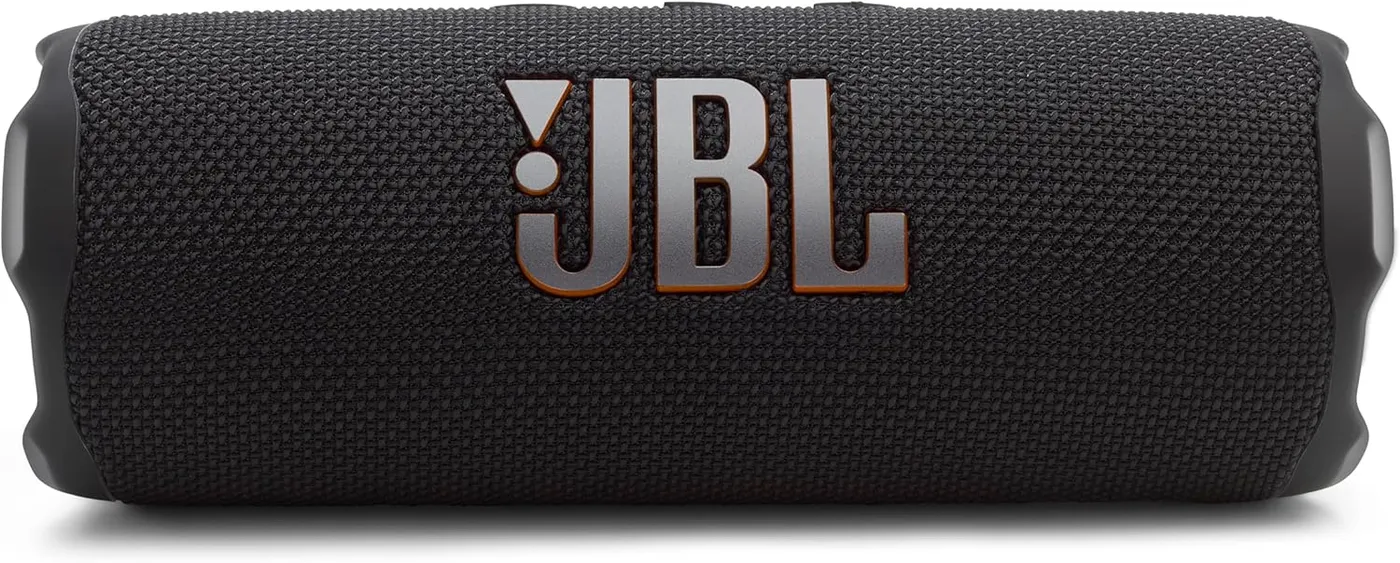
Auracast is JBL's name for the Bluetooth LE Audio broadcast standard. The protocol allows multiple Auracast-equipped speakers to receive the same audio stream simultaneously with low latency. For a yard party with a Flip 7 in the kitchen and another on the deck, the system works as advertised.
The catch is backward compatibility. Auracast doesn't pair with JBL's previous PartyBoost ecosystem. Existing owners of older JBL portables are out of luck. The Flip 5, Flip 6, Charge 5, Pulse 3, and other pre-2024 units can't chain with a new Flip 7. Anyone with a PartyBoost-era speaker hoping to pair it with a new Flip 7 will hit this wall. The choices are to return the speaker or accept that the older gear stays legacy.
JBL has signaled that Auracast is the forward direction across the lineup. That's the right long-term technical call. It just represents a real cost for the existing Flip-loyal cohort that owns two or three older units already.
For buyers entering the JBL ecosystem fresh, this is a non-issue. The Flip 7 chains beautifully with the Charge 6, the Xtreme 4, and any other current-line speaker.
For existing PartyBoost owners hoping to grow their setup, the Flip 7 may be the wrong call. A used Flip 6 to extend the PartyBoost group is sometimes the smarter move.
What's missing from the box
The Flip 7 ships in a sparse box. The speaker. The PushLock loop. The carabiner. A quick-start card. No USB-C cable. No power adapter. No mention in the marketing copy that these aren't included.
For buyers with USB-C cables already at home, this is a minor inconvenience. For buyers replacing a non-USB-C older speaker, or buying as a gift, it's a real friction point. The complaint is common enough that Amazon's own 'Know before you buy' AI summary surfaces 'charging issues reported in customer feedback' as a buyer-segment concern — and it appears in two of the four segment cards on the listing. That's not the kind of signal a manufacturer wants on a flagship product.
JBL's likely rationale is environmental. Most buyers already own USB-C cables. The execution leaves room for improvement. A clearly labeled 'cable not included' note on the listing would help. So would a low-cost in-box minimum.
A second missing-in-action item is a built-in microphone. Earlier Flip generations supported phone calls through the speaker. The Flip 7 does not. If phone-call use is in your buying calculation, factor this in.
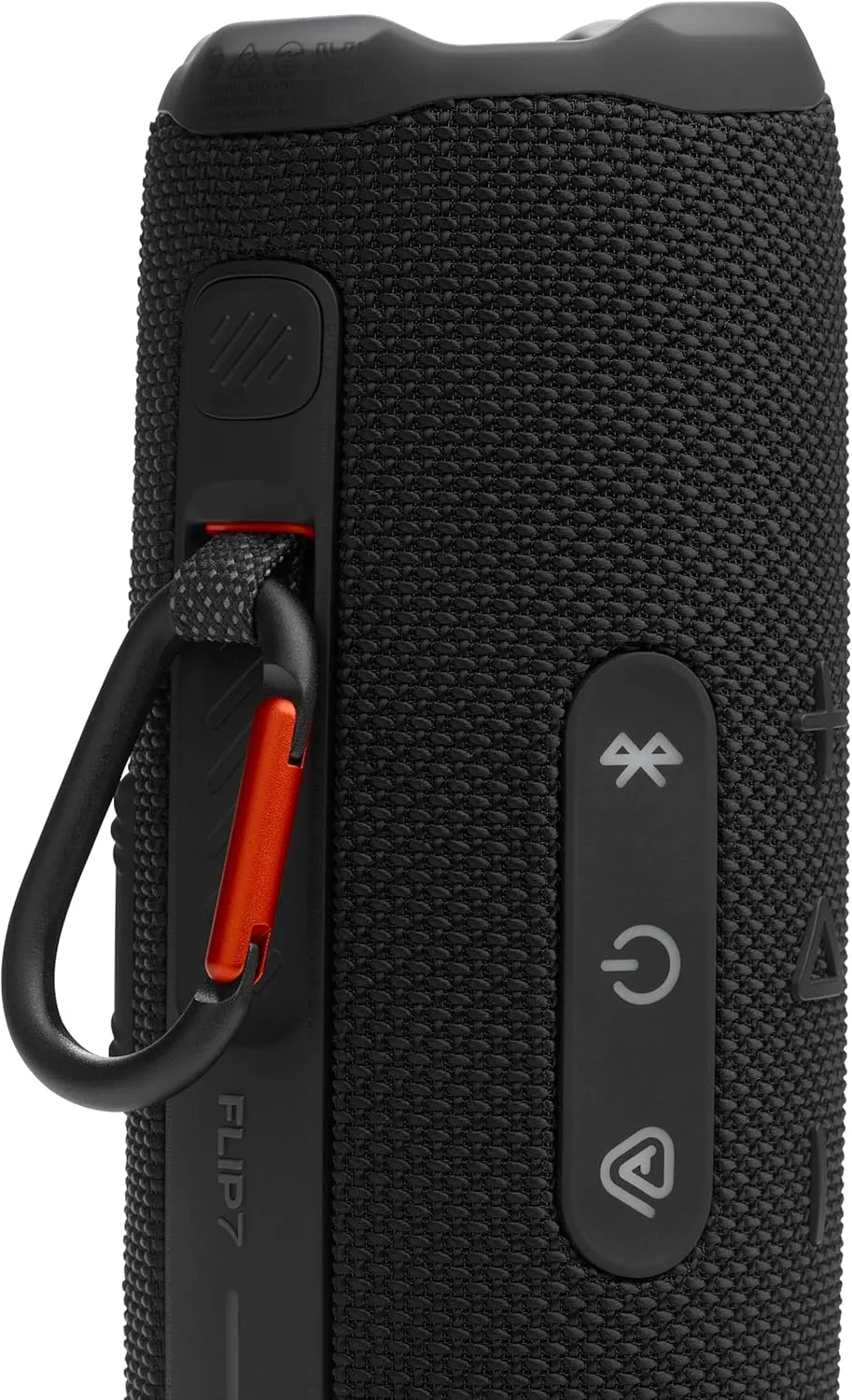
A third minor issue affects bedroom use. The power, Bluetooth, and triangle status LEDs run at a brightness level that's difficult to ignore in a dark room. There's no documented way to disable them while the speaker is on. JBL has shipped firmware updates for similar complaints in the past, so a fix may arrive eventually.
Where the Flip 7 fits in the lineup
The Flip 7 sits at the small end of JBL's current portable lineup. The Clip 5 is smaller and lighter. The Charge 6 is the next step up, with built-in power bank and louder output. The Xtreme 4 is the next big jump in size and price.
For most buyers, the Flip 7 hits the sweet spot. The cylindrical form factor fits in a cup holder, a shirt breast pocket, or a small backpack pocket. The 1.23 lb weight is genuinely forgettable. The IP68 build means no anxiety in pools, on beaches, or in the rain.
The competitive question is whether the Flip 7 is the right Flip. Buyers with a working Flip 5 or Flip 6 face the toughest call. The upgrades — sharper highs from the tweeter, Auracast, PushLock — are real. The regressions on backward compatibility and microphone-for-calls are also real. The Flip 7 reads more as a side-grade than a clear upgrade for anyone already running a recent Flip.
Against the Bose SoundLink Flex, the dominant cross-shop, the Flip 7 wins on price, IP68 rating, and ecosystem features. The Bose wins on tonal refinement and warmth. The choice is genuinely down to listening preference.
Against the Soundcore competition (Motion 300, Boom series), the Flip 7 wins on brand serviceability and ecosystem density. The Soundcore alternatives often win on raw bass output and per-dollar specs.
For the buyer who wants a portable, durable, ecosystem-current JBL speaker and already has USB-C cables at home, the Flip 7 is a strong choice. With eyes open about the trade-offs.
Pros: What we liked
- Pro: Genuine portable size at 1.23 lb — fits in a cup holder, daypack pocket, or shirt pocket
- Pro: IP68 waterproof rating (one tier above the Xtreme 4's IP67) covers full submersion to 1.5 meters
- Pro: PushLock interchangeable accessory system, with loop and carabiner included in the box — the carabiner is the breakout addition for cyclists and daypack users
- Pro: 7-band EQ in the JBL Portable app — more granular than the Xtreme 4's 5-band tuning
- Pro: AI Sound Boost extends dynamic range without distortion and appears to be the key to hitting the rated battery life
- Pro: Sharper highs from the new dedicated tweeter — clearly upgraded from the Flip 5 generation
- Pro: Auracast multi-speaker pairing with the current JBL lineup (Charge 6, Xtreme 4, Clip 5)
Cons: What could be better
- Con: No charging cable or power adapter included in the box — the listing doesn't flag this up front
- Con: Rated 14-hour battery life appears to require AI Sound Boost enabled; with it disabled, runtime can drop to 2-3 hours — a documentation gap JBL has not addressed
- Con: Auracast doesn't pair with older PartyBoost speakers, breaking the upgrade path for existing Flip 5, Flip 6, Charge 5, or Pulse 3 owners
- Con: No built-in microphone — phone-call use that earlier Flip generations supported is gone in the Flip 7
Best For
- Buyers entering the JBL ecosystem fresh, with no PartyBoost legacy gear to chain
- Portable-use cases — biking, beach, pool, daypack — where the IP68 rating and PushLock carabiner genuinely matter
- Single-speaker setups or pairs of new-generation JBL units, rather than chains with older gear
- Buyers who already have USB-C cables at home
Not Ideal For
- Existing Flip 5 or Flip 6 owners who want to chain with their older units (Auracast breaks PartyBoost compatibility)
- Buyers who use a speaker for phone calls — the Flip 7 dropped the microphone feature earlier Flips had
- Outdoor environments with significant ambient noise — the 25W output runs out of headroom against traffic or large crowds
- Buyers who expect a complete in-box experience, including charging cable and power adapter
| Specification | Details |
|---|---|
| Total Output Power | 25W |
| Drivers | 3-inch woofer + 0.6-inch tweeter; passive bass radiators at each end |
| Battery Life (rated) | 14 hours + 2 hours Playtime Boost = 16 hours max (real-world varies significantly) |
| Waterproof/Dustproof | IP68 (full submersion to 1.5 meters) |
| Bluetooth | Auracast (Bluetooth LE Audio) for multi-speaker pairing |
| Charging | USB-C — cable and adaptor NOT included in the box |
| Microphone | None (no phone-call support) |
| Weight | 1.23 lb (560 g) |
| Dimensions | 2.8 in D × 7.19 in W × 2.7 in H |
| Carrying | PushLock interchangeable accessory system; fabric loop + metal carabiner included |
Alternatives Worth Considering
Final Verdict
The JBL Flip 7 is a meaningful technical upgrade over the Flip 6. The tweeter sharpens the upper register. Auracast modernizes the multi-speaker story. PushLock solves a carrying problem. IP68 adds margin to the durability claim.
The trade-offs are real but separable. The empty in-box is a JBL packaging decision. The battery question may resolve once buyers learn to enable AI Sound Boost from day one. The microphone regression and the Auracast compatibility break are the genuinely structural concerns.
Buyers most likely to be happy are those entering JBL fresh. They get a pocket-sized speaker with party-grade durability and feature parity with the modern line.
Buyers most likely to be disappointed are existing Flip 5 or Flip 6 owners hoping to chain new with old. The Flip 7 is the right speaker for some, the wrong upgrade for others.
Frequently Asked Questions
Does the JBL Flip 7 come with a charging cable?
No. The box contains the speaker, the PushLock fabric loop, the PushLock metal carabiner, and a quick-start card. USB-C cable and power adapter are not included. JBL's likely rationale is environmental — most buyers already own USB-C cables — but the omission isn't clearly communicated on the listing.
What's the real-world battery life vs the rated 14 hours?
Real-world runtime depends heavily on whether AI Sound Boost is enabled. With AI Sound Boost on, the rated 14-hour figure is achievable at moderate volume. With it off, runtime can drop to 2-3 hours. JBL's documentation doesn't explain this dependency clearly. Enable AI Sound Boost from day one and confirm the rated battery life materializes. If it doesn't, support or a return may be in order.
Does the JBL Flip 7 pair with my older JBL speakers?
Not the PartyBoost generation. The Flip 7 uses Auracast, which is incompatible with the Flip 5, Flip 6, Charge 5, Pulse 3, and other pre-2024 JBL portables. It chains cleanly with the Charge 6, Xtreme 4, and other current-line speakers.
Can I use the JBL Flip 7 for phone calls?
No. The Flip 7 has no built-in microphone, which is a regression from earlier Flip generations. Audio still routes to the speaker during a call, but the call cannot be answered or spoken through the Flip 7 itself.
How does the JBL Flip 7 compare to the JBL Charge 6?
The Charge 6 is the next step up. It has a larger driver array, louder peak output, a built-in power bank function, and longer battery life. The Flip 7 is more portable, lighter, and one IP tier higher (IP68 vs IP67). For pure listening at moderate volume in a single room, the Flip 7 is the smarter portable. For larger spaces or extended outdoor use, the Charge 6 has more headroom.
The Verdict
A genuinely portable IP68 speaker with PushLock accessories and Auracast — held back by a sparse in-box experience, a confusing battery story, and a deliberate break with older JBL Flip speakers.