Bose SoundLink Flex 2nd Gen Review: IP67, Stereo Pairing
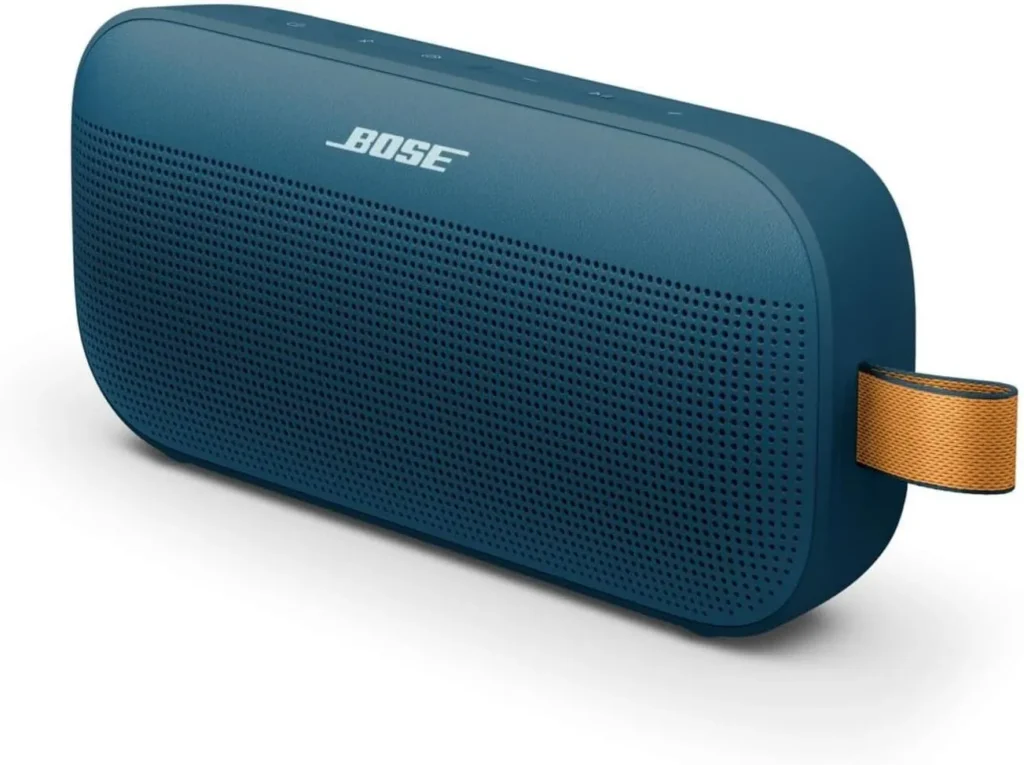
The Flex 2nd Gen nails sound and build quality, but app dependency and Bluetooth gremlins keep it out of the top tier.
The Bose SoundLink Flex 2nd Gen makes a specific pitch in a crowded category: tonal balance over raw loudness. Most portable speakers trade sound quality for volume, or the other way around. This Flex 2nd Gen aims for a different target. It is a small, travel-ready speaker that genuinely sounds like a Bose. In essence, this Bose SoundLink Flex review works through whether it earns the premium. Bose has iterated on the SoundLink line since 2013, and the Flex 2nd Gen is the most refined portable the company has shipped in this size class. Notably, the tuning is warm and room-filling — the kind competitors spend years trying to imitate. However, this is also a premium product at a premium price. A handful of software and reliability niggles shape the buying decision here. Overall, the real question is what you want from a portable speaker, and how much you trust Bose's app-first approach.
Sound quality of the Bose SoundLink Flex
Tonal balance is the core advantage of the Bose SoundLink Flex. Bose has refined this signature over two decades of portable speaker work. The sound reads as clean, warm, premium, and distinctly luxury. Notably, those qualities are tuning choices, not marketing fluff. In practice, the signature favors vocal clarity and a controlled low end. For example, it excels with acoustic tracks, jazz, vocal-forward pop, and podcasts.
Under the hood, a 50.8 mm dynamic driver handles the full range. Frequency response reaches up to 15.6 kHz, and passive radiators do most of the bass work. Maximum output is rated at 7.5 watts, which is modest on paper. In practice, the tuning extracts more perceived loudness and clarity than that spec suggests. As a result, this Flex works well as a primary computer speaker. It also fills an apartment-wide listening zone with room to spare. At higher volumes, the sound holds together. Cheaper portables, meanwhile, get boomy and muddy at the same levels.
Where the Flex 2nd Gen stops short is outright loudness. Anyone after party-level volume will find it underpowered next to a JBL Charge or Flip. Still, this is not a flaw so much as a design choice. Notably, Bose prioritizes clean output over raw SPL. For indoor listening, patios, and quieter outdoor settings, it is genuinely great. But for a backyard with a dozen people, it is not.
Design, build, and waterproofing
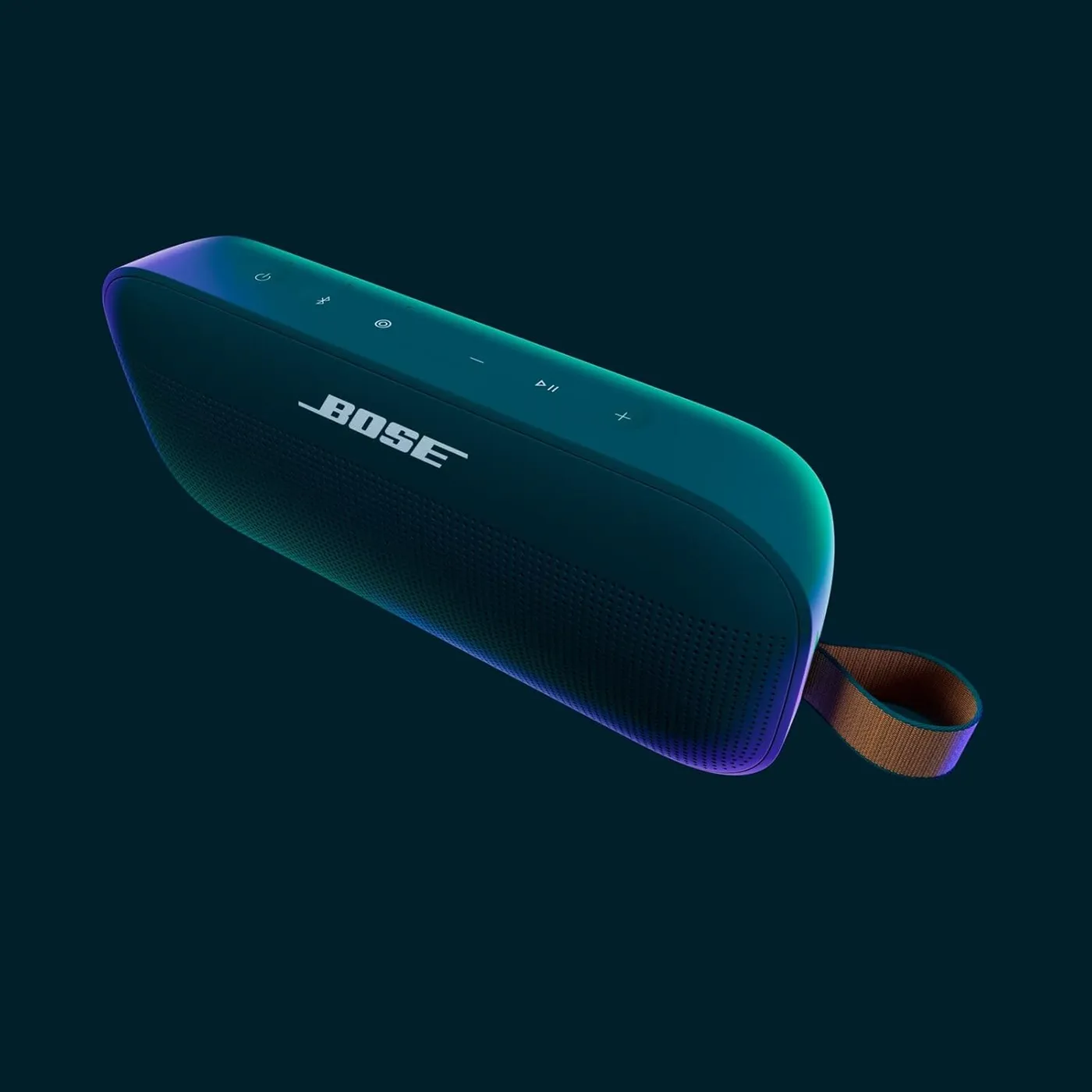
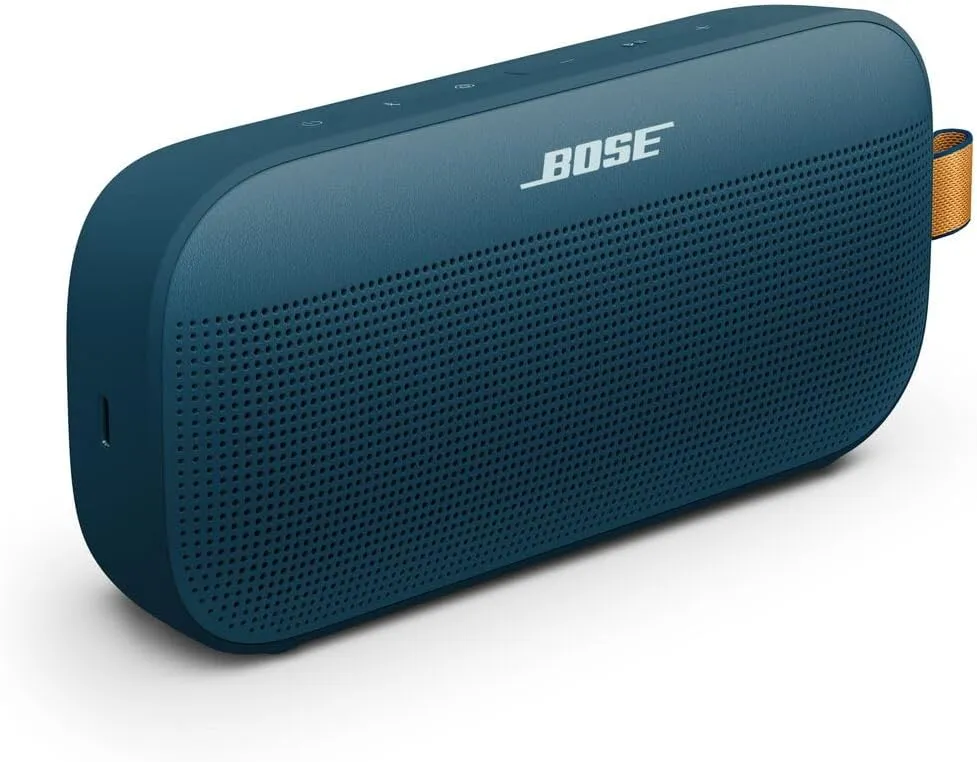
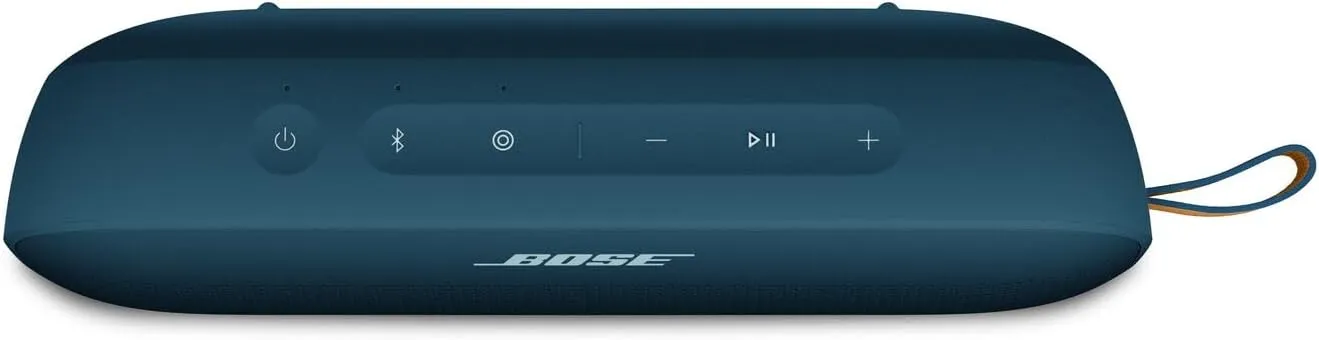
At 590 grams, this Flex sits in the middle of the portable speaker weight class. Its footprint measures 3.56 by 7.93 by 2.06 inches. For context, it is heavier than a JBL Clip and lighter than a SoundLink Revolve. In practice, the shape fits a bag side-pocket or a jacket. Bose's silicone-coated exterior is the standout design element. Notably, it resists scratches and scuffs better than older Bose soft-touch finishes. The surface also absorbs minor drops without cosmetic damage.
The IP67 rating holds up in actual use. For example, this is a speaker you can run in the shower, at the poolside, on the beach, or outdoors in rain. It also floats, which is a small but meaningful safety net for pool deployment. In fact, the waterproofing is genuinely the reason it stops feeling precious in the field.
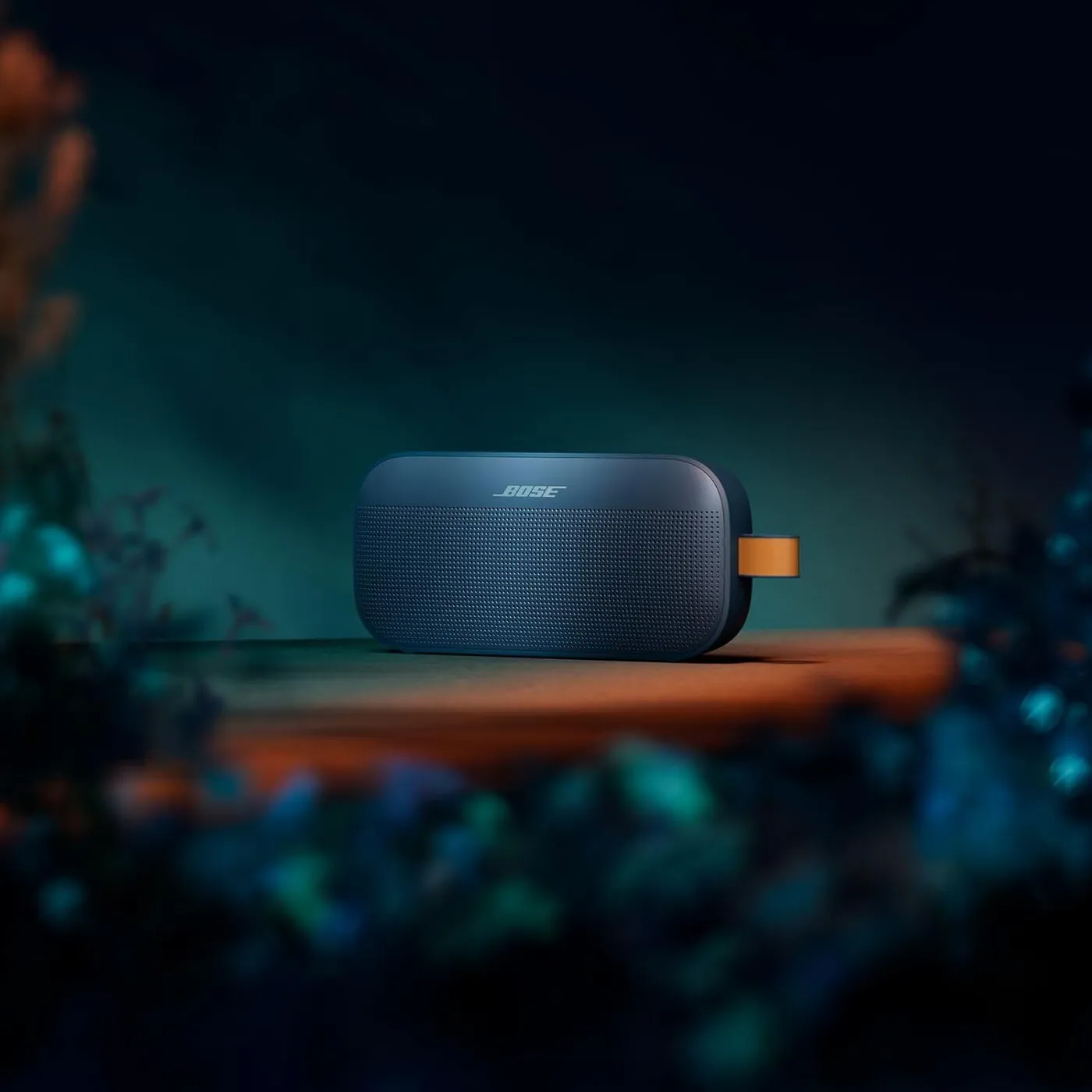
The color lineup is broader than most competitors offer. Choose between Black, Blue Dusk, Twilight Blue, Sandstone, Petal Pink, Citrus Yellow, or Fog Grey. Notably, the lifestyle finishes give the Flex a softer, less-utilitarian look than most portables. One consistent complaint stands out: the integrated strap. It is short, tight, and awkward to hang from anything thicker than a thin hook. For real portability, a carabiner clip solves the problem. Still, it is a minor annoyance on an otherwise solid industrial design.
Connectivity and the Bluetooth problem
Bluetooth pairing is instant with previously connected devices. Moreover, multi-device memory means the Flex switches between a phone and a laptop without re-pairing. Rated range is 30 feet, or about 9 meters. In practice, connection stability holds at typical indoor distances. Through-wall range stays solid in small-to-medium apartments.
The problem every Bose SoundLink Flex review has to address is consistency. A small share of units suffer intermittent Bluetooth dropouts. These show up as burps, hiccups, or audio briefly cutting out every 20 to 30 minutes. In practice, the failure affects a low single-digit percentage of units in the field. Some do it straight out of the box. Notably, exchanges do not always fix the problem. That pattern points to a firmware or protocol-level inconsistency. However, a single-batch manufacturing defect would not explain it. For the overwhelming majority, the speaker works fine. Still, the failure mode is frustrating enough to call out anyway.
Stereo pairing with a second SoundLink Flex works well when it works. The soundstage improvement is dramatic. Notably, the effect is strong enough to justify buying a second unit purely for the upgrade. Setup happens through the Bose Music app. That is both a convenience and a caveat, depending on how you feel about app-mediated hardware.
Battery life: 12 hours rated, mileage varies
Bose rates the SoundLink Flex 2nd Gen at up to 12 hours of playback. In practice, the rating holds at indoor or moderate volumes. Runtime comfortably reaches 10-plus hours at low-to-medium levels. For example, a 10-hour office session at 15 percent volume leaves roughly 70 percent of the battery untouched.
The rated number cracks under load. Near-maximum volume cuts runtime to four to six hours instead. This happens in noisy environments like workshops, factory floors, and larger outdoor gatherings. Granted, this is not unusual for any Bluetooth speaker. Still, it is worth flagging if your use case involves a full day of high-volume playback. In that case, a second unit or a power bank will be more practical. This Flex will not solo that workload realistically.
Charging is USB-C. A full charge takes approximately four hours from empty per Bose's spec. The battery indicator on the device is accurate. For precise readouts, the app provides granular percentage values. However, there is no fast-charge feature of note here. Plan on plugging in overnight or during a long break, as a quick top-up will not buy much additional runtime.
The Bose Music app is required
This Flex plays whatever your phone sends it. No app is needed for basic playback. But every advanced feature lives inside the Bose Music app. That includes EQ adjustment, firmware updates, and stereo pairing. For buyers who simply want to play music, this is a non-issue. For buyers who want fine-grained control, however, it is a friction point. In fact, this friction is where the Flex 2nd Gen gets its most consistent pushback.
Two specific issues stand out. First, there is no physical bass or treble control on the speaker. You must use the app to tune the sound. Moreover, the adjustment range is narrower than some audiophile-oriented competitors offer. Second, this generation removed the ability to power the speaker on remotely through the app. That feature was a staple of older Bose portables, yet Bose has not explained the change. For anyone upgrading from a SoundLink Mini or first-gen Flex, the regression is noticeable.
Startup and connection announcement tones are loud. That is a consistent source of frustration in real use. Voice prompts can be silenced in the app. However, connection chimes cannot. In a speaker that emphasizes premium sound, that is a frustrating omission.
Value, competition, and ecosystem fit
At this price point, the Flex has three direct competitors. They are the JBL Flip 7, the JBL Charge 6, and the Sonos Roam 2. Each occupies a different corner of the market. Overall, the right choice depends less on which is best. Instead, it depends more on what you want from a portable speaker.
Against JBL, the trade is straightforward. Bose wins on tonal balance, mid-range clarity, and finish quality. Meanwhile, JBL wins on raw loudness, party readiness, and price. The smart move for some buyers is to run both. For example, keep a JBL for outdoor gatherings and a Bose for everyday listening. For a JBL convert trying Bose for the first time, the jump is jarring in a good way. Still, the JBL is the better tool for parties.
Against Sonos, the consideration is ecosystem. The Roam 2 adds Wi-Fi, AirPlay, and integration with any existing Sonos system. That is a meaningful advantage inside an established Sonos setup. It also helps if you want multi-room audio long-term. By comparison, the Bose SoundLink Flex is a simpler, more focused Bluetooth-first speaker.
The Flex becomes the obvious pick if Bose already anchors your audio setup. In that case, the Bose Music app manages headphones, speakers, and this Flex in one place. Moreover, stereo pairing with a second Flex gives you a clear upgrade path. SimpleSync with other Bose products also works. You do not need to rebuy your audio library to get there. Overall, that ecosystem continuity is worth real money to anyone already in the Bose world.
Pros: What we liked
- Pro: Warm, clean, premium-sounding audio with noticeably deeper bass than most speakers in this size class
- Pro: IP67 dust and water rating holds up to pool, shower, rain, and beach use in the field
- Pro: Fills small-to-medium rooms with clean, controlled sound without the distortion cheaper speakers show at higher volumes
- Pro: Stereo pairing with a second SoundLink Flex delivers a genuine soundstage improvement
- Pro: Six lifestyle color options go well beyond the usual black-and-blue portable speaker palette
- Pro: 12-hour battery rating matches real-world use at moderate indoor volumes
Cons: What could be better
- Con: Intermittent Bluetooth dropouts and inconsistent long-term reliability in a small share of units
- Con: App-only EQ, firmware, and stereo pairing, with no physical bass or treble controls on the speaker
- Con: Remote power-on supported by older Bose portables is gone in this generation
- Con: Not loud enough for large outdoor gatherings or noisy environments
Best For
- Listeners who prioritize tonal balance and vocal clarity over raw loudness
- Owners of other Bose speakers or headphones who want one app and stereo pairing
- Small-to-medium indoor spaces, patios, pools, and quieter outdoor settings
- Anyone replacing an aging SoundLink Mini or first-generation Flex
Not Ideal For
- Pool parties, workshops, and factory floors where raw volume matters more than clarity
- Buyers who refuse to install a companion app to adjust basic sound settings
- Anyone relying on remote power-on or advanced app automation from older Bose models
| Specification | Details |
|---|---|
| Audio driver | 50.8 mm (2 in) dynamic driver with passive radiators |
| Max output power | 7.5 W |
| Frequency response | Up to 15.6 kHz |
| Battery life | Up to 12 hours rated; 10-11 hours real-world at moderate volume |
| Charging | USB-C, approximately 4 hours to full |
| Bluetooth | 30 ft (9 m) range; multi-device pairing; stereo pair with second Flex |
| Water/dust rating | IP67 (submersion-safe, floats) |
| Dimensions and weight | 3.56 x 7.93 x 2.06 in, 590 g |
| Colors | Black, Blue Dusk, Twilight Blue, Sandstone, Petal Pink, Citrus Yellow, Fog Grey |
| App | Bose Music (iOS and Android) required for EQ, firmware, stereo pairing |
Alternatives Worth Considering
Final Verdict
This Bose SoundLink Flex review lands at 8.3. Reach for it when you care more about how music sounds than how loud it gets. The Flex 2nd Gen earns that score on three fronts. First, the sound is warm, clean, and distinctly premium in character. Second, bass surprises for the size and build quality is evident in hand. Finally, the waterproofing genuinely works.
The problems are not about audio. Instead, they are about software polish. That means a required app for sound tuning, a removed remote-power feature, and loud startup chimes. Bluetooth stability is also inconsistent in a small share of units across exchanges.
This is the right speaker for a living room, a kitchen, a patio, or a pool day. For rugged reliability or raw party volume, however, the JBL Flip 7 or Charge 6 is the better call. You are paying for Bose's sound signature and finish. For the right buyer, the Bose SoundLink Flex is worth it.
Frequently Asked Questions
Is the Bose SoundLink Flex 2nd Gen actually waterproof?
Yes. It carries an IP67 rating for dust and water. The speaker can handle brief submersion in shallow water and survive sand, rain, and pool splashes. The waterproofing holds up in real-world abuse. It also floats if dropped in a pool.
How does the Flex 2nd Gen compare to the JBL Flip 7 or Charge 6?
The Bose wins on tonal balance, vocal clarity, and finish quality. The JBLs win on raw loudness, bass impact at maximum volume, and outdoor party readiness. Pick the Bose for indoor listening and cleaner sound. Pick the JBL for party scenarios.
Can you pair two SoundLink Flex speakers together for stereo sound?
Yes. Two Flex units pair for true left-right stereo separation through the Bose Music app. The soundstage improvement is dramatic. The effect is strong enough to make buying a second unit worthwhile.
Do you need the Bose Music app to use this speaker?
Not for basic playback. It pairs and plays over standard Bluetooth like any speaker. You do need the app for EQ adjustments, firmware updates, and stereo pairing setup. There is no physical bass or treble control on the speaker itself.
How long does it take to charge the SoundLink Flex 2nd Gen?
Bose rates a full USB-C charge at approximately four hours from empty. There is no fast-charge feature of note. Plan on plugging in overnight or during a long break rather than a quick top-up between uses.
Can you power the speaker on remotely through the Bose app?
No. This generation removed the remote power-on feature that older Bose portables supported. It is a regression when upgrading from a SoundLink Mini or first-generation Flex. Bose has not publicly explained the change.
The Verdict
The Flex 2nd Gen nails sound and build quality, but app dependency and Bluetooth gremlins keep it out of the top tier.